

New agreements with international energy firms aim to accelerate production of oil, gas and petrochemicals.
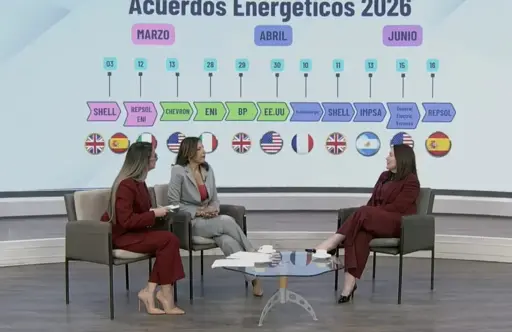
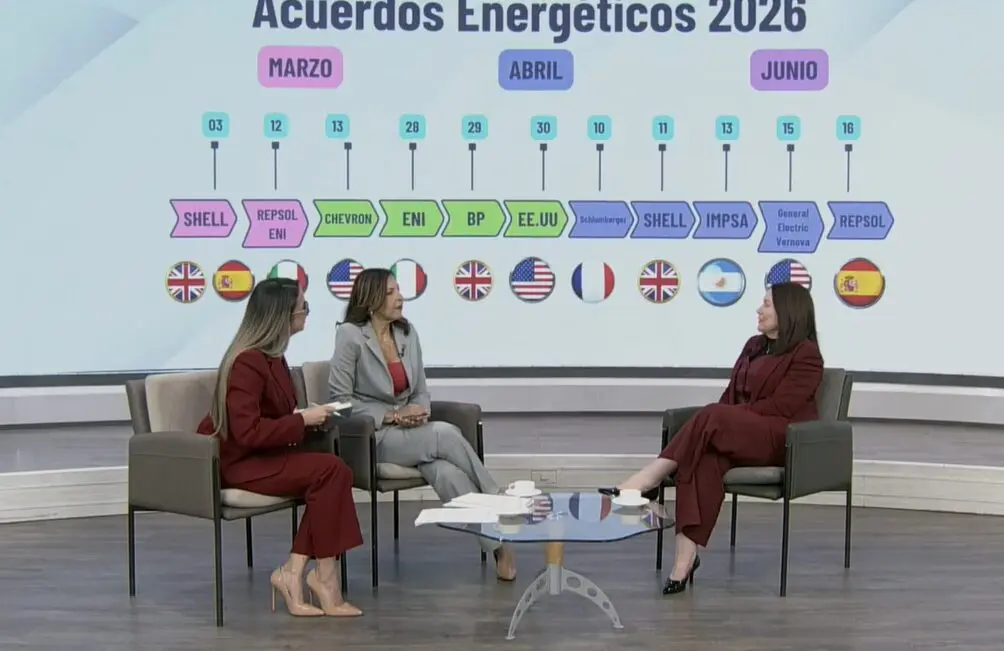
Venezuela is seeking to accelerate oil, natural gas and petrochemical production through new agreements with major international energy companies, with the government aiming to boost output in the short term and eventually become the world’s largest oil producer.
RELATED: Venezuelan Acting President Coordinates Regional Development Plans
The agreements involve state oil company PDVSA and are based on arrangements that bring together Venezuela’s technical capabilities, specialized workforce and hydrocarbon resources with investors’ capital, advanced technology and operational expertise, Hydrocarbons Minister Paula Henao said.
Henao outlined the government’s energy strategy and near-term priorities in an interview with state broadcaster Venezolana de Televisión, highlighting recent changes to the country’s hydrocarbons framework and the expansion of investment opportunities.
New investment framework
A partial reform of the Hydrocarbons Law that took effect on Jan. 29, together with its regulations, established new forms of business cooperation, including joint ventures, Hydrocarbon Production Participation Contracts, technical and financial partnerships, and exploration licenses.
The reforms, Henao said, “open the doors to innovative business models designed to encourage local and international capital.”
Venezuela currently ranks 20th worldwide in production relative to its reserves, according to Henao. The new agreements are intended to accelerate production of crude, gas and petrochemicals in the short term.
Héctor Obregón, presidente de PDVSA (Petróleos de Venezuela), afirmó que Venezuela debe pasar de gran reserva a gran productor de petróleo. #Venezuela #teleSUR pic.twitter.com/xp6cuAjkT5
— teleSUR TV (@teleSURtv) September 4, 2026
Text Reads: Héctor Obregón, president of PDVSA (Petróleos de Venezuela), stated that Venezuela must transition from a major oil reserve holder to a major oil producer.
The development plan covers 17 oil fields across the country, eight of them greenfield projects. The associated infrastructure will include well clusters, wells, pipelines and transportation centers, increasing demand for specialized technical workers.
To meet that need, Henao confirmed the implementation of an instruction from acting President Delcy Rodríguez to establish a University Council for Hydrocarbons. The body, being developed in coordination with the Ministry of University Education, will align academic programs with the industry’s operational needs and train geologists, geophysicists and engineers.
Henao also emphasized Venezuela’s energy ties with key markets, including the United States, with which she said the country has maintained more than 150 years of commercial relations in the oil industry. She described Venezuela as an essential player in hemispheric and global supply stability because of its proven crude reserves.
Oversight of investment
Investment proposals are being processed through the International Productive Investment Center, where companies undergo technical evaluations before contractual commitments are finalized.
For the next four months, Henao said the government would focus not only on securing new agreements for fields open to investment but also on monitoring existing contracts and reviewing their implementation.
“What lies ahead over these next four months is not only to see new agreements and contracts take shape in other fields where there will also be investment, but, most importantly, to begin supervising and reviewing how each of the agreements signed in recent days is being implemented,” Henao said.
From teleSUR English via This RSS Feed.