

The move follows the intervention of state oil company YPFB as fuel shortages and long lines intensify.
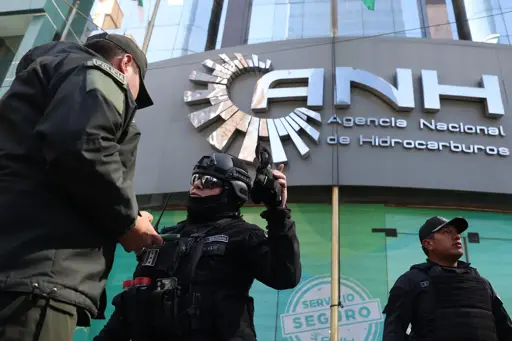
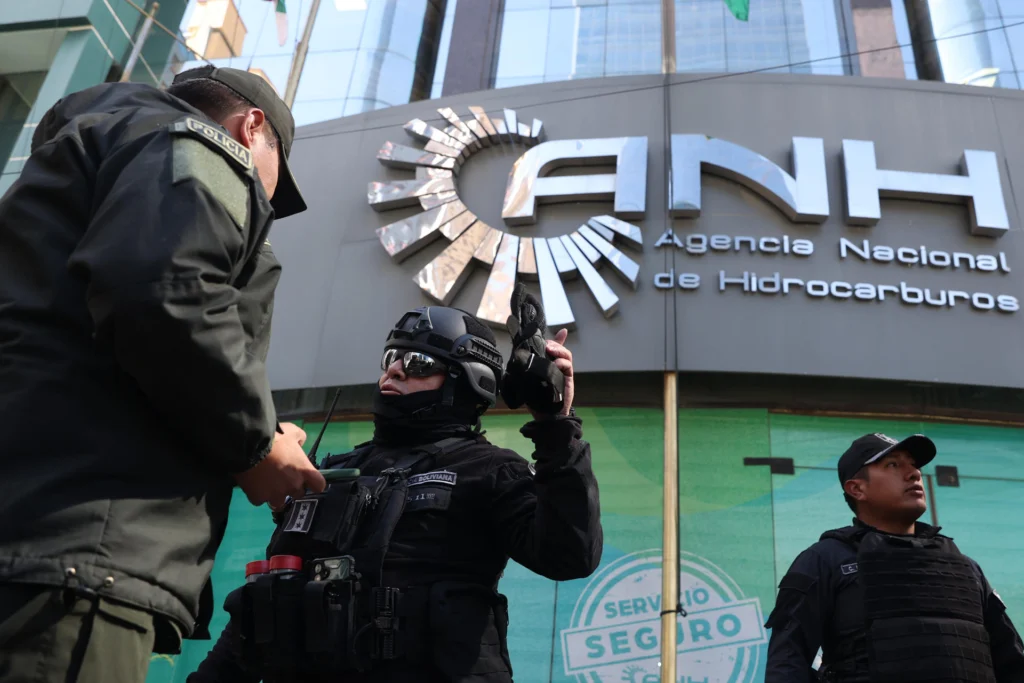
Bolivia’s government on Thursday intervened the National Hydrocarbons Agency (ANH) as a persistent fuel shortage, particularly of diesel, intensified, with authorities blaming institutional deficiencies and alleged irregularities for disruptions that have worsened in recent days.
RELATED: Bolivian VP Formally Accuses First Lady and Cerimedo of Influence Peddling
The intervention came one day after the government took similar action against state oil company Yacimientos Petrolíferos Fiscales Bolivianos (YPFB), following irregular fuel supplies since 2024 and a sharp deterioration over the past three days.
Hydrocarbons and Energy Minister Marcelo Blanco Quintanilla said the immediate objective was to restore fuel supplies and end the long lines at service stations.
“Those three days of queues are inhumane, and we will not allow this to continue,” Blanco said.
Government targets alleged irregularities
The decree ordering the ANH intervention calls for corrective measures, an investigation into the causes of the agency’s deficiencies and the identification of possible responsibilities linked to the crisis in the sector under previous administrations.
Blanco said “mismanagement” and “bureaucracy” at the institutions were among the most important reasons for the fuel shortages the government is seeking to address through the interventions.
The measure is extraordinary and takes effect immediately for 180 calendar days. It may be extended once for an additional 90 days and can end earlier if the conditions that led to the intervention are overcome.
The commission overseeing the operation includes the ministries of Hydrocarbons and Energy; Sustainable Production, Environment and Water; and Public Works, Services and Housing, as well as the Vice Ministry of Transparency, Legal Security and Public Integrity.
Vice Minister of Transparency Yamil García Delfín said the government would continue taking legal action to prevent corruption, fuel diversion and preferential treatment of certain suppliers and distributors.
A post shared by Ministerio de la Presidencia (@min.presidencia)
Text Reads: Supreme Decree 5697 creates the Extraordinary State Intervention Commission, comprised of the Ministries of Economy and Public Finance; Sustainable Production, Environment and Water; Hydrocarbons and Energy; Public Works, Services and Housing; and the Vice-Ministry of Transparency, Legal Security and Public Integrity, under the Ministry of the Presidency, to strengthen oversight and address potential irregularities at Yacimientos Petrolíferos Fiscales Bolivianos (YPFB). This Commission will prioritize technical audits to identify networks of embezzlement and smuggling, establish responsibilities, and take appropriate action.
We work for institutions that serve the Bolivian people, with transparency and clear information.
Findings at YPFB
The government intervened YPFB a day earlier under the supervision of the same four ministries and the Vice Ministry of Transparency after identifying about 600 irregular users who were not part of the state oil company but had access to its systems to make fuel nominations.
Authorities also identified cases in which tanker trucks disappeared while transporting fuel, while the GPS system was allegedly altered to divert fuel shipments, Blanco said.
The minister said the government wants YPFB to return to its “natural role” by gradually withdrawing from fuel commercialization and focusing on refinery operations as well as exploration and production activities.
Political analyst Franklin Pareja criticized the government’s decision to announce the interventions in advance, arguing that operations of this nature depend on surprise to uncover irregularities and catch those responsible in the act.
By making the measures public beforehand, Pareja said, the government had undermined their effectiveness and turned them into a belated response to a crisis that had already dragged on for months.
Pareja also said the decrees would not resolve Bolivia’s diesel shortage and described them as “palliative” measures. He questioned the decision to place government ministers in charge of the interventions, arguing that a credible and transparent oversight process should be free from direct executive interference.
He said the underlying problem was financial rather than one of internal oversight, arguing that YPFB lacks the foreign currency needed to import the fuel required by the domestic market.
From teleSUR English via This RSS Feed.