

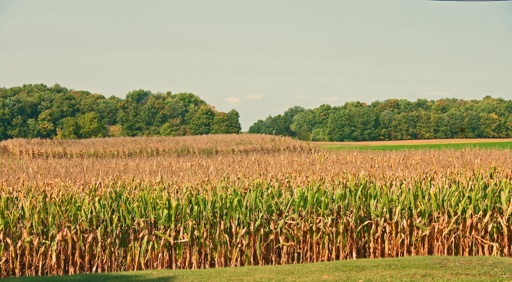
John Boyer grew up on his family’s 131 acres of rolling fields of corn, oats, and wheat in a rural area near the tiny city of East Jordan in northern Michigan. The farm had changed ownership outside the family several times over the decades before Boyer rebought it in 2018. He felt an obligation to repurchase and farm the land to prevent development from encroaching on the area’s community of family farms.
“For any farmer, everything’s personal,” Boyer said. “Every piece of property, every stone you pick up, you spend countless hours out there.”
As millions of farmland acres around the country are expected to change hands in the next few decades, farmers are facing decisions about whether — and if so, how — to preserve farmland amid pressures from rising land values, a shifting climate, and a younger generation that doesn’t want to farm. The number of acres devoted to farming in Michigan has declined in recent decades, as it has in the rest of the country. And ownership of that land is changing.
In 2022, an estimated 9.5 million acres, or about a quarter of the state, were devoted to farming, a roughly 3 percent dip from 2017, according to the most recent federal farm census. Farmland in Michigan where the majority of operations were family-owned decreased nearly 470,000 acres in those same five years. Conversely, land leased or rented for farming operations increased by nearly 30,000 acres.
Despite shifts in farm ownership and acreage dedicated to agriculture, the number of farmland acres in Michigan protected by conservation programs has increased in recent years, reflecting a national trend. The state saw an additional 22,000 acres protected in easements between 2017 and 2022, according to the U.S. Department of Agriculture.
“It’s a matter of trying to figure out what exactly is going to be the best fit for everybody’s situation. And there’s a lot of pressure. There’s a lot of money,” said Jon LaPorte, a farm business management educator for Michigan State University Extension.
According to the USDA, Michigan farmland was valued at about $6,800 per acre last year, up 7.8 percent from 2024 and outpacing the national average of 4.3 percent.
The pressure to preserve farmland could be especially strong in northern Michigan. Farmers there are already confronting the effects of climate change, including more extreme precipitation, crop disease, and temperature swings, but some local farmers said those impacts are relatively easier to deal with than elsewhere in the country.
“As the world climate changes, this area could become more and more important for food production and food security,” said Dave Skornia, a farmer in Boyne City, Michigan. “So, you got to have land.”
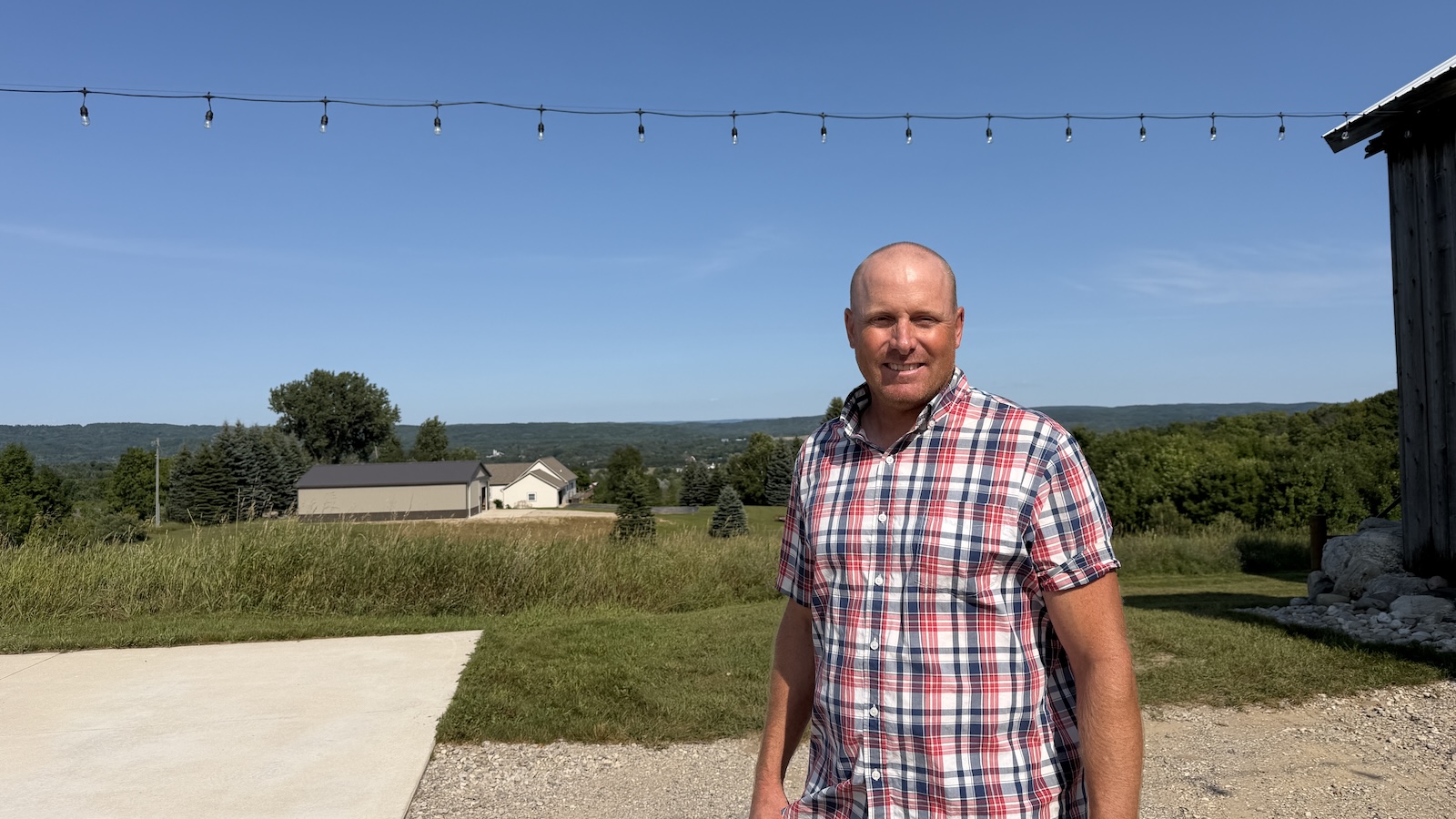
John Boyer on his farm outside East Jordan, Michigan.
Vivian La / Grist
For Boyer, the best way to protect his farmland was to restrict future development on it by entering into what’s called a conservation easement. He still owns the property, but he sold the future development rights of his 131 acres to the Little Traverse Conservancy, a nonprofit that acquires and protects land. The organization holds those rights even if Boyer transfers land to his kids or decides to sell to another owner down the line.
An easement can be a hard decision for farmers because land is typically their greatest asset, something that can pay for retirement or a college fund, said Joe Graham, chief financial and operating officer for the Little Traverse Conservancy.
“We’re offering them another alternative,” Graham said. **“**We’re offering a way to capture some of the equity and the value they have in that land without having to sell it and see it leave their ownership.”
Of the conservancy’s 30,000 acres protected in easements across five counties in northern Michigan and its Upper Peninsula, about 6,000 acres are farmland. Graham has seen interest in conservation easements growing among small farming communities.
Read Next
Georgia is losing farmland fast. Is a state conservation fund enough to save it?
But easements still have their challenges, he said. Conservancies pay landowners for a portion of the overall land value, and selling the development rights earns the landowner less revenue than outright selling the land. As land values rise in rural northern Michigan, the conservancy doesn’t see many farmers purely motivated by financial return entering into such agreements.
“There can be a question of timing: ‘Is this the right thing to do? What might we be foregoing later?’” Graham said.
Boyer wants to prevent his land from being divided up down the line and sold in smaller parcels “to make a quick buck.” Once an acre is converted for built developments like houses or commercial buildings, it typically doesn’t return to farmland.
“Then suddenly a productive farm field or ground is gone, and it’s gone for generations,” Boyer said. “It’s gone forever.”
Rebecca Carlson, a cherry and apple grower who runs Overlook Orchards in Northport, a village at the tip of Michigan’s Leelanau Peninsula on Lake Michigan, also sees land division as a future threat to the farmland in her county. Aging farmers might split up land among multiple kids, leaving a patchwork of ownership that “breaks up multigenerational farms,” Carlson said, especially as younger people in the area choose not to go into the business.
She’s a fourth-generation farmer who married into another multigenerational farming family. She and her husband have grown the original farm from about 200 acres to 1,300 acres over eightyears. To expand, the couple bought nearby land, but they also lease some parcels, mostly from family farmers who don’t have a younger generation to take over.
“In order to be successful in farming, in some cases, it’s one of those, ‘Go big or go home,’ with the climate of farming today,” Carlson said.
In Michigan, about 39 percent of agricultural land is leased, according to the 2022 USDA census, a number that mirrors the national average.
Leases keep farmland in production for the duration of the contract — most of Carlson’s leases are for 30 years. She pays annual fees that vary based on factors like location or crop productivity. Those fees can be significantly cheaper than owning farmland outright, because Carlson isn’t responsible for property taxes or other costs like insurance for infrastructure.
“It’s a great way to maintain your … farm and grow your farm,” she said. “They don’t make land anymore.”
Leasing does have some limitations. A 2026 MSU survey of Michigan farmers found high lease rates and locating land that matches their needs were the top concerns for those looking to lease. Farmers either have a “crop in mind but no ground, or they had the ground, but in some cases they weren’t sure what they could raise on it,” LaPorte with MSUExtension said.
It’s not just about land, either. LaPorte said the relationship between landowner and farmer is just as important.
“You might have a great relationship where you never worry a single day about whether or not you’re going to have the property a year from now,” LaPorte said. “Other cases, there’s some differences in terms of what each party’s goals are that kind of create that sense of anxiety about, ‘Is this going to last long-term?’”
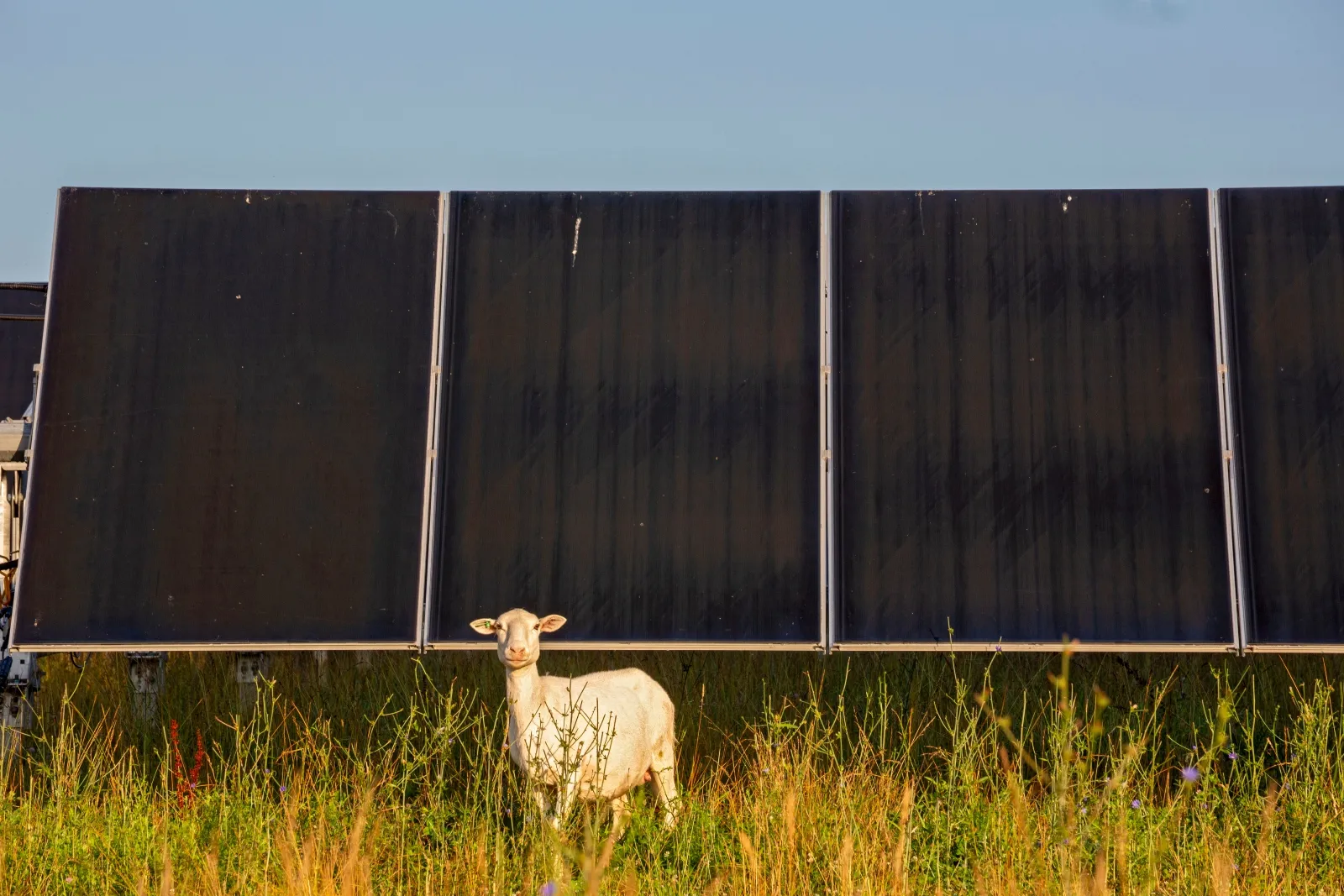
Sheep graze among solar panels on the Turkey Creek Solar Ranch in Lancaster, Kentucky, in July. The solar operator pays a local farmer to graze his sheep, to keep grass and weeds at manageable levels, and improve the soil, while also producing pasture-raised meat. Universal Images Group / Getty Images
In the Midwest, farmland values are holding steady or even increasing, even as farm incomes are down nationally. That’s because demand from industrial and residential development in the region is high, said Howard Halderman, president and CEO of Halderman Companies, a farm real estate and management agency working primarily in Indiana, Michigan, and Ohio.
Halderman said high farmland values come from tax-deferred exchanges, which allow landowners to defer capital gains taxes when they sell highly appreciated land and use those proceeds to buy other property.
“That’s where a lot of your farmland value gets support. Are there other buyers out there that keep a floor under it?” he said. “If you’re looking to buy farmland, that might be frustrating. However, if you’re a farmer that owns a lot of farmland and you like to keep your asset values on your balance sheet higher, it’s a good thing.”
As the state pushes for a cleaner grid to combat the effects of climate change, favorable policies are also attracting renewable energy developers to farming communities, where they’re eyeing land for wind turbines, battery storage facilities, and solar panels.
“From a landowner’s perspective, they’ve got bills to pay the same as a farmer, and they’re looking at situations of, ‘Where can I get the most value?’” LaPorte said. “And if they struggle to find an interested farm, they might be willing to go into some of these long-term agreements that you see into wind turbines, solar.”
In Michigan, solar takes up a small share — 0.09 percent — of USDA prime farmland. Like in the rest of the U.S., it’s less than the acreage that’s been converted to suburban development or recreational uses like golf courses, according to the trade group Solar Energy Industries Association.
Still, local opposition remains fierce. Earlier this year in Wexford County, on the northern end of Michigan’s Lower Peninsula, early plans from a renewable energy developer to build solar panels on nearly 1,500 acres of farmland sparked concerns about encroaching development on productive fields and the long-term impact on the ground.
Michigan researchers are hoping to address those concerns by looking at ways that solar panels and farming can coexist, a practice known as agrivoltaics. Solar panels can shade livestock or crops, and leases with renewable energy developers can be a way for farmers to offset declining farm incomes, said Charles Gould, a bioenergy educator with MSU Extension.
It doesn’t necessarily have to be a choice between producing power or food, he said.
“If we can do both on the same acre of land, why wouldn’t we?” Gould said. “We want to preserve the family farm. This is a very powerful tool.”
This story was originally published by Grist with the headline As family farms decline and the climate heats up, farmers weigh what to do with their land on Sep 4, 2026.
From Grist via This RSS Feed.