

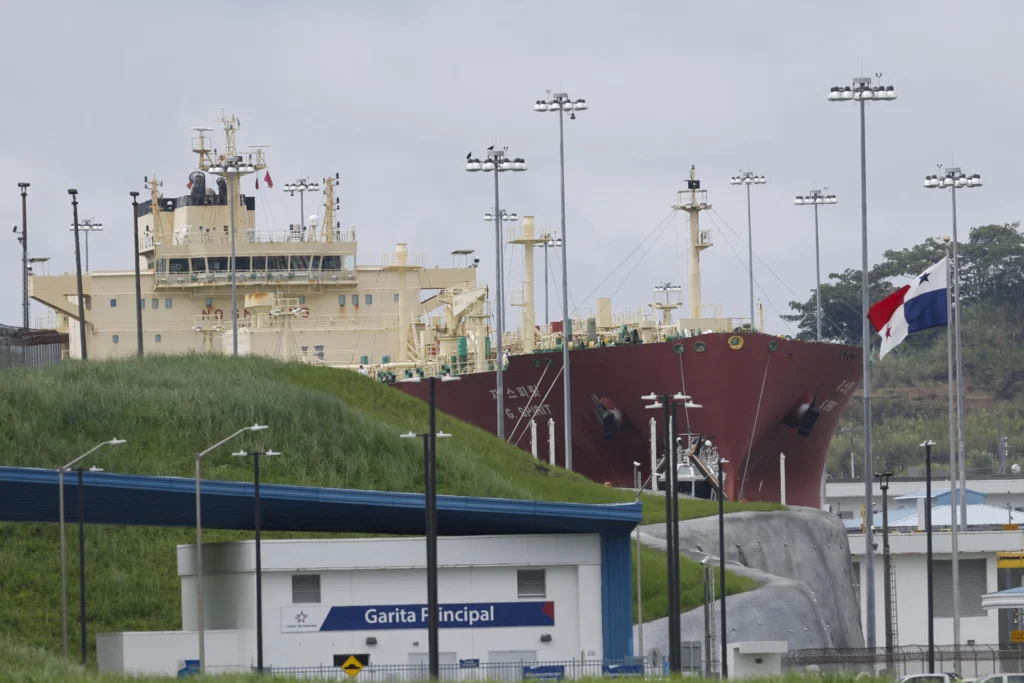
The Panama Canal Authority has implemented its first transit restriction of 2026 due to severe drought, reducing daily crossings to 34 ships from the usual 36.
The measure aims to conserve water resources in the artificial lakes Gatún and Alhajuela, which supply the interoceanic route and provide potable water to more than half of Panama’s population.
The drought, exacerbated by the El Niño phenomenon, has resulted in a 34% deficit in rainfall over the past months.
RELATED: El Niño: 95% Risk of a Historic Climate Threat in Latin America
This water shortage has led to a significant increase in the cost of transit for ships, with recent auctions for priority passage reaching multimillion-dollar figures.
The reduction in transits through the Panamax and Neopanamax locks is part of a progressive adjustment plan to manage the water levels in the lakes. Official projections indicate that the draft limit will continue to decrease progressively until the summer season due to the persistence of dry conditions.
The Panama Canal will cut daily vessel transits to 34 from Thursday, down from 40, due to low water levels.
The cap drops to 32 on September 15. The Hormuz crisis is pushing more shipping through the canal. What impact will the new restrictions have?
https://t.co/c2DdhkRXAB pic.twitter.com/hr26CzoCvx
— Al Jazeera English (@AJEnglish) September 3, 2026
The operational strain has exponentially increased the auctions for reserve quotas for ships arriving without prior planning. In recent days, the extraordinary transit costs have reached multimillion-dollar figures for the largest vessels seeking to avoid delays in cargo delivery.
This high demand for passages through the Panama Canal is partly due to the diversion of energy ships transporting liquefied gas from Western Asian routes to the Asian market. Hydrocarbon transport companies are using the Central American route to ensure compliance with international delivery times amid disruptions in other global routes.
The Panama Canal Authority will maintain constant monitoring of lake levels to adjust water-saving measures in the coming months. Meteorological projections suggest that operational restrictions will extend until early 2027 to prevent a greater paralysis in global commerce.
Cuando el clima cambia, cada decisión cuenta. Ante el fenómeno de El Niño, cuidar el agua se vuelve una responsabilidad compartida. Usarla de manera consciente también es prepararnos para lo que viene. Cuidemos nuestra agua. Juntos subimos el nivel. pic.twitter.com/rHbvGk8lqY
— Canal de Panamá (@canaldepanama) August 24, 2026
Text reads: “When the weather changes, every decision counts. In the face of the El Niño phenomenon, caring for water becomes a shared responsibility. To use it consciously is also to prepare for what comes. Let’s take care of our water. Together we rise the level.”
From teleSUR English via This RSS Feed.