

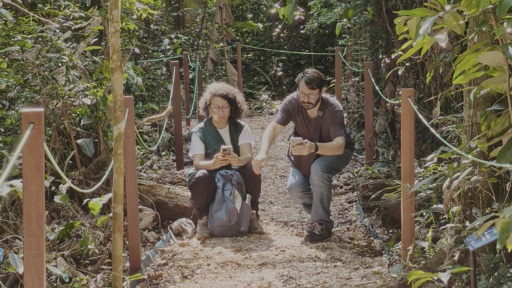
A few tree species are key to restoring biodiversity and carbon storage in deforested areas of the Brazilian Amazon, suggests an article published in June in Global Change Biology. Researchers examined 102 plots under natural regeneration in four municipalities in Pará state — Bragantina, Marabá, Paragominas and Santarém — and concluded that a range of 15 to 25 species accounted for nearly half of the trees present and half of the plots’ carbon stocks. Among these species are the embaúba (Cecropia palmata), the tatapiririca (Tapirira guianensis), the ingá-vermelho (Inga alba), and the araticum-bravo (Annona exsucca). This relatively short list of hyperdominant species could “guide assisted restoration and enrichment strategies” in the Amazon, the researchers said, and help Brazil meet the goal of restoring 12 million hectares (30 million acres) of forests by 2030, an area roughly the size of North Korea. “These areas are already restoring [ecological] services and biodiversity,” Fernando Elias, a researcher in Pará’s Emílio Goeldi Museum and the coordinator of the study, told Mongabay. “That is why it is so important to understand how these forests behave.” According to Elias, the Brazilian Amazon has more than 140,000 square kilometers (around 57,000 square miles) of regrowing forests in areas previously deforested, known as secondary forests. In many cases, these lands have been abandoned after being used for cattle ranching. Most of it has the potential to recover naturally, without the need to plant a single seed. Close monitoring, however, is necessary to control fires, cattle ranching and land…This article was originally published on Mongabay
From Conservation news via This RSS Feed.