

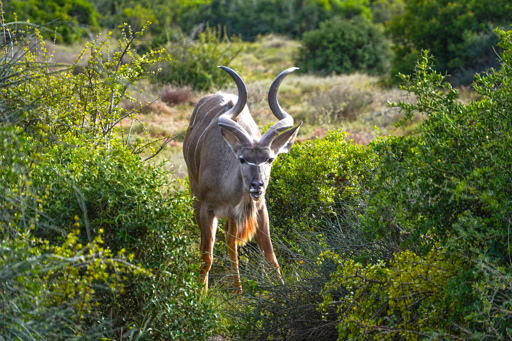
This is the third article in Mongabay’s three-part investigation of spekboom-led ecosystem restoration in South Africa. This is part of an award-winning collaboration between independent science writer Leonie Joubert, the Stellenbosch University School for Climate Studies, and the Henry Nxumalo Foundation which supports investigative journalism in Africa. Read parts one and two. GQEBERHA, South Africa — Browsed. Heavily browsed. Knackered. This farm camp is well on the knackered side of the degradation scale, threadbare after decades of heavy livestock pressure. But the single shrub at Nick Hamp-Adam’s feet may help change that. It just needs a second chance. This young spekboom plant (Portulacaria afra) is more stocky shrub than rooted cutting. It’s had more time than usual in the nursery to bulk up ahead of being released into the wild. But for the moment, it’s stricken on its side, roots exposed. Hamp-Adams, general manager for Return to Thicket, one of the smaller restoration projects in this nook of South Africa’s Eastern Cape province, is about to set things right. He sinks to his knees, finds a hand-sized stone and begins reopening the original planting hole. “Kudu, most likely …” His breath is metered by his efforts with the digging tool. “… came through …” Strike. “… grabbed it …” Strike. “… probably wasn’t planted deep enough.” Strike. He’s gentle when he rights the plant, taking care as he tamps the soil around its roots. Tough plants, generally. Don’t need much coddling. Except during planting. Treat them like babies during planting.…This article was originally published on Mongabay
From Conservation news via This RSS Feed.