

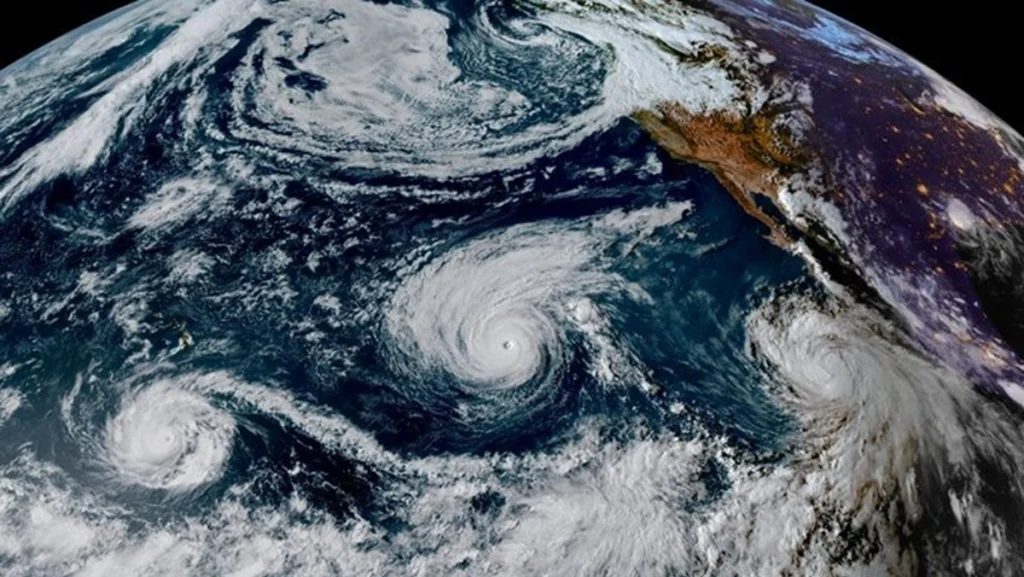
The event will continue until February 2027, the World Meteorological Organization warned.
On Thursday, the World Meteorological Organization (WMO) confirmed that El Niño is set to intensify into a very strong event in the coming months, bringing risks of floods, drought, and extreme heat.
RELATED:
Ecuador Declares Nationwide Red Alert As El Niño Conditions Evolve
Fueled by exceptionally warm ocean conditions across the tropical Pacific, El Niño is likely to peak towards the end of this year. The likelihood that the event will persist through to February 2027 is “nearly 100 percent,” the WMO said.
“El Niño is being supersized before our eyes. Sea surface temperatures are rising, temperatures keep climbing, and the world is in the danger zone of extreme weather,” United Nations Secretary Antonio Guterres warned.
On the current trajectory, El Niño “may be stronger than anything since our monitoring began, literally off the charts we have used for the past four decades,” WMO Secretary Celeste Saulo said, adding that the WMO called on all countries to closely monitor the evolution of the event and respond appropriately.
EL NIÑO JUST ENTERED THE DANGER ZONE.
The WMO says El Niño is set to become VERY STRONG — with a near 100% probability it persists through February 2027.
Niño 3.4:
• May–July: +1.5°C
• July: +2.0°C
• Late July–mid Aug: +2.2°C to +2.6°C
Subsurface Pacific… pic.twitter.com/26Y3KltR3c
— Gaurav kochar (@gaurav_kochar) September 3, 2026
“We are already seeing disruption and devastation from droughts and floods, and we expect these impacts to increase as El Niño intensifies. This exceptional El Niño demands exceptional preparation and response,” he pointed out.
El Niño is a natural climate phenomenon characterized by the warming of sea surface temperatures in the central and eastern equatorial Pacific. It typically occurs every two to seven years and lasts about nine to 12 months. Its effects on global temperatures are often most pronounced in the year following its formation.
The WMO noted that a very strong El Niño event increases the likelihood of major changes in rainfall, temperatures and atmospheric circulation across many parts of the world.
However, its impacts can vary according to location and season, and can be modified by other climate drivers, including conditions in the Indian and Atlantic Oceans.
teleSUR/ JF
Source: Xinhua
From teleSUR English via This RSS Feed.