

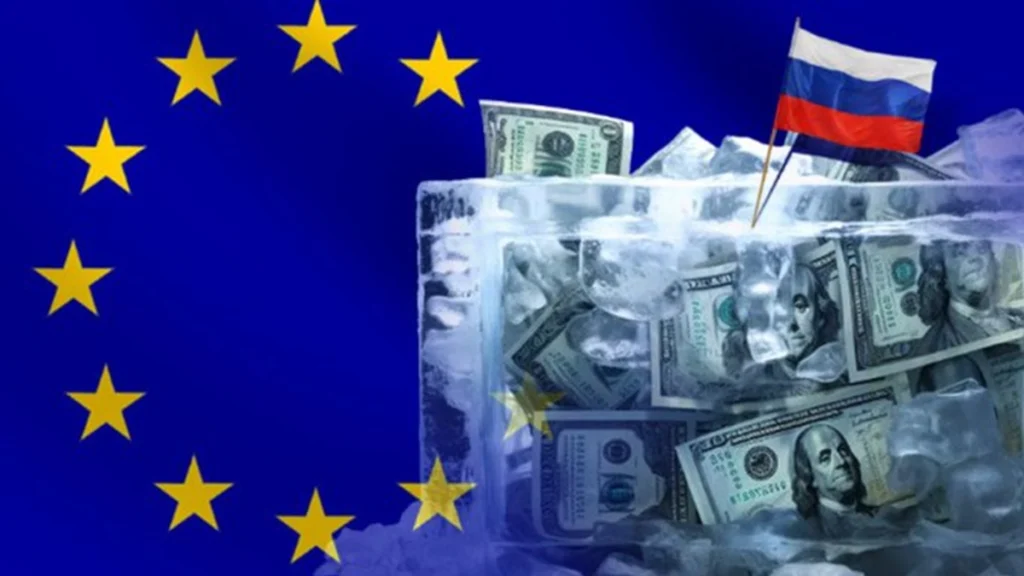
Currently, around 210 billion euros in Russian central bank assets are immobilized in European territory.
On Wednesday, Belgian Deputy Prime Minister and Foreign Minister Maxime Prevot confirmed that several European states have renewed efforts to use frozen Russian assets.
RELATED:
Russia Summons German Charge D’affaires Over Drone Accusations
Last week, Poland, the Netherlands, Spain, and Sweden sent a letter to the European Commission, calling on it to explore new ways of using frozen assets of the Central Bank of Russia to support Ukraine.
Belgium’s position on the issue has remained unchanged for a year, Prevot said, adding that the grounds for its opposition remained valid. He warned that using the assets through a mechanism amounting to confiscation would entail significant risks.
According to the EU, around 210 billion euros (US$243.36 billion) in Russian central bank assets are currently immobilized in the bloc, the vast majority of them held by Euroclear, a Brussels-based international central securities depository.
Over 200 billion euros in Russian state assets are frozen in the #EU. Sweden, Poland, Spain and the Netherlands want #Brussels to revisit how that money can support #Ukraine. The question is simple: should Europe pay for Russia’s destruction, or should #Russia? pic.twitter.com/vwzEjR2tQj
— Volunteer Info (@volunteerinform) September 3, 2026
Belgium has repeatedly stressed that adequate legal and financial safeguards must be in place before the assets can be put to any further use.
Meanwhile, on Wednesday, the EU High Representative for Foreign Affairs and Security Policy, Kaja Kallas, and the European Commission President, Ursula von der Leyen, announced that the European Union is preparing a new round of sanctions against Russia.
The announcement was justified as part of a response to an alleged “escalation of hybrid attacks” in EU territory, including the discovery of a drone carrying explosives at an airport in the German city of Leipzig, according to European officials.
teleSUR/ JF
Sources: Xinhua – EFE
From teleSUR English via This RSS Feed.