

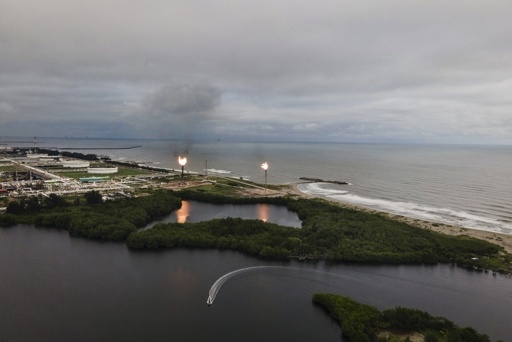
Environmental organizations have raised concerns that a recent partnership between the state petrochemical companies of Brazil and Mexico will commit both nations to decades of fossil fuel production, increase the risk of oil spills in the Gulf of Mexico, and displace coastal communities with industrial expansion. On June 23, Brazil’s Petrobras and Mexico’s Pemex announced a two-year memorandum of understanding (MoU) outlining their collaboration. The document itself was not published, but in a short press release, the companies describe cooperating to “increase production in deepwater” and “mature fields … in the Gulf of Mexico”. The agreement also refers to ancillary fossil fuel products such as fertilizers, biofuels and carbon capture, according to the release. Mexico extracts the majority of its fossil fuels from the southern Gulf of Mexico, but has seen production declining in recent decades. Although the partnership is aimed to increase the country’s energy sovereignty, energy researchers and environmentalists say questions remain about the terms of the deal and its repercussions. “This is an effort from the Mexican administration to increase oil barrels, but at what cost,” Renata Terrazas, vice president, Mexico, of marine environmental group Oceana, said to Mongabay over video call. “Right now we’re just guessing. There’s no transparency about what this actually means, and that’s one of the things that we fear the most.” The partnership comes after Pemex suffered two major safety incidents this spring. In February, an exploratory natural gas well near Las Choapas, Veracruz, exploded and continued to release smoke and gas…This article was originally published on Mongabay
From Conservation news via This RSS Feed.