

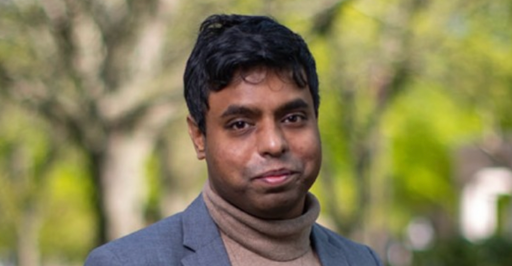
Janine Jackson interviewed Brown University School of Public Health’s Abdullah Shihipar about Medicare for All for the August 28, 2026, episode of CounterSpin*. This is a lightly edited transcript.*
https://media.blubrry.com/counterspin/content.blubrry.com/counterspin/CounterSpin260828Shihipar.mp3
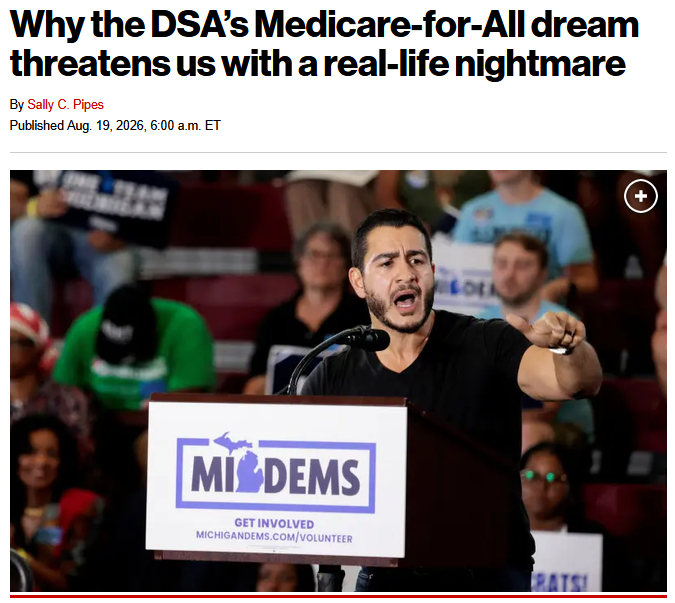
New York Post (8/19/26)
Janine Jackson: From “‘Our System Is in Dire Straits’: Progressive Democrats Hold Medicare-for-All Hearing” to “Why the DSA’s Medicare-for-All Dream Threatens Us With a Real-Life Nightmare,” from “Universal Health Coverage Could Save $1 Trillion and 114,000 Lives Every Year, Yale Study Projects,” to “Socialist Chic and the ‘Medicare-for-All’ Sham,” headlines are telling us a range of stories about the proposal called Medicare for All.
Much of it, like Forbes magazine saying “Medicare-for-All Is a Brand, Not a Plan,” is familiar capitalist scaremongering. And some is a similarly familiar brand of shushing: Let’s ask for less, because if we say what we really want, they’ll come for us.
A recent article by our guest says, yes, “Any attempt to expand healthcare or protect gains will be met with organized political resistance, so why not go for the moon?” The moon, in this case, is millions of people in this nominally wealthy industrialized country not having to choose between seeing the doctor and making rent.
Abdullah Shihipar is a public health researcher and writer. He leads Narrative Projects and Policy Impact Initiatives at the People, Place and Health Collective at the Brown University School of Public Health. His article, co-authored with Brandon Marshall, titled “Medicare for All Is Making a Comeback,” appeared recently in the New Republic. He joins us now by phone from Providence, Rhode Island. Welcome to CounterSpin, Abdullah Shihipar.
Abdullah Shihipar: Thank you for having me. Happy to be here.
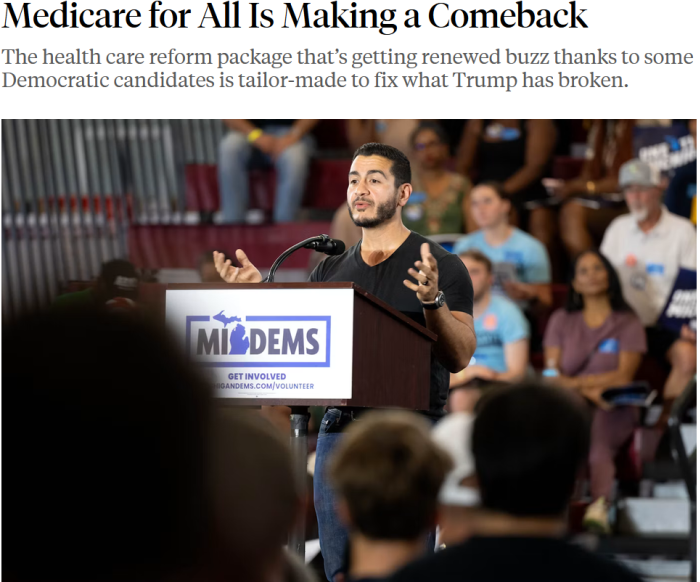
New Republic (8/24/26)
JJ: I would like to ask you to start, as your article does, with the problem, with the current landscape, which only a fantasist would say is not a problem. If people being able to get healthcare is the goal, then this country is failing, and that’s not really contestable, unless your paycheck depends on contesting it. But if you could just start with where we’re at in terms of healthcare in this country, and where we might be next year, right?
AS: Yeah. Where we’re at in terms of healthcare is not good. So healthcare in the United States has always been a sort of tenuous situation. People are quite familiar with the hassles of, even if you are insured, dealing with insurance companies, getting authorization, dealing with copays and deductibles, and navigating all of that.
And for the last 10, 15 years, American healthcare policy has really been a bit of a wave, a bit of a seesaw. We expand healthcare for a bunch of people, and then it’s being taken away. And so we saw a big expansion during the Affordable Care Act, which crucially expanded Medicaid for millions of people, created the marketplace, and was a good step in the right direction for broader healthcare reform, in getting us to universal coverage eventually.
But now we are in a contraction. During the Covid-19 pandemic, we saw modifications being made for continuous enrollment of Medicaid, when the government just continued to keep people enrolled in Medicaid. That in itself, because there were no longer onerous documentation requirements and people having to navigate bureaucracy, that in itself kept millions of people on care. And as soon as three years later, that was ended, we saw millions of people be disenrolled, even if some of them were temporarily disenrolled.
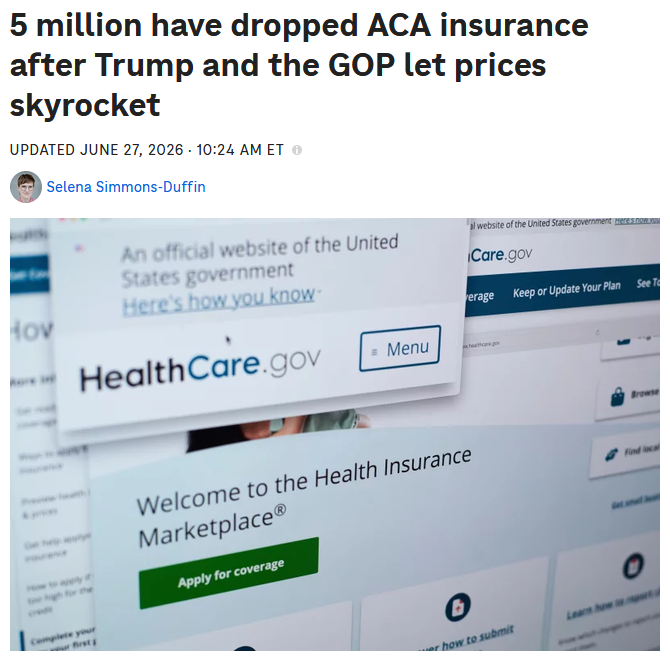
NPR (6/27/26)
So now we are in what I would say is a serious contraction period. Already, because the enhanced tax credits for the marketplace plans, because those tax credits expired, we saw millions of people just drop health insurance. And now, because of the changes to Medicaid that are occurring under the One Big Beautiful Bill Act, we will see millions of people again drop off of Medicaid, starting next year.
And this is for two reasons. First of all, I should say that 92% of the people who are currently on Medicaid should still be eligible for Medicaid. There are some people who are, writ large, being removed, and these are certain classifications of immigrants.
But apart from that, a lot of people in theory should be able to maintain their Medicaid. But the government has introduced a variety of new paperwork requirements. The amount of times you have to renew your Medicaid, they have taken that from annual to six months. They have introduced work requirements.
All of these bureaucratic hurdles are designed to kick people off care and produce savings for the government. And so, as a result, people who are totally eligible for care under the law, that very same law is what is kicking them off, because they cannot meet those paperwork requirements. So we are going to see millions of people lose care next year, and we are in a very dire situation.
JJ: I really appreciate your separating the reality versus the paper. Personally, I hate having to say “One Big Beautiful Act,” that’s just crazy, but I just want to underscore that you’re saying 92% of people will still be eligible for Medicaid coverage, except that’s not where life is lived; being eligible on paper is not going to translate to people actually getting care, because of these paperwork and bureaucratic hurdles that are being presented, right?
AS: Yeah, absolutely. Let’s say, for instance, a lot of people who receive Medicaid currently, some people who receive Medicaid don’t have any fixed address. They’re unhoused, so they receive their mail at a homeless shelter or whatever. And so, if your state is really proactive about wanting to keep you enrolled in Medicaid, so I can say, for instance, Rhode Island is undergoing a very proactive campaign to make sure that people are enrolled. They’re doing things like making sure that enrollments can be automatic as much as possible, so they can match data sources on their backend, so the barriers for people are as low as possible.
But that depends on if you’re in a state that actually is invested in keeping people on Medicaid. Some states are not invested in doing that. And so if you’re in a state like Nebraska or Oklahoma or Texas, which hasn’t even expanded Medicaid, you’re going to navigate that process alone. So if the government asks you for certain paperwork to keep you enrolled, and you miss that notice, or you don’t happen to have that documentation, your care can be interrupted. And that can have dramatic consequences if you depend on that care for routine things like wound care, or you are getting treatment for cancer or something like that.
SFGate (1/2/26)
And so, as we know, even if folks don’t deal with Medicaid, folks who aren’t on Medicaid may not realize, “Oh, well, because of the potential fraud or something like that, and these people are getting free healthcare, isn’t it a good thing to make sure that the right people are getting the right care, and what’s wrong with more paperwork?”
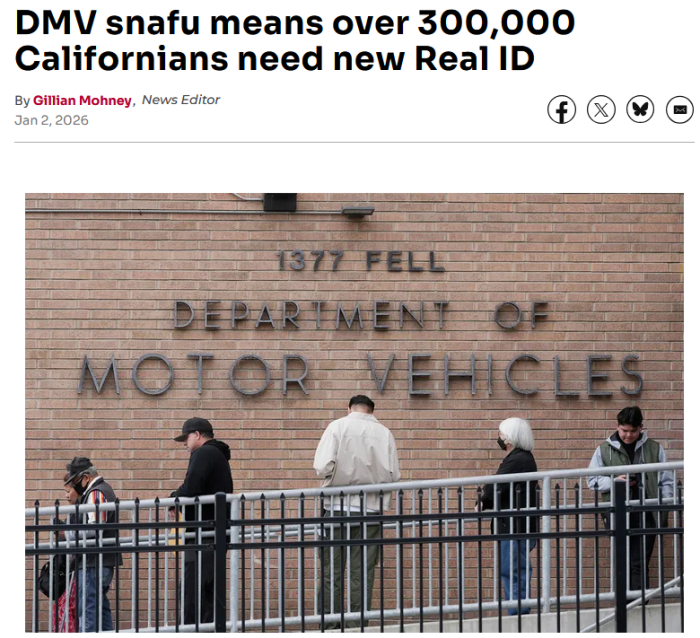
And what I would say to people is, remember the SNAFU around the Real ID, around anyone going to the DMV, for instance, even just getting your driver’s license renewed, everyone hates that process. Everyone hates waiting in line, going to the DMV with what you think are the right documents, but then finding out, actually, you’re missing this form or that form, whatever. I would ask people to think about government bureaucracy, and how annoying it is to navigate in your own lives.
Now imagine that for Medicaid, and the consequences being way more severe when you don’t have that right document. It’s potentially weeks or months of missed care, if you get back on it, and potentially losing healthcare totally. We saw it in Arizona with the SNAP changes: States that are under-resourced, which do not have enough staff, do not have enough case managers, when someone gets kicked off, the wait to get back on can be months or weeks, and those have dramatic consequences.
JJ: Absolutely. Well, there’s a certain admixture of the coverage, and I will say that a lot of it is op-eds and letters to the editor—that’s still media making choices—but a lot of it is, “Yeah, you may have heard that other countries do this better, but actually they don’t.”
The US has worse life expectancy, higher infant mortality than other “industrialized countries.” And yet somehow these outcomes, this experience, is presented as the “price of freedom,” or the “price of choice.” What could we learn from other countries? And it’s not that they’re perfect, but, geez Louise, we could learn something.
AS: I think if you ask any American on the street, if they feel “free” or if they have “choice” when they’re navigating their healthcare, most of them would say no, right? It’s the illusion of choice. Oftentimes they don’t have the choice of doctor, because if your insurance company happens to include the doctor that you like seeing in network, great. Otherwise, I guess you have to find a new doctor. And if your employer decides to change the insurance company that you’re working with, well then it’s too bad if you’ve been seeing that doctor for so long. If you need that procedure and then a doctor can’t get the authorization for it, well, that sucks, I guess.
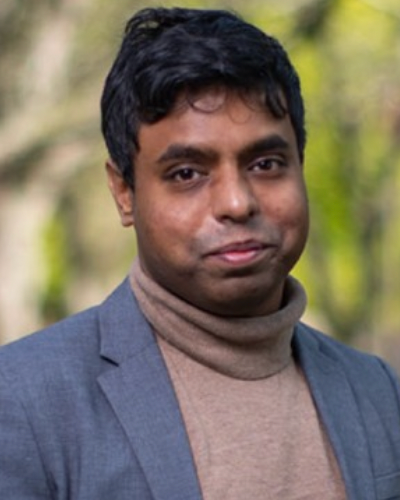
Abdullah Shihipar: “Complexity is lack of freedom, is lack of choice, and it’s increased costs; that all translates to worse health outcomes. Because if healthcare is something that is difficult to access, then you’re not going to get preventative care, even if you have health insurance.”
There’s this sort of, yes, we have healthcare on the private market, but that doesn’t necessarily lead to more consumer choice, and it doesn’t even lead to this sort of idea of freedom. What has happened is we have created a healthcare system that is dramatically more expensive than any other country’s in terms of healthcare, in part because we have introduced so many bureaucratic hurdles that are designed to deny people care, to increase the profit margin. And that creates incentives for folks to get as much money as they can out of the system, when different parts of the system are trying to squeeze as much money as they can out of it. And also, all those barriers and paperwork and bureaucracy, that also adds additional costs.
So complexity is lack of freedom, is lack of choice, and it’s increased costs; that all translates to worse health outcomes. Because if healthcare is something that is difficult to access, then you’re not going to get preventative care, even if you have health insurance. If going to the doctor and navigating insurance is just something you don’t want to deal with, you’re not going to go and seek a preventative specialist. You’re not going to go and get routine screenings. And so, let’s say, that’s a cancer that could have been caught earlier—which is not only good for the person, but it’s also reduced costs on the healthcare system—that cancer is then caught way too late, which then leads to worse outcomes for that person, potentially death, and also higher costs in the healthcare system.
So every other country has figured this out, or most of our industrialized counterparts have figured this out. The systems are not perfect, but they’ve made systems that are just far less complex, far less hassle, and lead to way better outcomes for individuals.
JJ: I want to say, caregivers want to give care. I feel like we have and we will have more people who are sick and vulnerable, and the person in front of them is someone who is constrained by rules they didn’t write. And then they’re going to fight each other, while the people making the rules and making the bank are not even in the room.
AS: Absolutely.
JJ: It infuriates me.
And the idea that—I’ve seen the expression “pie in the sky” used—the idea that you should do anything other than spend a week filling out your mother’s paperwork to make sure that she can get her cancer care, or to prove that just because she has cancer is she actually not able to work, which is a new thing that’s being introduced. The conversation to me is so disappointing, I guess is where I’ll land, disheartening because there are better options.
AS: For sure, for sure.
JJ: So what would you say about media and the public conversation?
AS: Yeah. What I would say is that Medicare for All is a system that can be built. It is a system that was built elsewhere. It can absolutely be built in the United States. The laws can be written, the technical regulations can be drawn up. That can all be done, just like it can be done when Medicaid is constricted, just like it can be done when we take away healthcare. We can definitely build systems that are thought out, and account for complexities and account for all the things that naysayers will point out. Those systems can be built, and there are technical explanations as to how we will get there.
Yale School of Public Health (8/13/26)
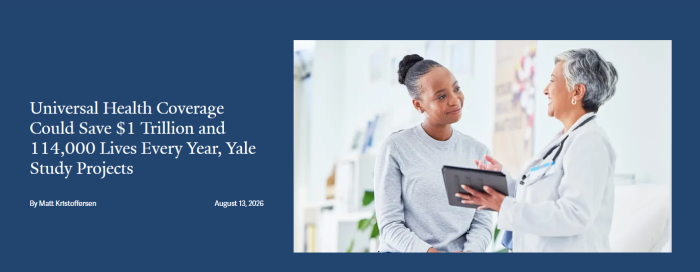
Just like what the Yale study showed, there’s also cost effectiveness, that yes, Medicare for All will cost us this much, but then there are all these savings that we have to take into consideration. I think most of us, including employers, would rather have a tax, paying a few hundred dollars more every year in taxes, as opposed to having the sort of monthly premiums that we have to pay. Or if you’re an employee, that you have to pay for your employee’s health insurance. Taking all of those cost savings that would be had with Medicare for All offsets any potential costs that people are raising as a barrier, which we don’t raise when we are passing tax cuts, for instance, or when we are expanding defense budgets. There is always money to pay for things. It’s whether or not something is a priority.
Data for Progress (11/26/25)
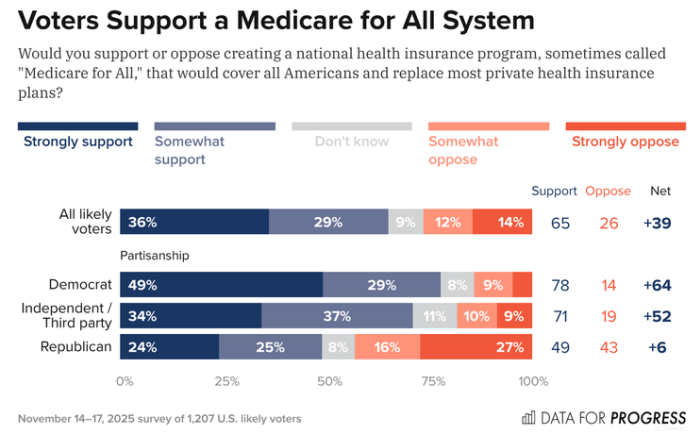
The people who are well intended, people who want to expand, who are invested in expanding healthcare in the US, for so long, we’ve sort of adopted and internalized this idea of Medicare for All as this sort of pie-in-the-sky idea, even though every other European, and our neighbors to the north in Canada, do it. But because we’ve internalized this idea of it being unserious to begin with, we put forward proposals that are good reform proposals to expand healthcare as a serious proposal, as the one that we’re willing to fight for. And I think that’s a real mistake. I think those proposals should be seen as compromises on the way to Medicare for All, but we should always continue to propose Medicare for All as a serious policy option, and one that the polling shows that most Americans are ready for.
And I hope whenever the next administration comes, that this is something that will be taken seriously and will be pushed, not only by individuals who advocate for the public, but I hope that medical associations, public health associations, finally see this as a real, needed policy solution, in part to deal with the damage that we will see from these Medicaid cuts.
JJ: Absolutely. I just want to ask you a final question. I know that you work on overdose, and what’s been dubbed the “opioid crisis.” And I think to drill it down for some folks, could you speak to what the effects of Medicare for All are in terms of that set of issues, which in media, they’re on two separate pages. They’re going to have a story about opioid overdoses on one page, and then the story about Medicare for All is going to be on a different policy page. And if we don’t connect those dots, then we’re not getting the story. And I just wonder, final thoughts from you: How do you connect these things?
Stat (6/12/25)
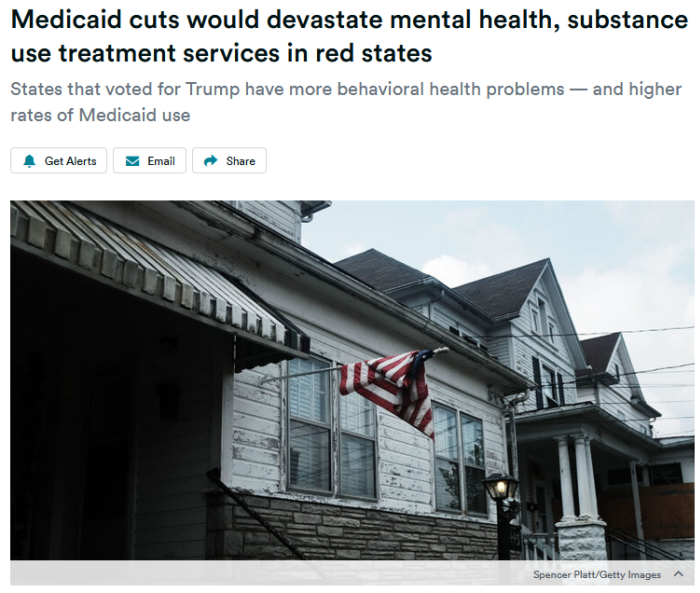
AS: Well, for one thing, it’s so much easier for people to get treatment. Medicaid, for instance, right now, pays for over 90% of people receiving substance use treatment at a methadone clinic, which these Medicaid cuts are seriously threatening—and I could go down that rabbit hole—but having Medicare for All just removes the healthcare system as one barrier to worry about when it comes to dealing with precarious populations, and for caring with people who may have a substance-use issue or an addiction issue, whatever. It’s just one less thing that you have to worry about.
And then, obviously, there are a whole host of things in society that affect people’s health, like housing and employment and what have you. But having a universal healthcare system ensures that they can get the treatment that they need, that you don’t have to worry about cost or anything like that, or access when people get the treatment. They will go and seek preventative treatment, so issues can be caught a lot quicker.
If it’s an injury, potentially, and someone is avoiding care because they’re worried about the cost of dealing with that, so avoiding care, then that could potentially then lead to them self-medicating and buying drugs off the street, which could then lead to an overdose. If you just take the cost element out of it, and someone isn’t worried about cost and goes to the doctor, gets treated, and then their pain goes away, or the issue is managed, that interrupts a pathway that’s potentially deadly to buying drugs off the street and overdosing because you can’t take the pain.
And there’s so many more examples where we can interrupt which outcomes just by providing preventative care earlier. And why aren’t people getting preventative care? It’s because of the cost.
So Medicare for All, it’s not a panacea for all of our social problems, but right now lack of healthcare access makes our social problems worse. This would not only alleviate some of that, but it would also just be one less thing to worry about.
JJ: All right. We’ll end on that note. We’ve been speaking with Abdullah Shihipar, public health researcher and writer. His piece, co-authored with Brandon Marshall, appeared recently in the New Republic. Abdullah Shihipar, thank you so much for joining us this week on CounterSpin.
AS: Thanks for having me.
From FAIR via This RSS Feed.