

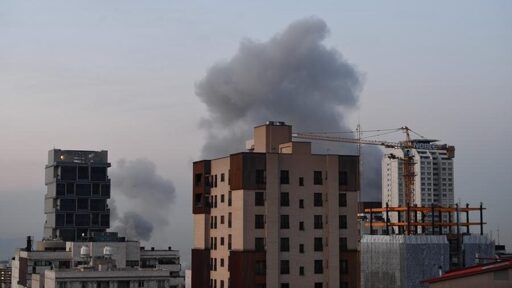

At least 18 Iranians, including children, were killed and around 80 others were injured in the latest US airstrikes in southern Iran’s Khuzestan, Bushehr, Baluchestan, and Hormozgan provinces late on the night of Tuesday, September 1, IRNA reported.
Several Iranian media reports claimed one of the sites attacked on Tuesday night was a wedding celebration in Sirik in the southern Hormozgan province. At least four people, including a four years old child, were killed and around 70 others were wounded in that attack.
Meanwhile, Iran rejected the claims made by the US Central Command that the overnight attacks only targeted locations belonging to Islamic Revolutionary Guard Corps (IRGC), in retaliation to attacks on commercial ships and US servicemen in the region.
On Wednesday morning, Iran retaliated by striking US military outposts in Bahrain, Jordan, Kuwait, and Iraq with drones and missiles. The IRGC also claimed it downed yet another US MQ-9 drone.
The IRGC said its retaliatory attacks on Kuwait have “killed a number of enemy elements.”
The latest round of military strikes and counter strikes in the over six-month-long war on Iran began on Sunday when US forces carried out attacks on Iran’s Larak island on Sunday, killing scores of Iranians.
The military strikes on Larak Island were carried out after a weeks-long halt in military hostilities. The Trump administration in the US had previously claimed it would prioritize economically isolating Iran instead of carrying out further attacks.
After Sunday’s strikes, US CENTCOM said the attacks were part of its efforts to prevent Iran from laying fresh mines in the Strait of Hormuz in the future.
Iran ridiculed Washington’s claims, calling them a “fantasy” and retaliated by striking US military bases in Jordan and the UAE.
In a statement issued late Tuesday night, the IRGC claimed that the “desperate” attacks carried out by the US would only tighten its grip on the Strait of Hormuz instead of weakening it in any way.
The IRGC also claimed two oil tankers hit a mine and caught fire while trying to use the US-backed route to cross the Strait of Hormuz on Wednesday. At least two crew members were reported killed in the incident.
The cycle of US atrocities
Responding to the latest attacks on civilians in Iran, Esmail Baghaei, official spokesperson of its foreign ministry called it a completion of the “catalogue of atrocities” carried out by the US since the attack on school children in Minab on the first day of the war.
More than 160 school children were killed in the strike in Minab on February 28. In a similar strike on the same day, 21 civilians were killed in Lamerd sports hall. Following the global outrage, the US initially denied the attacks and later dismissed them as “human errors,” refusing to hold those responsible accountable.
The targeting of civilians during war is a war crime.
“More dangerous than the bomb itself is the normalization of bombing; and more dangerous than silence is the conversion of silence into legitimacy,” Baghaei said, vowing a strong response to the attacks.
Mohammad Bagher Ghalibaf, speaker of the Iranian parliament and head of its delegation negotiating peace terms, condemned the latest attacks on civilians.
“If a power acts like Satan, picks targets like Satan, and kills like Satan, it’s Satan,” Ghalibaf wrote in a post on X, comparing attacks on the wedding celebration with attacks in Minab and Lamerd sports hall.
Over 3,500 Iranians, including its former Supreme Leader Ayatollah Seyyed Ali Khamenei and several other top military and political leaders, have been killed in the war started by the US and Israel.
The war has also heavily impacted the global economy. The Strait of Hormuz, a major route for global trade in energy, has been blocked for months now causing a rise in global energy prices.
International efforts to end the war have failed after the US refused to adhere to the norms of the peace agreement, called the Memorandum of Understanding, signed in June.
Iran has recently reiterated that if the US agrees to adhere to all the provisions of the MoU the situation in the region would be resolved, which may include the normalization of shipping through the Strait of Hormuz.
From BT News via This RSS Feed.