

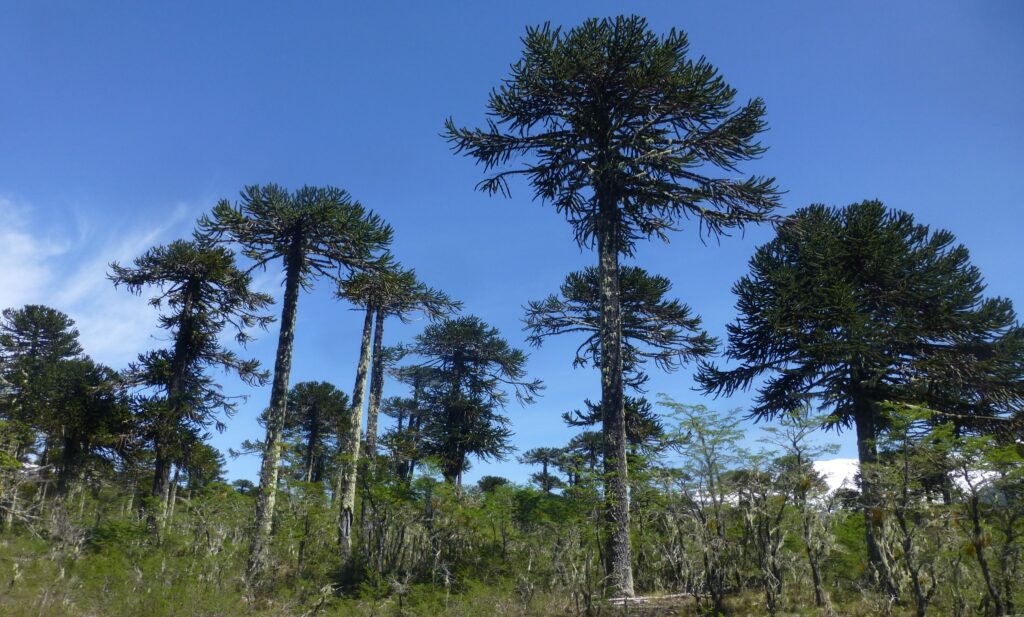
Exotic conifers show a greater capacity for recovery after periods of drought, thanks to more abundant carbon reserves.
A new study led by the Institute of Ecology and Biodiversity (IEB) in Chile challenges the traditional view that plants cannot grow quickly and tolerate water stress simultaneously.
RELATED:
Chile Declares Catastrophe State in Tocopilla After Mudslides
The research, published in Nature magazine, shows that exotic pines in the Southern Hemisphere grow up to four times faster than their northern counterparts and exhibit greater resistance and resilience to drought.
The team cautions that these results should not be interpreted as a general solution to the climate crisis, as the introduction of exotic species can have negative impacts on local biodiversity.
Some of the conifers studied, such as the Chilean pine, are invasive species in regions like Aysen, where their spread beyond plantations poses a conservation challenge. The analysis included the growth rings of nine species from the Pinaceae family, across 192 sites in the Americas, Europe, Africa, and Oceania.
First flowers emerge in Chile’s Atacama as ‘Desierto Florido’ season begins pic.twitter.com/Yk4EjvjOyb
— WPLG Local 10 News (@WPLGLocal10) August 27, 2026
Exotic conifers showed a greater capacity for recovery after periods of drought, thanks to more abundant carbon reserves, known as non-structural carbohydrates, which are essential for coping with water stress.
The carbon isotope signature revealed that these species maintain photosynthesis under adverse conditions, which explains their advantage in the face of water scarcity.
One possible reason for this behavior is the absence of natural enemies in the Southern Hemisphere, which favors their growth and carbon balance without external disturbances.
#FromTheSouth News Bits | Environmental activists and students marched across Chile to protest policy rollbacks by far-right President Jose Antonio Kast and to demand stronger protections for native wildlife. pic.twitter.com/4gWfUqBg7i
— teleSUR English (@telesurenglish) August 25, 2026
teleSUR: JP
Source: EFE
From teleSUR English via This RSS Feed.