

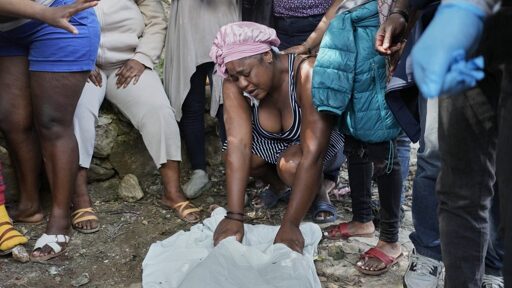

The violence in Haiti shows no signs of stopping. On August 24, 47 people were massacred in Kenscoff, near the capital, Port-au-Prince, according to the UN. Of the 47 people killed, 22 were murdered in a local church. According to authorities, the massacre took place amid a gang war for control of territories in the Caribbean nation.
María Fernanda Arocha, an analyst with Armed Conflict Location & Event Data (ACLED), told El País: “The latest attack in Kenscoff is yet another example of how gangs resort to large-scale killings of civilians to subdue the local population and impose their authority. The raid also serves as a stark reminder of the challenges the government faces in consolidating the results of its operations against the gangs.”
UN Secretary-General António Guterres condemned the incident: “I condemn the latest gang attack on Kenscoff, a commune on the outskirts of Port-au-Prince, in Haiti, that reportedly killed at least 47 people, including 22 who were reportedly executed in a church compound where they had found shelter.”
Guterres added: “The relentless gang attacks on communities & the loss of civilian lives underscore the alarming security conditions in Haiti & reinforce the urgent need to intensify Haitian & international security efforts to counter gangs. I reiterate my call for Haitian authorities to ensure that those responsible for such attacks are held accountable.”
For several years now, a coalition of international forces, under a UN mandate, has been operating in the Caribbean country to help address a security crisis that seems to only be escalating, despite the promises made by foreign armed forces. According to some reports, only 1,000 of the coalition’s 5,000 troops are currently deployed, leading many to call for the plan to be carried out with all available troops.
The leader who allegedly ordered the attack is also said to have ordered the kidnapping of nearly 60 people to prevent a strong response from the authorities, threatening to execute the hostages if his gang is attacked. According to reports, 13 people have already been released.
In this regard, Pope Leo XIV demanded the immediate release of the hostages and called on the authorities to take action to halt the spiral of violence in Haiti: “I ask that the hostages be released without delay, and I issue a concerned appeal to all those in positions of responsibility to make concrete efforts to ensure the safety of the population and put an end to all forms of violence.”
For his part, Haitian Prime Minister Alix Didier Fils-Aimé demanded a “firm response” from his soldiers and police: “The Kenscoff massacre will not go unpunished.” He also stated that specific operations are underway to dismantle criminal networks and regain control of the occupied areas, although these promises have yet to be fulfilled.
Indeed, the severe security and economic crisis in Haiti, a country of 12 million people, shows no signs of abating. According to the UN, in 2026 alone, more than 3,000 people have been killed and more than 1,400 injuries have been reported. Added to this is the plight of more than 1 million internally displaced persons who have been forced to flee as a result of the violence.
According to the International Committee of the Red Cross (ICRC), half the country requires some form of urgent humanitarian aid, which highlights the extremely severe scale of an internal war that shows no signs of abating. Only 30% of health care facilities are operational; the rest are unable to operate due to a lack of staff and security to care for patients.
Added to this is sexual violence, which disproportionately affects women and girls: 700 people have reported some form of sexual violence. In addition, more than 100 cases of kidnapping have been reported, although several NGOs claim that the actual numbers are much higher – it’s just that not all cases are reported due to a lack of security guarantees.
From BT News via This RSS Feed.