

As many of you know, I co-facilitate a spiritual and emotional support group for activists alongside my dear friend Tanuja Jagernauth. Over the past few years, Tanuja and I have spoken with a number of people who were interested in starting their own version of the project, which we call Understory. We had those conversations often enough that we decided to create a toolkit, so that people who believe these spaces should exist might be better equipped to create their own.
What follows is an excerpt from the toolkit, which Tanuja and I co-created, along with a link to download the full toolkit. Please feel free to print it, use it, and share it as you see fit.
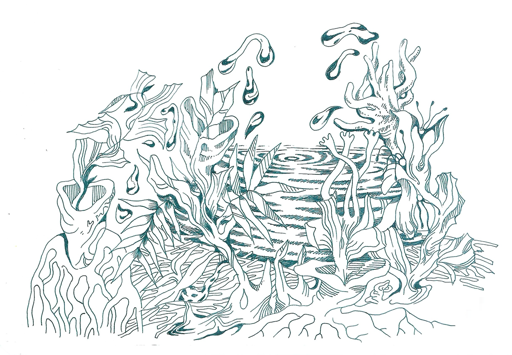
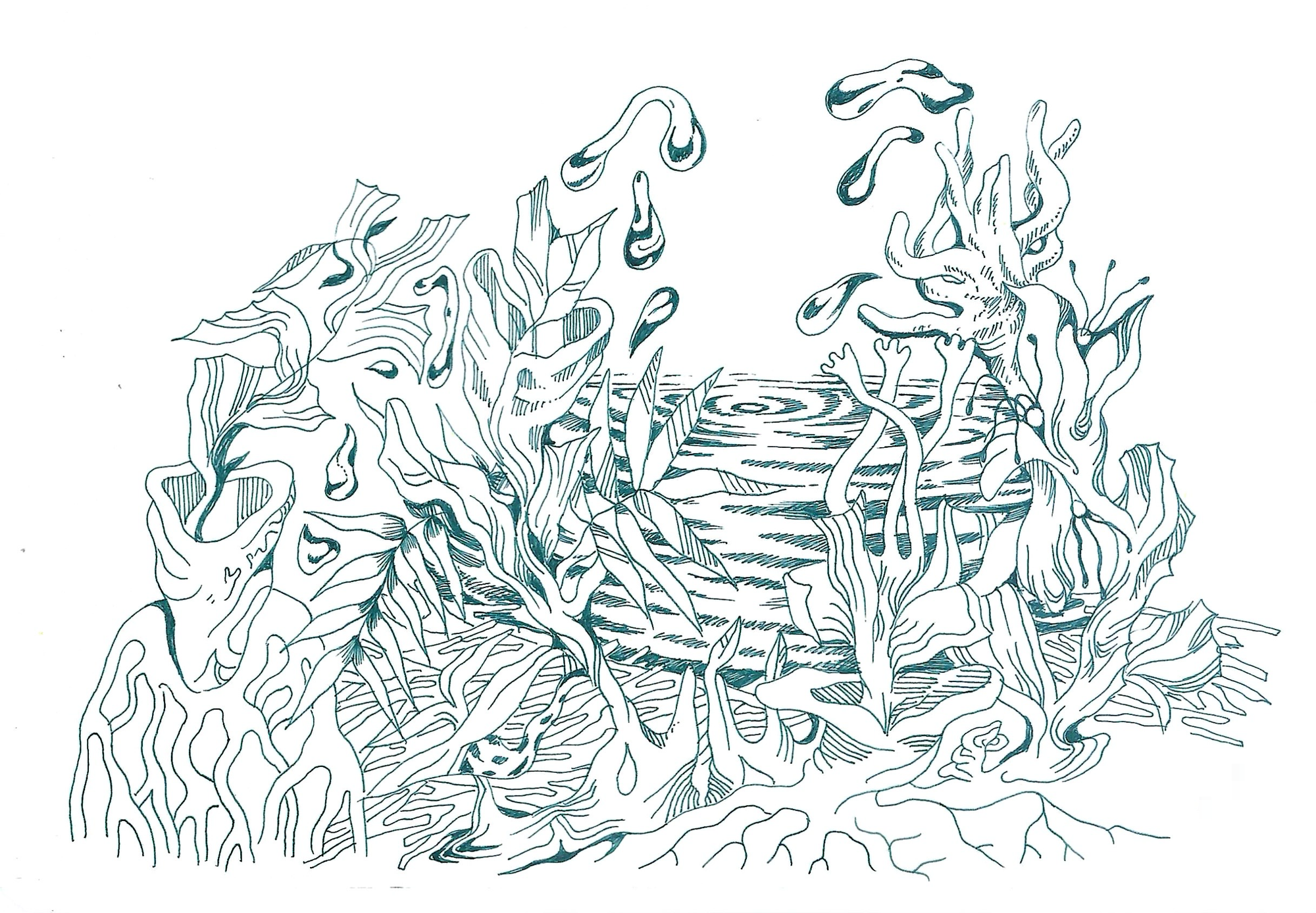
I want to extend my deepest thanks to Tanuja for all of the labor she put into this toolkit. Much like Understory itself, it would not exist without her vision and tenacity. I would also like to thank Geo, who spontaneously sketched the cover art while listening to Tanuja and me discuss Understory and subsequently gifted it to us, and Kara Rodriguez, who designed the toolkit’s layout and created the internal artwork.
Tanuja and I will discuss the toolkit with our friend Atena Danner on Monday at Socialism 2026, where a limited number of print copies will also be available.
[Understory Toolkit
Full Version
Understory Toolkit.pdf
3 MB
download-circle](https://organizingmythoughts.org/content/files/2026/09/Understory-Toolkit.pdf “Download”)
Excerpt:
Why Understory
Understory began with a need we recognized in ourselves, in the people we organized alongside, and in the movements we were part of.
Tanuja approached Kelly with the idea of creating a space where people who shared our political commitments could explore words and ideas that felt sacred to them. Kelly was eager to join her. We were both living with the pressures of organizing during difficult political times, and we saw those pressures affecting people throughout our communities.
Organizers were carrying grief, fear, exhaustion, anger, and moral injury. People were responding to violence and crisis, navigating conflict, supporting others, and trying to remain politically engaged without becoming emotionally flattened or overwhelmed. We felt these strains in our own lives, and we witnessed them in the lives of friends, collaborators, and fellow organizers.
We wanted to create a place where we could process some of those realities together. We also wanted room to reflect on the ideas, relationships, ecosystems, traditions, and ways of being that gave our work meaning. We wanted to ask what people with our politics considered sacred—not in the sense of religious doctrine, but in the sense of what we felt called to honor, protect, practice, and keep alive.
Most movement spaces are built to accomplish necessary work. In productivity-based spaces, people gather to develop strategy, share information, make decisions, organize actions, respond to emergencies, and distribute tasks.
But people do not enter those rooms as political actors alone. We bring our fears, histories, hopes, disappointments, longings, and need for belonging with us.
Understory was an effort to create space for those dimensions of movement life without turning them into another set of tasks. We wanted a place where people did not have to translate every feeling into usefulness, arrive with a solution, or convert every reflection into an action item.
We hoped the group might offer some of the social and spiritual nourishment people sometimes experience in close-knit communities: gathering regularly, reflecting on shared words and ideas, witnessing one another’s lives, and feeling connected to something larger than oneself. Understory would not be a religious project, but it would make room for questions of meaning, purpose, interdependence, and what we hold sacred.
We were not interested in creating a large audience around emotionally resonant experiences while leaving relationships shallow. We wanted relationality to develop slowly, through familiarity, consistency, and trust.
For that reason, invitations to Understory were relationship-based. People did not join because they encountered a public announcement or happened upon the group online. Someone already connected to the group had to know and invite them. This did not guarantee trust or eliminate the possibility of harm, but it gave the group a relational foundation. New participants arrived through an existing thread of connection and accountability.
We began with an intention, not a finished model. Understory was an experiment, and we built much of it in flight. We developed practices, invited feedback, adjusted our structure, and learned from the people who gathered with us. Over time, the group became an important source of connection and support for a core community of activists and organizers.
A Need Our Movements Often Leave Unaddressed
Unmet emotional and spiritual needs have long constrained our movements.
People join social movements with political commitments and concrete objectives, but many of us are also, consciously or not, searching for belonging, connection, healing, and a sense of purpose.
The society we live in has isolated us and trained us to view one another as threats, competitors, audiences, or temporary servants. Many of us have been socially deskilled. We have had few opportunities to learn how to remain in meaningful relationship through difference, discomfort, uncertainty, and disappointment. We also carry wounds and forms of trauma that shape how we relate to ourselves and one another.
Movement spaces can feel like a possible answer to that isolation. People may arrive hoping they have finally found a place where their struggle will be understood, their humanity recognized, and their sensitivities accommodated. But movements are made up of people who have also been shaped and wounded by uncaring systems. Groups are rarely prepared to care for one another in all the ways a struggling person might hope, and no group can meet every need its members carry.
Even people who arrive with grounded expectations, practiced communication skills, and strong organizing abilities can be weighed down by grief, exhaustion, disappointment, and the ongoing violence that activists refuse to turn away from.
Under that pressure, it becomes harder to navigate differences constructively. People can become depleted, dysregulated, isolated, or mired in conflicts that might otherwise have been resolved or avoided.
Productivity-driven spaces cannot meet the full range of emotional and spiritual needs that arise in this work. But when those needs are ignored, they do not disappear. They surface in burnout, disconnection, avoidable ruptures, and our inability to support one another through periods of intense struggle.
People need places where they do not have to translate every feeling into usefulness.
They need spaces where grief, doubt, longing, exhaustion, joy, and moral complexity can be held with care. They need opportunities to consider what sustains them and what kind of people they want to become in the course of trying to change the world. They need spaces where reflection, connection, beauty, and collective grounding are treated as part of what makes sustained struggle possible.
For too long, masculinist ideas about strength, discipline, and what is supposedly too indulgent or “too woo” to merit time have prevented many groups from creating the spaces they need for care and renewal. Reflection and restoration are often treated as luxuries that can wait until the urgent work is finished—as though the urgent work will ever be finished.
We conceived of Understory as a place where people could wade through their feelings and experiences together. It would be a place to discuss words and ideas that felt sacred to us, to sit with questions that did not have immediate answers, and to practice holding one another in our humanity during profoundly dehumanizing times.
What Understory Became
In a forest, the word understory refers to the shade-tolerant trees, plants, ferns, mosses, and fungi that grow beneath the tree canopy. It is a space of essential growth, decomposition, and renewal that often goes unseen.
In Understory’s virtual gatherings, we hoped to make room for the growth, breakdown, and rejuvenation of the ideas that fueled our organizing and sustained us as people. We wanted participants to experience grounding, connection, beauty, rest, and reflection. We wanted people to have a place where they did not have to perform competence, productivity, optimism, or emotional resolution.
Like the forest, we wanted Understory to be a nourishing space people could return to as they were able and as they needed. Participants could attend with cameras on or off. They could speak, write in the chat, listen quietly, journal, move around, or simply be present. They did not have to attend every gathering to belong. They did not have to disclose personal experiences or perform vulnerability to prove that they were participating.
Trust developed slowly. It accumulated through consistency, shared reflection, grief, laughter, awkwardness, experimentation, and repeated experiences of being welcomed back. Over time, Understory became an important support system for a core group of activists and organizers.
The significance of that foundation became especially clear to those of us in Chicago during the traumatizing months of Operation Midway Blitz. Our communities were under sustained attack, and some group participants were engaged in urgent, high-stakes activism. A number of healing and support spaces emerged during that period, and all of those spaces were important. People needed every opportunity available to grieve, connect, regulate, and recover. For us, however, there was something especially meaningful about having a group in which trust and shared vulnerability had already been established. Understory did not have to become a space of care in response to the crisis. The relationships and practices were already there.
We had spent time learning how to be together. Participants had encountered one another’s tenderness, humor, fear, uncertainty, grief, and conviction. We had developed shared language and a familiar rhythm. When words were inadequate, we could simply gather with people who understood something about what we were carrying.
Understory could not undo the violence people witnessed or experienced. It could not protect participants from exhaustion, grief, or trauma. But it offered a place where we did not have to face those realities alone.
That experience affirmed something we had come to believe deeply: infrastructure for care, belonging, and reflection cannot be constructed only after a crisis arrives.
Trust takes time. Vulnerability takes practice. When communities establish relationships and shared practices before an emergency, they create collective resources that people can draw upon when conditions become especially frightening or destabilizing.
Why This Toolkit
We created this toolkit for people who want to build emotional and spiritual support within an organization, across an organizing community, or among people of conscience seeking deeper forms of connection and collective grounding.
We are not suggesting that every group should reproduce Understory. The qualities that made our gatherings meaningful emerged from particular people, relationships, histories, commitments, and circumstances. A structure can be borrowed, but chemistry cannot. Practices can be adapted, but trust cannot be manufactured on command.
This is not a blueprint or a claim that one model will fit every community. It is a collection of reflections, practices, examples, and guiding questions drawn from our experience. We offer them in the hope that others will reshape and build upon what has been meaningful in our work.
The pages that follow describe the visible structure of an Understory gathering as well as some of the less visible work that makes such a space possible: clarifying purpose, making invitations, setting expectations, pacing intimacy, attending to access, sharing responsibility, responding to feedback, navigating conflict, and recognizing the limits of what a group and its facilitators can hold.
Your version may be virtual or in person, temporary or ongoing, connected to an existing organization or independent of one. It may draw upon different political, cultural, spiritual, artistic, or somatic traditions. It may develop practices we never imagined.
The goal is not to create an exact copy of Understory. It is to create a space appropriate to your people and your context: a place where participants can slow down, reflect, make meaning, and encounter one another with care; where no one has to make their grief useful; and where people can practice the kinds of relationships they hope will exist in a more just and loving world.
[Understory Toolkit
Full version
Understory Toolkit.pdf
3 MB
download-circle](https://organizingmythoughts.org/content/files/2026/09/Understory-Toolkit-1.pdf “Download”)
From Organizing My Thoughts via This RSS Feed.