

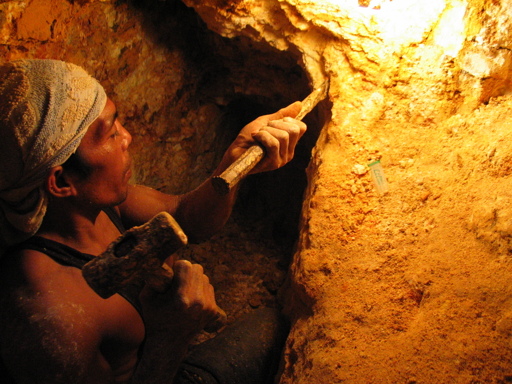
The Philippines is moving to accelerate critical-mineral development across millions of hectares of land, raising concerns that expanded mining and faster permitting could put pressure on forests, ancestral domains, and Indigenous communities’ ability to give or withhold consent. In an executive order signed on Aug. 18, President Ferdinand Marcos Jr. established a national framework for developing the country’s critical-minerals industry. The order identifies at least 9 million hectares (22 million acres) of prospective areas that could host mineral resources, and calls for policies that promote downstream processing, investment, and “responsible and sustainable mining practices.” Executive Order No. 122 directs the Department of Environment and Natural Resources (DENR), through its Mines and Geosciences Bureau, to implement a national exploration and mineral reservation program. It also orders mining applications streamlined through a virtual one-stop shop that will allow national and local permits and clearances to be processed simultaneously rather than sequentially. The Legal Rights and Natural Resources Center (LRC), an environmental and Indigenous rights legal group, says the policy could expose a much larger area to mineral exploration and development. The 9-million-hectare figure represents about 30% of the country’s land area, and is more than 11 times the 813,575 hectares (2.01 million acres) currently covered by approved mining projects, according to the LRC. EO 122, however, describes the 9 million hectares as prospective areas with potential mineral resources, rather than as approved mining projects. Rogelio Andrada II, a forestry professor and director of the Institute of Renewable Natural Resources at the University…This article was originally published on Mongabay
From Conservation news via This RSS Feed.