

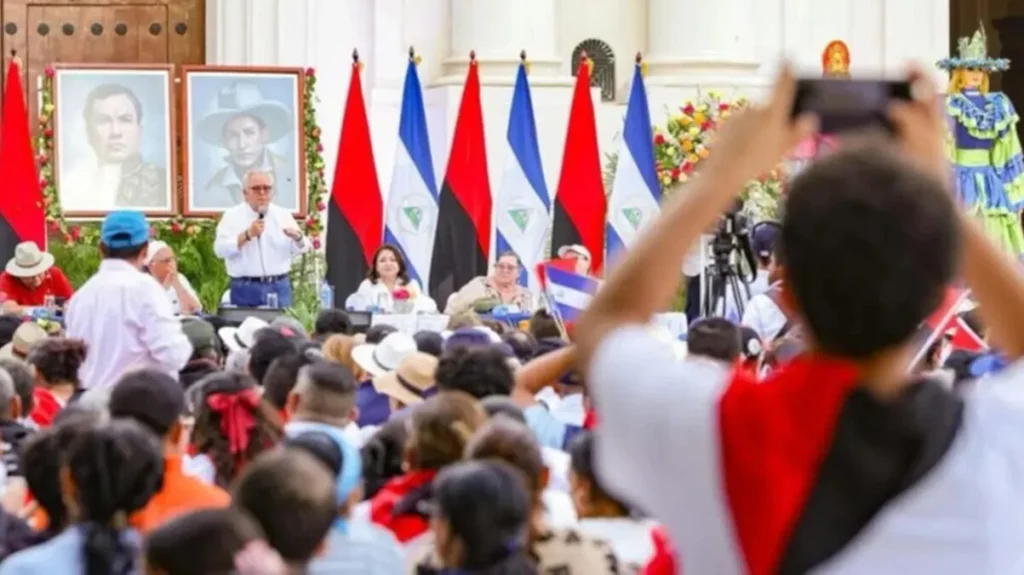
Amendments bar ‘traitors to the homeland’ from political organizations, electoral candidacies, and public office.
On Tuesday, Nicaragua’s National Assembly approved on first reading constitutional reforms that extend the presidential term to seven years and exclude “traitors to the homeland” from participating in elections.
RELATED:
Nicaragua Sends Its Condolences to China Following the Flash Floods
More specifically, the amendments establish that the following types of actors may not join any political organization, may not run for elected office, and may not hold public office:
— Those who lead or have led, financed, directly or indirectly participated in, or had any type of involvement with the planning, preparation or execution of an attempted coup or a coup.
— Those who commit or have committed acts that undermine Nicaragua’s independence, sovereignty, self-determination, security and peace.
— Those who promote foreign interference, call for military intervention or organize themselves with financing from abroad.
— Those who propose, manage, or support economic, commercial or financial blockades and sanctions against the State of Nicaragua, its institutions and its citizens.
— Those who violate or have violated the fundamental principles established in the Constitution.
Presidente de la Asamblea Nacional de Nicaragua realiza acto previo a aprobación de reformas constitucionales
El líder del ente legislativo nicaragüense, Gustavo Porras, depositó en la tumba donde descansan los restos del poeta universal Rubén Darío, en el interior de la… pic.twitter.com/ITpci3oNgm
— Sputnik Mundo (@SputnikMundo) September 2, 2026
The text reads, “The President of Nicaragua’s National Assembly held a ceremony prior to the approval of constitutional reforms. Gustavo Porras, leader of the Nicaraguan legislature, placed the first copy of the proposed amendments to the Constitution at the tomb of the renowned poet Ruben Dario, inside the Cathedral of Leon (northwest). These amendments are expected to be approved in the first legislative session. The Assembly president was accompanied by members of parliament present at the solemn session. Among the changes to the Nicaraguan Constitution are provisions to prevent foreign financing of electoral processes and to limit participation in such activities to those deemed traitors to the homeland.”
The constitutional reform also establishes that the term for elected positions will be seven years. This will apply to the co-presidents of the republic, lawmakers, judicial and electoral magistrates, the attorney general, the superintendent of banks, and the heads of the Army and Police.
The constitutional reforms must be ratified by the next legislature, which will begin Jan. 9, 2027. The amendments are intended to strengthen national sovereignty, prevent foreign interference in the country’s internal affairs, guarantee elections free from foreign pressure, and preserve social peace.
In that regard, for example, Article 12 establishes that no provision that entails a violation of “the independence, sovereignty, self-determination, security and peace of the Nicaraguan people” will have legal validity in the national territory.
Nicaraguan lawmakers also established that the presidential inauguration will take place Jan. 18 in tribute to poet Ruben Dario, who was born on that date in 1867.
The consultation on the reforms began July 28 with the participation of the Special Constitutional Commission, representatives of the Supreme Electoral Council and members of the Cabinet, who endorsed the changes after gathering opinions from various sectors of society.
teleSUR/ JF
Sources: EFE – El 19 Digital
From teleSUR English via This RSS Feed.