

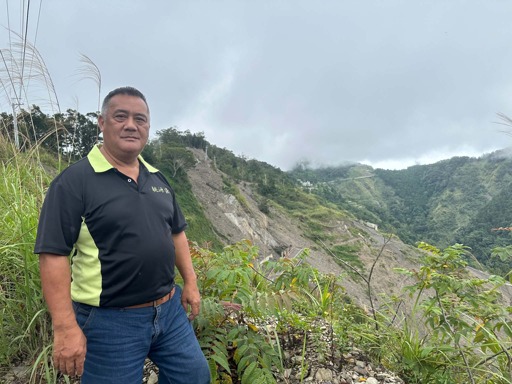
TENGJHIH HAMLET, Taiwan – Nestled high on a mountain slope in southern Taiwan, Tengjhih was a key settlement of the Bunun Indigenous people. Today, however, little remains but memories of the hamlet. Wild grass sprouts around abandoned houses. Stray dogs have made the empty streets their territory. The children’s toys and chairs scattered across the ground hint at a hurried departure. Bunun leader Dahu Ismahasan is visibly moved as he looks at what is left of his village. “When we were children, we played here. We were happy, innocent,” he says. But “now the village is destroyed,” says Dahu, who is president of the Bunun tribal council. Dahu and fellow villagers had to leave Tengjhih in the wake of Typhoon Morakot, which killed 755 people in 2009 across Taiwan. The deadliest storm in the island’s recorded history brought torrential rainfall, causing floods and landslides primarily in mountainous Indigenous territories. At the time, Indigenous peoples accounted for only 2.1% of Taiwan’s total population; yet in the aftermath of Morakot, around 70% of areas deemed unsafe by the government were located in Indigenous territories. View from the mountain road that leads to Tengjhih, a Bunun Indigenous settlement, in southern Taiwan on Aug. 6, 2026. Image by Aylin Ho for Mongabay. Nobody in Tengjhih died during Morakot, but the typhoon destroyed the only road leading to the hamlet. With Tengjhih declared a “high-risk zone”, authorities in 2009 began permanently resettling its 150 residents, mostly in surrounding lower-elevation areas like Kaohsiung, Taiwan’s third-largest city,…This article was originally published on Mongabay
From Conservation news via This RSS Feed.
I believe the dictator Chiang Kai-shek was infamous for persecuting and genociding the ethnic natives during the 1950s.