

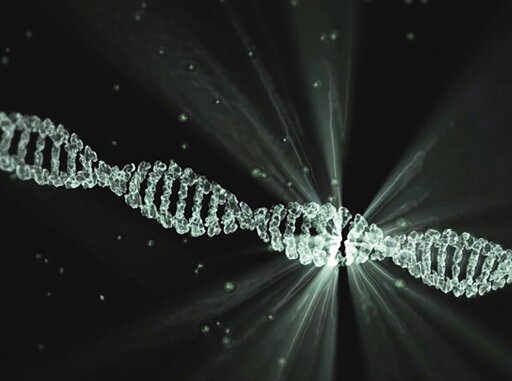
All known life on Earth uses the same genetic alphabet, consisting of four letters. Now, researchers at the University of California San Diego have demonstrated that one of biology’s most essential enzymes can accurately read and transcribe an expanded, eight-letter genetic alphabet. The findings provide important evidence that cells can process synthetic genetic information using their natural molecular machinery, advancing a long-standing goal in synthetic biology to expand the language of DNA. It could also allow scientists to custom-engineer biological systems that perform functions or produce compounds not found in nature.
From Biology News - Evolution, Cell theory, Gene theory, Microbiology, Biotechnology via This RSS Feed.
You must log in or # to comment.