

Caracas, September 1, 2026 (venezuelanalysis.com) – The Chinese government has called for its “legitimate rights and interests” in Venezuela to be protected following reports that joint ventures involving Chinese firms are set to be displaced by a US-backed corporation.
“China-Venezuela cooperation is protected by international law and the laws of both countries. China’s legitimate rights and interests in Venezuela must be guaranteed,” foreign ministry spokesman Guo Jiakun said in a press conference on Tuesday.
Guo added that the economic and trade relations between nations “should follow the principles of equality and mutual benefit.”
Beijing’s warning came in the wake of an announced US-Venezuela oil deal that Venezuelan Acting President Delcy Rodríguez termed “historic” and US President Donald Trump called “the biggest in history.”
Under the joint plan, Washington-backed North American Blue Energy Partners (NABEP) is set to receive long-term concessions to develop 17 oilfields, holding 65 billion barrels of proven crude reserves, in the Caribbean nation. The projects are split between light- and medium-crude fields in western Venezuela and extra-heavy crude ventures in the eastern Orinoco Oil Belt.
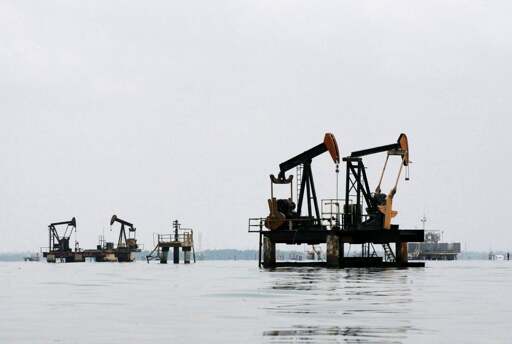
According to Reuters, five of the oilfields to be handed over to NABEP are joint initiatives with Chinese companies, including state-owned CNPC and Hong Kong-registered China Concord Petroleum. In 2025, China Concord installed a drill rig in Lake Maracaibo in what was the first major infrastructure investment in western Venezuela in many years.
Another project in the agreement is believed to be run by a joint venture between Venezuela’s state oil company PDVSA and a Russian enterprise.
NABEP is owned by Venezuelan oil mogul Alejandro Betancourt and has expanded its presence in the Venezuelan oil industry in recent years. Its current oil output is around 200,000 barrels per day (bpd). Betancourt has faced multiple international embezzlement and money laundering investigations but has never been formally charged, with US officials reportedly lobbying Swiss authorities not to bring criminal charges against the Venezuelan businessman.
In a statement posted on Monday, Betancourt said Venezuela is “blessed with an abundance of natural resources” that would be “unleash[ed] to the great benefit of both Venezuelans and Americans.”
The Trump White House published a “fact sheet” on Monday, claiming that the deal “secures US energy dominance for the next century.”
The administration stated that the Department of War’s Office of Strategic Capital (OSC) will receive a 35 percent stake in NABEP at no cost. The State Department will be given the right to purchase 20 percent of NABEP’s output at cost and hold the right of first refusal for the remaining 80 percent.
Washington will also have the final say on NABEP’s board of directors and the company will be subject to US laws and government audits. The document also pledged that the Betancourt-owned company will invest “up to $100 billion” in the oilfields.
The White House went on to explain that the concessions will conform to Venezuela’s reformed Hydrocarbon Law, which was “adopted with US support” and vastly expanded benefits for private corporations. Washington has exerted significant control over the Venezuelan oil industry since its January 3 military operation, issuing sanctions waivers for select companies while the US Treasury manages crude export revenues.
The Trump administration hailed NABEP’s takeover of oilfields previously run by Russian and Chinese companies as a triumph for the Monroe Doctrine, “ensuring American dominance in our hemisphere is never again questioned.”
The US factsheet insisted that the oil concessions will last 100 years, contradicting Rodríguez, who said the agreement is for 25 years. Venezuela’s acting president vowed that the accords would usher in a new era of “welfare and prosperity.”
According to Rodríguez, the initiative has a 1.5 million bpd target and Venezuela will collect an estimated US $19 per barrel extracted, a figure significantly below the benchmarks established under the prior hydrocarbon legislation enacted by former President Hugo Chávez.
The US-Venezuela deal has drawn widespread scrutiny over its lack of transparency and the unfavorable terms for Caracas, with popular movements rallying against “neocolonialism and imperialist attacks.”
For its part, the Venezuelan National Assembly approved a resolution on Tuesday endorsing the “binational energy accords.” The proposal was backed by the United Socialist Party (PSUV) and allies as well as some opposition deputies.
National Assembly President Jorge Rodríguez, the acting president’s brother, reiterated the government’s argument that “oil underground serves no purpose” and promised that crude production will reach “levels never seen before.”
US Energy Secretary Chris Wright landed in Venezuela on Tuesday night ahead of a scheduled press conference with Acting President Rodríguez on Wednesday. The Trump official, the Venezuelan government, and NABEP are expected to formally sign agreements at the ceremony.
Alongside the White House deal, several multinational corporations, including US-based Chevron and GE Vernova, India’s state-owned ONGC, and Italy’s Eni, are expected to ink contracts with Caracas in the coming days.
Some companies are slated to update existing agreements in accordance with reformed legislation, while others are set to enter into new deals in the South American country. According to Reuters, Chevron will expand its presence in the Orinoco Oil Belt while also securing access to light crude in Monagas State.
Edited by Lucas Koerner in Philadelphia, USA.
The post China Demands Respect for Venezuela Investments amid Oilfield Transfers to US-Controlled Operator appeared first on Venezuelanalysis.
From Venezuelanalysis via This RSS Feed.
Is it just me, or is China suddenly starting to take up more adversarial positions in the past 2 weeks than it has taken in the last 5 years?
