

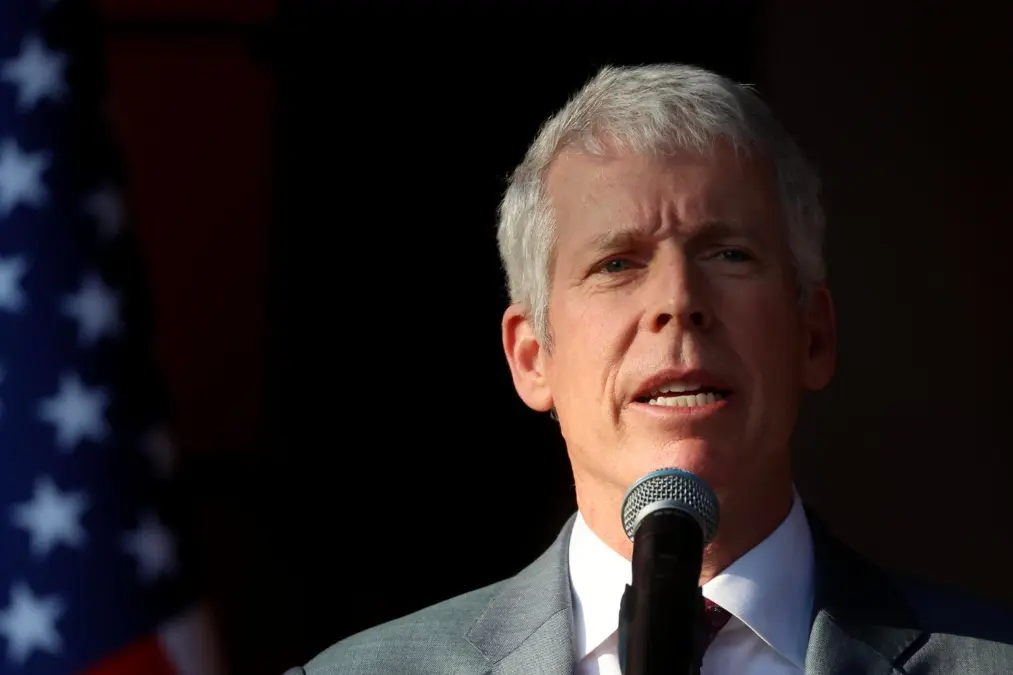
U.S. Energy Secretary Chris Wright arrived in Venezuela on Tuesday night to finalize a strategic energy agreement between the two governments, a 25-year project aimed at developing new fields and lifting production beyond 1.5 million barrels per day.
Wright’s visit follows an announcement days earlier in which both governments outlined the broad contours of the deal, including multimillion-dollar investment in field development, production growth, infrastructure construction, and the creation of thousands of jobs.
Wright landed at Simón Bolívar International Airport in Maiquetía, where Hydrocarbons Minister Paula Henao received him.
RELATED: Venezuela’s $209 Billion Energy Agreement With the U.S.
The project spans a quarter century and covers 17 strategic blocks. Acting President Rodríguez said the goal is to exceed 1.5 million barrels of daily output while contributing to the energy security of the hemisphere.
The fiscal terms are substantial. Using an estimated base price of $65 per barrel, the projections point to total revenues of up to $209.335 billion for the Venezuelan state. Nineteen dollars from every barrel sold would flow directly to the country.
Ver esta publicación en Instagram
Una publicación compartida de teleSUR English (@telesurenglish)
Venezuelan Acting President Delcy Rodríguez emphasized that Venezuela retains sovereignty and ownership over the hydrocarbon resources beneath its soil. She framed the agreement as a mechanism to convert that wealth into concrete prosperity, with better incomes, robust public services, health care, education, and road infrastructure.
Rodríguez presented them as proof that the agreement serves national development rather than foreign extraction, a point she underscored by insisting on Venezuelan control over the resources.
Just touched down in Venezuela.
President Trump’s energy diplomacy is delivering results—advancing new energy deals, opening the door for American companies, and strengthening energy security across our hemisphere.
American energy leadership is back thanks to @POTUS.
— Secretary Chris Wright (@SecretaryWright) September 2, 2026
Twenty-Five Year Plan
The deal’s structure reflects Venezuela’s broader offensive to raise crude production, forge new energy alliances, and diversify its hydrocarbon exports. The 17 blocks form the operational core of that push, with the 25-year horizon giving investors the stability required for large-scale capital deployment.
Wright’s arrival Tuesday coincided with a separate announcement from Chevron outlining plans to expand its operations in Venezuela. The two signals together suggest a widening reopening of the country’s oil sector to international participation.
The U.S. official had visited Venezuela in mid-February, an early indicator that energy diplomacy between Washington and Caracas was advancing despite longstanding political tensions. This week’s trip moves that dialogue from discussion to signature.
From teleSUR English via This RSS Feed.