

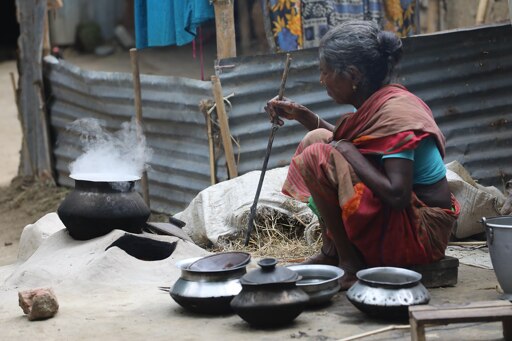
Burning biomass fuels like dry wood and rice husk for cooking can produce air pollution and contribute to toxic heavy metals buildup inside rural kitchens in Bangladesh, a new study finds. Md. Badiuzzaman Khan, an environmental science professor at Bangladesh Agricultural University and the study’s lead author, said the research addresses a gap in understanding indoor pollution in rural communities. “Local people use various kinds of fuels like cowdung, or branches of wood or agricultural byproducts like rice straw or jute sticks,” Khan said in an email to Mongabay. “Heavy metals may come to rice straw or jute sticks from the fertilizers used in the crop field. Heavy metals may also come from natural sources like soil.” For this study, researchers collected dust samples from the walls and ceilings of 63 households in Bangladesh’s Haor and Charland regions, which both heavily rely on biomass fuel. They also analyzed 11 composite samples of biomass fuels used for cooking and examined their elemental composition. The study ran from November 2022 to March 2023. Many low-income rural households use biomass, potentially exposing people to heavy metals and the health consequences associated with them. However, most pollution research in Bangladesh has largely focused on cities; little is known about rural exposure. The study found that the heavy metals in household dust likely come from both human activities, such as farming and burning fuel, and natural sources such as soil and sediments carried by floods. The types of metals found also differed between the two…This article was originally published on Mongabay
From Conservation news via This RSS Feed.