

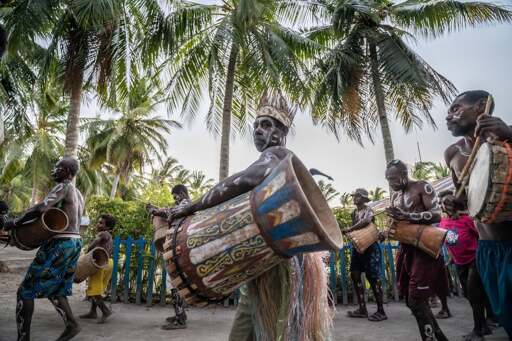
ARBOREK, Southwest Papua, Indonesia — For generations, Raja Ampat’s Indigenous communities have governed different forests, reefs and islands according to their customary systems. Those communities have distinct identities and territorial claims, which sometimes overlap or lead to disputes. Recently, nickel mining has created new divisions, with some communities seeing the industry as an economic opportunity, while others fear it will damage the land and sea on which they depend. Against that backdrop, representatives of 20 Indigenous subtribes gathered in the tiny island village of Arborek from Aug. 20-23, 2026, to find common ground and strengthen their collective voice over the future of Raja Ampat. The gathering, called Heyul Pelei Koranu Fyak, takes its name from the two major Indigenous groups in Raja Ampat, the Maya and Biak. Heyul Pelei is a Maya term meaning grand gathering, while Koranu Fyak in Biak means Indigenous people. The gathering, , was the culmination of a consolidation effort among Indigenous communities in Raja Ampat that began in 2025. It was organized by the Forum Gelar Senat Masyarakat Adat Raja Ampat in collaboration with Institut USBA, an Indigenous-focused organization based in Southwest Papua, and Greenpeace Indonesia. As night fell on the first day, representatives from each participating subtribe introduced themselves and shared stories from their respective villages. Many spoke about struggles over land, resources and environmental protection. The gathering ultimately produced a common resolution opposing mining in Raja Ampat. The Indigenous community of Arborek village welcomed the participants of the Heyul Pelei Koranu Fyak gathering,…This article was originally published on Mongabay
From Conservation news via This RSS Feed.