

Just under half of all terrorism arrests in Britain since 9/11 have come in the past year, coinciding with the proscription of Palestine Action, official data shows.
Of the 6,539 arrests for ‘terror-related’ activity since the World Trade Center was destroyed in 2001, 3,021 happened in the year ending 21 March 2026.
The figures mean that, following the proscription of Palestine Action on 5 July last year, there has been a 1,434% increase in terrorism-related arrests.
Palestine Action is the first direct-action protest group to be banned using counter-terror powers.
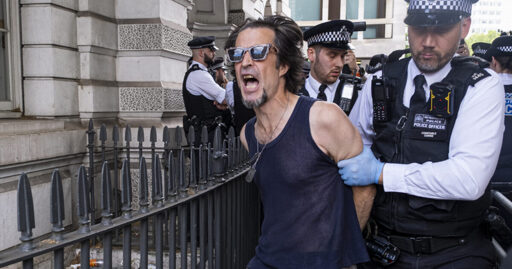
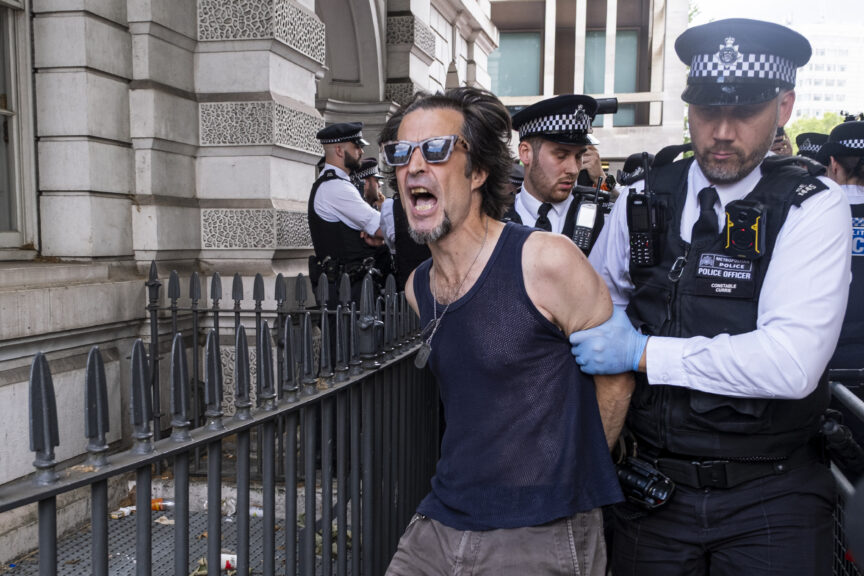
Thousands, including notable numbers of elderly and disabled people, have been arrested for expressing support for the group, typically by holding signs that read: “I oppose genocide. I support Palestine Action”.
The ban is the subject of an ongoing legal challenge which will be heard at the Supreme Court on 4 November.
“The staggering increase in arrests over the past year is the clearest indicator that the UK’s counter-terror laws are not fit for purpose,” said Ruth Ehrlich, director of external relations at human rights group Liberty. “The government’s current definition of terrorism is so wide-ranging it captures behaviour most people would never consider terrorism.”
A spokesperson for Defend Our Juries, the group behind a mass civil disobedience campaign against the ban, said: “The government has shown that they are not using these laws to protect the public – rather to silence those who speak and act against genocide.
“The proscription of Palestine Action is not about protecting the British public, but about protecting the UK’s relationship with Israel and protecting the arms companies who, on UK soil, manufacture and supply weapons to a genocide. If the government was truly aiming to proscribe violent groups targeting civilians, the IDF would be first on its list.”
A Home Office spokesperson said: “Showing support for a proscribed organisation is against the law. Decisions to arrest are operational matters for the police and are taken on the basis of the facts and circumstances of each case.”
From Novara Media via This RSS Feed.