

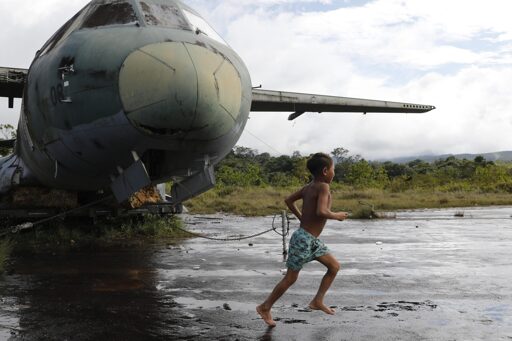
A study detailing the links between illegal gold mining and malaria cases in the Yanomami Indigenous Territory in the Brazilian Amazon won second place in the MapBiomas Award, announced in July. The research collective produces data on land use in Brazil and recognizes initiatives that use this information to promote conservation. The study examined the explosion in malaria cases under the government of Jair Bolsonaro, Brazil’s president from January 2019 to 2022, whose far-right policies encouraged illegal miners to invade Brazil’s largest Indigenous land, home to 31,567 Yanomami. Known locally as garimpeiros, the illegal miners spread disease, contaminated water sources with mercury, and scared away wildlife, prompting a humanitarian crisis in the territory straddling the states of Roraima and Amazonas. Using satellite imagery and data from the Ministry of Health, researchers led by Márcia Castro, from the Harvard T.H. Chan School of Public Health in the U.S., found that a 1% increase in the mined area in the Yanomami territory was associated with a 24% increase in monthly malaria cases. The study, published in November 2025 in the journal PLOS Neglected Tropical Diseases, shows that malaria also increased in areas without mining activity but still used as routes by the miners. “The garimpeiros move around a lot because they have to bring in supplies and machinery,” Castro told Mongabay. “When you pass through these areas, you’re a carrier of the parasite as you walk, and you can get bitten by a mosquito along the way. And just like that, [the…This article was originally published on Mongabay
From Conservation news via This RSS Feed.