

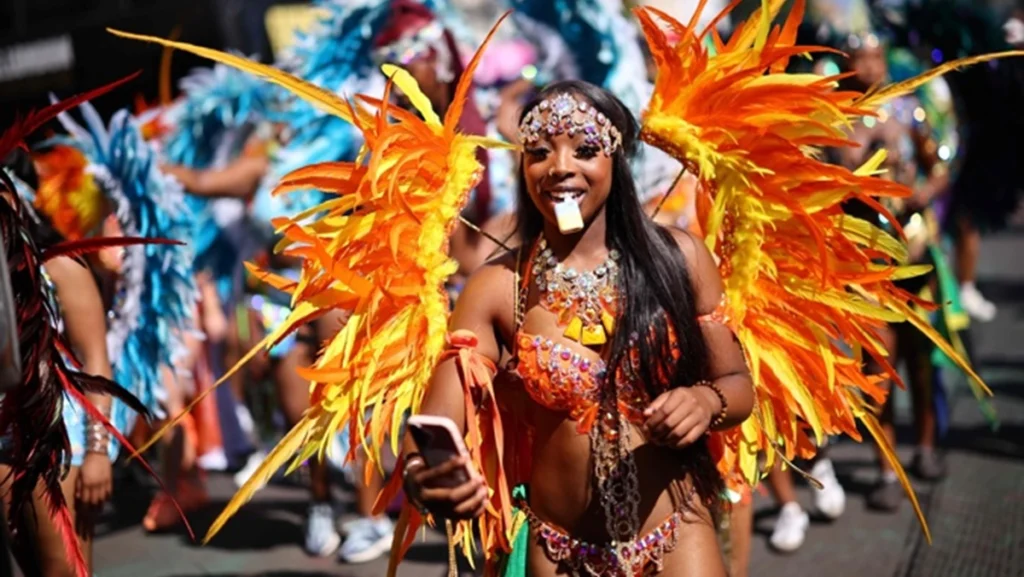
Thousands Gather in London for Colorful Parade as Police Make Hundreds of Arrests.
On Monday, the Notting Hill Carnival celebrated its 60th anniversary, with thousands of people flocking to the iconic London neighborhood to enjoy the traditional and colorful adult parade of floats.
RELATED:
Carnival 2026: Venezuela Continues Celebrations
The Notting Hill Carnival is one of the world’s largest street festivals and a major celebration of Caribbean culture in London. Held annually during the August bank holiday weekend, it traces its roots to the postwar arrival of Caribbean migrants, many of whom settled in Notting Hill and faced widespread racism, discrimination, and violence.
The carnival emerged from efforts to strengthen community solidarity following the racial tensions and riots that affected the area in the late 1950s. A key precursor was the indoor Caribbean Carnival organized in London in 1959 by Trinidadian-born activist Claudia Jones, founder, and editor of the West Indian Gazette. The event promoted Caribbean culture and unity in the aftermath of racial unrest.
The modern street carnival developed in 1966, when community activist Rhaune Laslett organized a multicultural festival in Notting Hill and invited Trinidadian musician Russell Henderson and his steel band, prompting a spontaneous procession through the streets.
What does Notting Hill Carnival mean to you? pic.twitter.com/3Kk4Z7RQmA
— BBC London (@BBCLondonNews) August 30, 2026
Over subsequent decades, the carnival developed into a major expression of Caribbean heritage, featuring elaborate masquerade costumes, steel bands, calypso, soca, reggae and sound systems, as well as Caribbean food and dance.
It has retained its historical association with cultural identity, resistance and community while becoming a central event in London’s multicultural calendar, attracting around 2 million visitors in a typical year.
In recent years, this massive influx has forced London’s Metropolitan Police Service, known as the Met, to deploy about 7,000 officers to increase security during the event.
Authorities said 242 arrests were made Sunday and 394 on Monday, with the remaining arrests taking place before and after the event. Offenses included drug possession and supply, assaults, weapons possession, sexual offenses, and public order offenses.
The use of live facial recognition technology was expanded this year, leading to 121 arrests and 86 registered sex offenders being stopped and spoken to.
Seven registered sex offenders were found to be breaching their conditions or notification requirements and were arrested. Stop-and-search powers were used extensively as part of the policing operation, resulting in the discovery of 68 weapons, including a handgun.
teleSUR/ JF
Source: Xinhua – London Museum
From teleSUR English via This RSS Feed.