

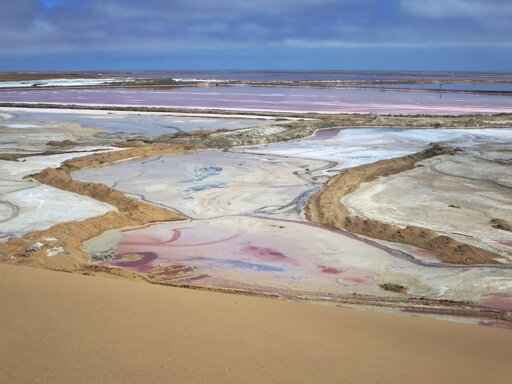
Namibia has granted an environmental clearance to a controversial marine phosphate extraction project. The clearance allows the Sandpiper Project, operated by Namibian Marine Phosphate (NMP), to dredge the seabed off the coast of Walvis Bay for phosphate. Environmentalists are concerned about the impact on the country’s fisheries sector and the potential health impacts from consuming fish that breed in the areas earmarked for dredging. The Environmental Clearance Certificate (ECC) granted to NMP by the Ministry of Environment, Forestry and Tourism (MEFT) on Aug. 5 allows industrial mining within concession 170 (ML 170) off the west coast of Namibia in country’s Exclusive Economic Zone (EEZ). The concession area covers roughly 2,234 square kilometers (863 square miles) of the Atlantic seabed, according to the company’s website. NMP plans to dredge phosphate-rich sediments present in the seafloor at depths of 180-250 meters. Dredging is the removal of sediments and debris from the bottom of lakes, rivers, harbors and other water bodies. Nonprofit Ocean Conservation Namibia (OCN) has strongly criticized the decision to issue the ECC, saying “that the large-scale development could have significant impacts on the Benguela marine ecosystem, Namibia’s fishing industry, and marine conservation.” Saltpans in Walvis Bay, Namibia. Image courtesy by David Stanley via Flickr (CC BY-NC-SA 2.0). The Benguela Marine ecosystem along the coast of southwestern Africa is one of the world’s most productive coastal upwelling zones, areas where deep, cold water rises to the surface, bringing nutrients to the surface. An area off the shores of southern Namibia is…This article was originally published on Mongabay
From Conservation news via This RSS Feed.