

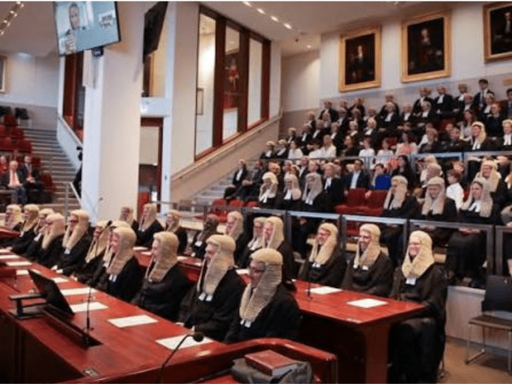

The New South Wales state government in Australia has announced that it will not appeal the Supreme Court’s rejection of the so-called International Holocaust Remembrance Alliance’s (IHRA) definition‘ of antisemitism.
In August 2026, Supreme Court judge, Desmond Fagan, rejected the ‘IHRA’ for being wordy, not defining anything and being a “preposterous” tool used by Israel’s supporters to demonise those who protest against its crimes in Gaza.
The judge’s findings echoed those of international law experts and even the author of the definition, who have dismissed it as a tool to suppress free speech about the apartheid ethno-colony.
Judge Fagan also turned his fire to the lobby’s tactic of trying to equate opposition to the racist political ideology of Zionism with antisemitism, and treating all Jews as if they support Israel and its crimes.
Now, the state’s attorney general has let slip that its government will not appeal following legal advice that there is no prospect of success.
Australian Green Party justice spokesperson, Sue Higginson, welcomed the government’s decision to drop its “bewildering” appeal plan, but said that the underlying circumstances of the state persecuting Israel’s opponents were unresolved.
Australia politician speaks out
She said:
The IHRA definition of antisemitism is an imprecise and wide-ranging definition which has no place in prosecutions and the justice system of New South Wales.
Justice Fagan has rightly decried the IHRA definition as incomprehensible to the ordinary and reasonable member of the Australian public. It was bewildering to see the Minns Labor Government signalling they would appeal this decision.
The Government’s own legal experts have clearly seen the writing on the wall and told the Attorney General that any appeal of this decision would fail,
Across the NSW Government, the public service, and many other private institutions, this definition remains in force despite this clear guidance of the Supreme Court. Jillian Segal is attempting to expand the application of this definition, but I think this judgement should pour cold water over that proposition.
I remain concerned at the circumstances which gave rise to this decision, which was an attempt to pursue an extremely troubled young Lebanese-Australian man through the judicial system and to keep him locked up despite a statutory parole order from the Courts. That parole order required the defendant to obtain mental health and drug and alcohol support.
A person living with financial troubles, substance abuse issues and intellectual disabilities is being mischaracterised by the State as antisemitic when in fact the Supreme Court has found that curses against Israel do not constitute antisemitism.
I understand the Law Enforcement Conduct Commission is overseeing a police investigation into the circumstances surrounding this young man’s prosecution, and I await the outcome of that investigation with great interest.
Despite its manifest unfitness, the Israel lobby worldwide continues to try to push governments and institutions into adopting the ‘IHRA’ [non] definition, precisely for its use as a tool to attack opponents of genocide. To their shame, many have capitulated.
Featured image via Instagram
By Skwawkbox
From Canary via This RSS Feed.