

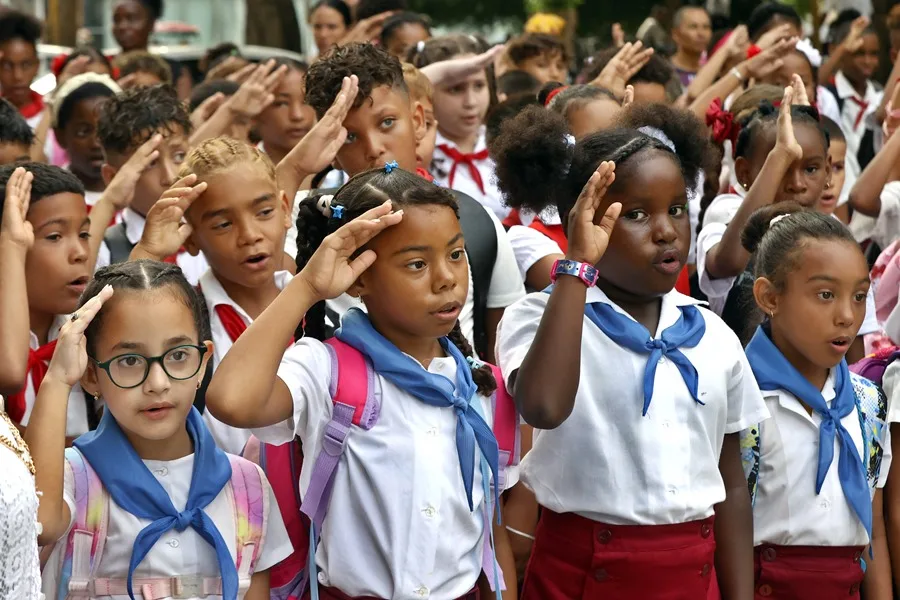
Over 1.4 million Cuban students are set to head back to school across the island on Tuesday, kicking off the 2026-2027 academic year under the weight of a reinvigorated United States economic and oil blockade.
The new cycle introduces a “educational zone” model, a territorial framework designed to pool teaching staff and physical infrastructure. The strategy moves beyond simple administrative reshuffling, allowing primary, secondary and university facilities to share the same premises through staggered shift schedules in an effort to make better use of available means.
RELATED: Cuban Chess Team Excels at the 5th Panama Open
Teacher coverage remains a critical shortfall, prompting authorities to incorporate university students and retired professionals into classroom duties. Uniform scarcity—blamed on power outages hitting textile plants and obstacles to importing raw materials—has led to a pledge that remaining supplies will be channeled first to pupils in the most vulnerable situations.
Appearing on the Mesa Redonda television program, Education Minister Naima Trujillo defended the decision to maintain in-person instruction, arguing that direct interaction between pupils and teachers is non-negotiable and constitutes a cornerstone for comprehensive development during childhood and adolescence. She also explicitly acknowledged that the energy crisis and supply shortages are affecting school communities.
“El éxito de nuestra Revolución, la seguridad de nuestro futuro; el éxito de nuestro socialismo dependerá, en gran parte, de lo que sean capaces de hacer los educadores”.#100AñosConFidel
El inicio del curso escolar, este #1Septiembre, es posible, en gran medida, gracias a la… pic.twitter.com/B8eJbaoiJX
— Partido Comunista de Cuba (@PartidoPCC) September 1, 2026
Trujillo characterized the start of term as an extraordinary national effort under current circumstances, confirming that teaching formats have been tailored to each province and individual school. She further reflected that the “historic” 2026-2027 cycle might ultimately prove exemplary worldwide, while calling for transparency, creativity and collective resolve to navigate the constraints.
From teleSUR English via This RSS Feed.