

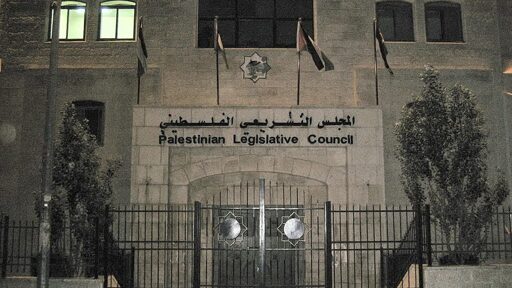

After over two decades of political impasse caused by the division between the major Palestinian factions Fatah and Hamas, a new alliance in the making has revealed itself as a national unity coalition. The coalition will participate in the historic November 28 elections for the Palestinian Legislative Council (PLC). The PLC elections were held in 2006.
According to media reports, the emerging election coalition comprises the Fatah-affiliated Democratic Reform Current and led by Mohammad Dahlan, Hamas, Palestinian Islamic Jihad, the Popular Resistance Committees, and Nasser al-Qudwa’s National Democratic Forum.
The Popular Front for the Liberation of Palestine (PFLP) and the Democratic Front for the Liberation of Palestine (DFLP) have yet to finalize their decision to join the coalition, reports indicate.
A controversial alliance that would end the Abbas era
The news regarding the nascent alliance drew mixed reaction among the Palestinian grassroots, and provoked the indignation of the Fatah bloc led by the President of the Palestinian Authority (PA) Mahmoud Abbas.
For over two decades, the Abbas-led Palestinian Authority has sought to tighten its grip on the political landscape in the occupied West Bank. Since Hamas’s landslide victory in 2006, the PA has manuevered to maintain control by repeatedly blocking presidential and legislative elections and obstructing reconciliation efforts with Hamas.
The PA has also brutally cracked down on its opponents in the West Bank through detention, administrative restrictions, and in some cases assassinations, with greater focus placed on members of Hamas.
However, this crackdown has even extended to include members of the Fatah movement. In 2011, Abbas suspended Mohammad Dahlan from Fatah over alleged corruption and coup plotting. Dahlan then moved into exile in the United Arab Emirates, but his supporters in the West Bank were frequently targeted by the PA security forces. For many, Abbas has sidelined Dahlan and his entourage because he posed a significant political threat as a prospective successor, a fear which now seems to have manifested.
Furthermore, the Abbas administration has systematically suppressed cross-factional resistance groups in the West Bank in collaboration with the Israeli forces, in order to sustain the US-backed security coordination process with Israel.
Read more: In collaboration with the US, Israel, Palestinian Authority escalates crackdown on resistance in West Bank
The Abbas era has been marked by economic recession, growing corruption, and deterioration in security. Moreover, his administration is blamed for further worsening Gaza’s humanitarian crisis – already exacerbated by the Israeli siege – by implementing punitive financial measures against the Hamas-run government in the besieged Strip between 2017 and 2018.
Analysts argue that all these factors, along with its submissive stance toward the Israeli genocidal aggression on Gaza, have led to a sharp decline in the PA’s popularity among Palestinians.
Political activist and former prisoner in Israeli jails, Omar Assaf, argues that the new coalition has drawn controversy due to the historic disparity between the factions it comprises, particularly their position on crucial issues such as armed resistance against the occupation and the Oslo Accords.
From Assaf’s point of view, this alliance was formed out of necessity or compulsion as the only solution to counter the monopoly of Abbas’s bloc.
He added that the Palestinian Popular Conference (14 Million), where he serves as a coordinator, joined another alliance in the West Bank to run in the upcoming elections.
“These alliances will diminish the Palestinian Authority’s chances of securing an overwhelming victory in the elections. Recent polls show that the PA’s popularity among Palestinians has declined to 10–15%, meaning the bloc representing the PA is expected to win only around 15 out of 132 seats in the upcoming elections.” Assaf noted.
Read more: Israel has used the Oslo Accords to strengthen its occupation
Mohammad Dahlan: the US-backed political leader for the next era
Mohammad Dahlan, who seemingly leads the new coalition, constitutes another major aspect of this controversy. For many, he had played a key role in fueling the division, which led to a bloody infighting between Hamas and Fatah in Gaza in 2007.
Many also say that the exiled Fatah leader became a key advisor to the rulers of the United Arab Emirates (UAE) and Saudi Arabia. He is therefore accused of allegedly having participated in instigating turmoil, internal conflict, and regime change across West Asia and Africa.
Furthermore, analysts suggest that Dahlan receives substantial backing from the United States, with reports indicating his close contact with the US Central Intelligence Agency (CIA), and the Israel Security Agency (also known as Shin Bet).
In addition, he is viewed by many as one of the former PA officials who established the rules of security coordination with the Israeli authorities, which a large segment of the Palestinian people opposes.
Some sources claim that Dahlan succeeded in convincing Hamas to accept the disarmament plan proposed by Trump’s Board of Peace (BoP). This acceptance was meant to guarantee Hamas a role in the political Palestinian landscape.
The claim was supported by an announcement made by the High Representative of the BoP, Nikolay Mladenov, on Wednesday, August 26, stating that Hamas and other resistance factions agreed “for the first time to surrender their weapons” and transfer full civilian and security authority to a UN-recognized transitional administration.
If proven to be the case, the move may undermine the popularity of these factions among the Palestinian grassroots, after they had firmly insisted that they would not lay down arms under US pressure throughout the three-year Gaza ceasefire negotiations.
Read more: Palestinian factions: We categorically reject unilateral disarmament
The alliance has alarmed the PA
While Dahlan continues to be a controversial figure, the new alliance still managed to alarm the Ramallah-based ruling class, seemingly pushing it towards taking counter-maneuvers in a desperate attempt to maintain its power, a power its leaders had long assumed to be infinite.
A high-ranking Fatah delegation headed by the Palestinian Authority’s Vice President Hussein al-Sheikh traveled to Cairo last week to meet with Egyptian officials and representatives of the Dahlan-led bloc. Although the delegation was set to meet Hamas leaders in the Egyptian capital, the meeting was reportedly cancelled.
The meetings ostensibly aim to unite the Fatah movement and enhance efforts for achieving reconciliation with other Palestinian factions. However, Al-Sheikh’s maneuvers were interpreted by commentators as a political survival effort by the PA.
Dahlan jeopardizes the authority of the Abbas oligarchy as he seems to enjoy more substantial support from the United States, while maintaining a loyal network of supporters by pumping millions of dollars from the UAE into Gaza, the West Bank, and Palestinian refugee camps.
With just three months left until the polls, the situation on the ground is bound to intensify as the different factions struggle to make political overtures and maneuver for votes amid intensified Israeli siege.
From BT News via This RSS Feed.