

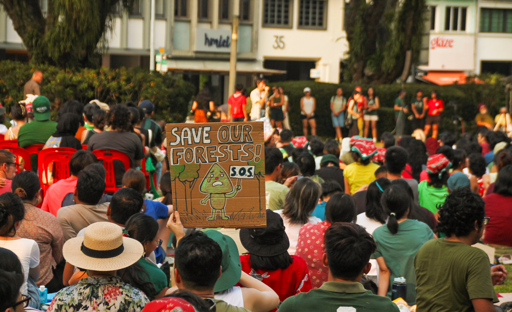
SINGAPORE — At a rare public demonstration against a state development plan, 22-year-old environmental studies student Saw Yun Ya called on the Singaporean government to redo an environmental impact assessment (EIA) for Maju Forest, arguing that it had overlooked the climate and health effects of clearing the site. The EIA for Maju, a 23-hectare (57-acre) patch of regenerating forest bordered by housing in central Singapore, was announced in July, prompting an unusually impassioned public backlash in the conservative city-state. Maju is one of several secondary forests facing development as the 744-square-kilometer (287-square-mile) city looks to address an acute housing crunch amid a growing population. Forests at Sembawang, Woodlands, Tengah and Gillman Barracks are also on the chopping block. Secondary forests cover about 16% of Singapore’s land area, having regrown over abandoned villages and plantations after much of the population was moved into high-rise housing from the 1960s. The island lost almost all of its primary forests in the British colonial era. Singapore’s EIAs assess the pollution, waste and biodiversity impacts of developing an area, and have identified critically endangered species such as the Sunda pangolin (Manis javanica) and straw-headed bulbul (Pycnonotus zeylanicus) at sites including Maju and Gillman Barracks. But residents and environmental groups say EIAs do not adequately account for the climate and health benefits provided by forests. A protester at a rally against deforestation on Aug. 16 holds a banner reading: “Know your enemy,” in reference to sites that could be used as alternatives to forest to build…This article was originally published on Mongabay
From Conservation news via This RSS Feed.