

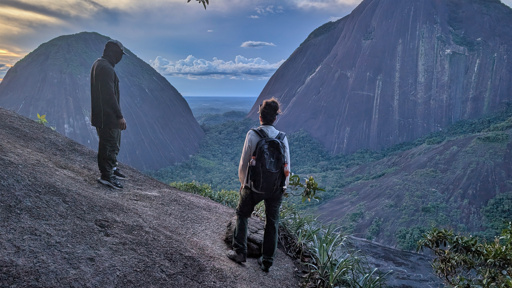
High gold prices have fueled illegal mining across the Amazon. As Brazil tightened controls on the trade, criminal groups found another route through Venezuela, where it could be laundered and then exported overseas, according to a Mongabay investigation published last year. Documenting the trade required journalists in three countries to work together—an approach Daniela Quintero considers essential because environmental crimes rarely respect national borders. Near the Mavicure Hills with residents of the El Venado Indigenous Reserve. Credit: Rhett A. Butler As investigations editor at Mongabay Latam, Bogotá-based Quintero develops projects that combine field reporting with official records, satellite imagery, scientific papers, and legal documents. She also coordinates Mongabay’s Nature Crimes Fellowship, working with journalists from Colombia, Ecuador, and Peru on investigations in the Amazon and the Pacific. Quintero previously covered environmental issues and worked in the investigative unit at El Espectador before joining Mongabay in early 2025. Her reporting has ranged from glass-eel fisheries in the Dominican Republic to the gold smuggling story. Ahead of Mongabay Latam’s PUMA FEST in July, I traveled with Quintero to Colombia’s Guainía department, where I interviewed her about her work and her path into environmental journalism. Daniela Quintero Diaz An interview with Daniela Quintero Mongabay: Can you introduce yourself? Daniela Quintero: I’m a Colombian journalist and sociologist based in Bogotá. I’m an investigations editor at Mongabay Latam, where I develop and edit cross-border investigations into nature crimes and environmental issues across Latin America. Mongabay: What does a normal day at Mongabay look like…This article was originally published on Mongabay
From Conservation news via This RSS Feed.