

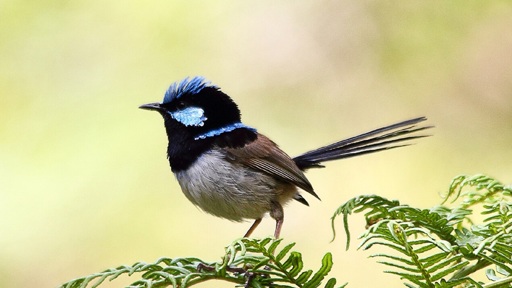
If you sit in an Australian park or garden for long enough, chances are you might catch a flash of brilliant feathers out of the corner of your eye: the superb fairywren. With its bright blue and soft brown plumage, it was voted Australia’s “bird of the year” in 2021, “narrowly defeating the tawny frogmouth in a nail-biting finish” in a poll by Guardian Australia and BirdLife Australia. Yet, despite its seeming abundance in gardens and backyards, this iconic bird is showing worrying signs of decline. Superb fairywrens (Malurus cyaneus) are found in any habitat with dense shrubbery along the east coast of Australia, parts of South Australia and Tasmania. Despite being categorized as least concern on the IUCN Red List, a long-term study of superb fairywrens conducted in the Australian National Botanic Gardens in Canberra determined that they’re disappearing, with climate change impacting their survival. Scientists have been monitoring these superb fairywrens since 1988, and research led by the Australian National University’s Cockburn Group found that this population has rapidly declined. In a recently published article in Nature Communications, the researchers write that this “common species … is in imminent danger, with virtually no time or way to prevent it.” Female superb fairywrens have a soft brown plumage unlike their bright blue male counterparts. Image by Cooper Williams. “We have seen some dramatic changes in the fairywren population in the Australian National Botanic Gardens,” said Damien Farine, a researcher from the Australian National University, who took over monitoring of…This article was originally published on Mongabay
From Conservation news via This RSS Feed.