

Photo: Kayla Isomura / The Narwhal
FortisBC is a familiar name to many British Columbians. The company’s yellow and blue logo appears on utility bills across the province, but people might not know the company operates one of B.C.’s longest-running liquefied natural gas (LNG) facilities. And now it’s hoping to be able to produce 10 times more LNG at its plant in Delta, B.C., under a proposal dubbed Tilbury LNG Phase 2.
FortisBC’s Tilbury LNG plant has been operating for 55 years. It currently produces about 250,000 tonnes of LNG per year, which is used as fuel by some marine vessels and to heat homes and businesses. The Phase 2 expansion could allow the facility to produce up to 3.4 million tonnes each year, with roughly 2.5 million set aside for export. That’s slightly more than the 2.1 million tonnes Woodfibre LNG in Squamish expects to export once it begins operations.
FortisBC has been working on beefing up its operations at the Tilbury site for about a decade. In July, Minister of Energy and Climate Solutions Adrian Dix announced the government’s support of an earlier expansion proposal, known as Phase 1B, which will add a marine jetty to the site and increase production capacity to 650,000 tonnes of LNG per year. Once Phase 1B is completed, Tilbury LNG will be able to fuel more marine vessels with LNG, which is a lower-emission fuel than the diesel many ships use for power.
A July cabinet order signed by Dix exempted Phase 1B from review by the B.C. Utilities Commission. That means the expansion will not undergo an independent assessment to examine whether it is necessary and serves the public interest. Last year, the B.C. government also exempted the North Coast transmission line from such a review.
The order also created the option for First Nations co-ownership of the project, which the Musqueam Indian Band has expressed interest in.
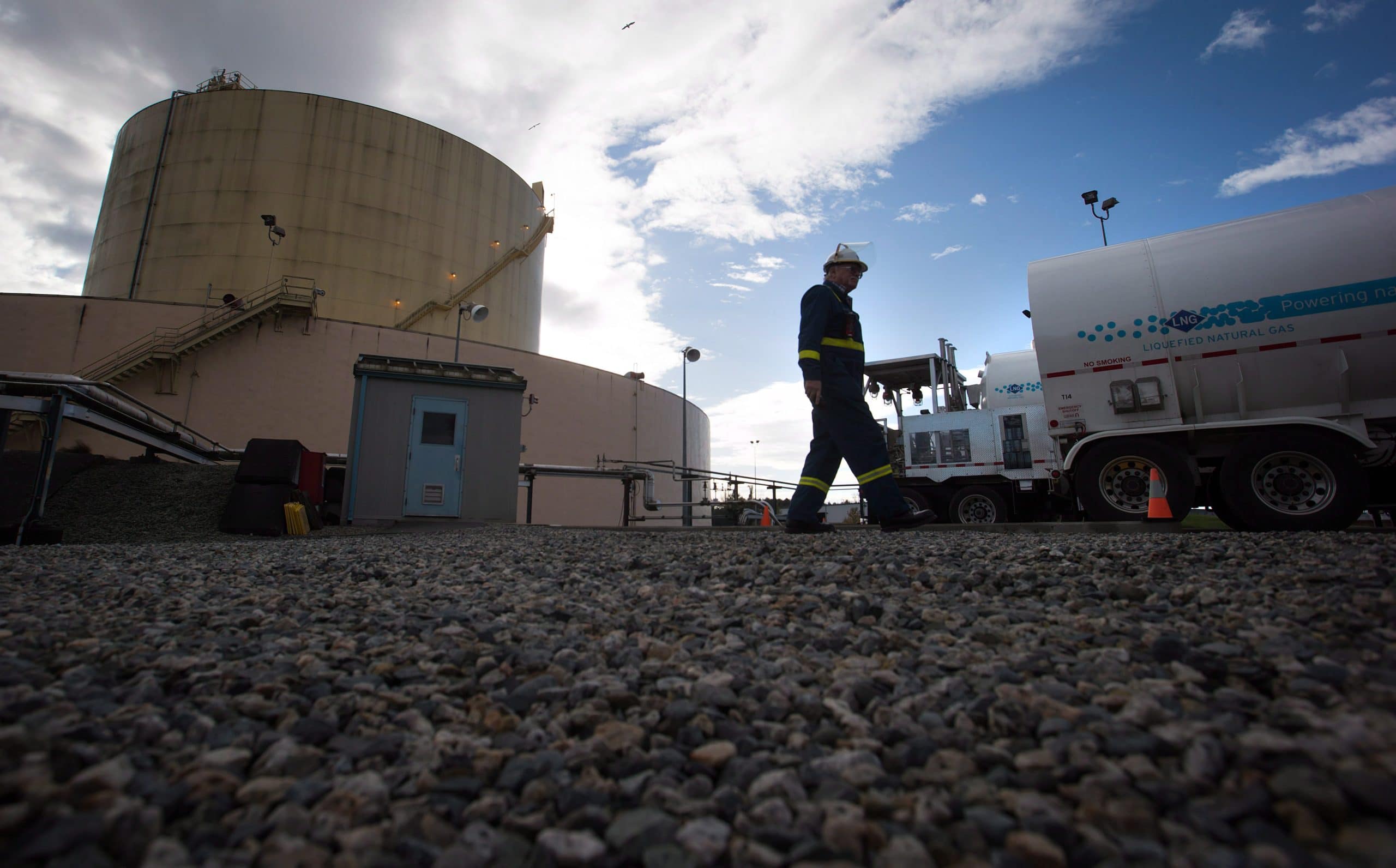
FortisBC’s Tilbury LNG plant has been operating for 55 years, producing fuel for some marine vessels and to heat homes and businesses. A new expansion, dubbed Tilbury LNG Phase 2, could allow the facility to produce up to 3.4 million tonnes of LNG each year — but the project raises environmental concerns. Photo: Darryl Dyck / The Canadian Press
Meanwhile, Tilbury LNG Phase 2, a separate proposal for the same site in Delta, is currently being evaluated by the Environmental Assessment Office. If approved, it would see the construction of a new LNG storage tank with a capacity of up to 142,400 cubic metres, about 57 Olympic swimming pools. There would also be new gas liquefaction facilities capable of producing up to 7,700 tonnes of LNG per day, along with other infrastructure needed to support the expanded operations.
B.C. is betting on major projects as Canada looks to open new markets and reduce its reliance on the U.S. Tilbury Phase 2 is among the 35 energy and mining projects the province has identified as a priority.
Here’s what you need to know.
Table of Contents
- Why this project?
- What’s different about Tilbury LNG?
- How does this fit into a bigger conversation about shipping traffic?
- What exactly will the expansion look like?
- What are the possible health impacts for people living near the project?
- What are the next steps for the proposed expansion?
Why this project?
Tilbury’s Phase 2 expansion will boost the gas system in the Lower Mainland and help meet peak demand for heat during cold weather, according to the provincial government. Building the project will support 1,210 jobs, the province’s major projects site states — though how many people will be employed after the expansion is built is not yet known
The project description does not mention the LNG export aspect of the expansion.
FortisBC’s website describes the Phase 2 expansion as a way to “continue reliably serving our customers in a lower-carbon energy future while providing economic growth and benefits to local and Indigenous communities.”
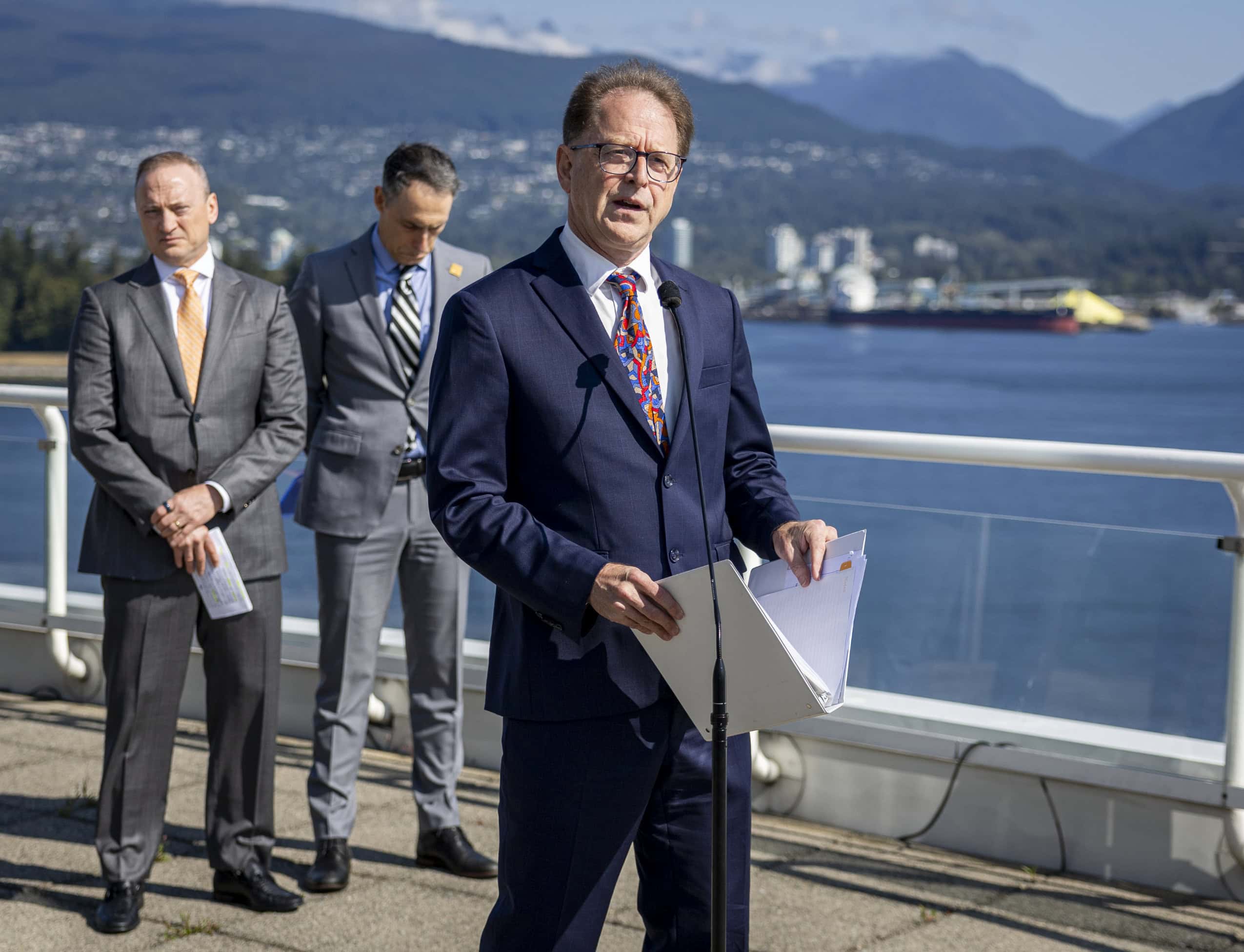
Minister of Energy and Climate Solutions Adrian Dix at a press conference in July for Tilbury LNG’s Phase 1B expansion. The provincial government has touted the regional benefits of the plant’s expansion, but a focus on exports is not included in the project’s description. Photo: Province of B.C. / Flickr
Increasing Tilbury’s LNG production capacity will allow the company to “respond to the growing demand for LNG as a lower-carbon fuel,” according to the site.
In an emailed statement, a FortisBC spokesperson highlighted that the Tilbury facility runs on electricity and therefore has “a lower carbon footprint compared to fossil fuel-based power sources commonly used in LNG production elsewhere.”
“The proposed Phase 2 expansion will be required to meet all applicable regulatory, environmental and permitting requirements, including those established by Metro Vancouver.”
What’s different about Tilbury LNG?
While the other LNG facilities operating or under construction in B.C. are located at some distance from nearby communities, Tilbury LNG is an urban facility.
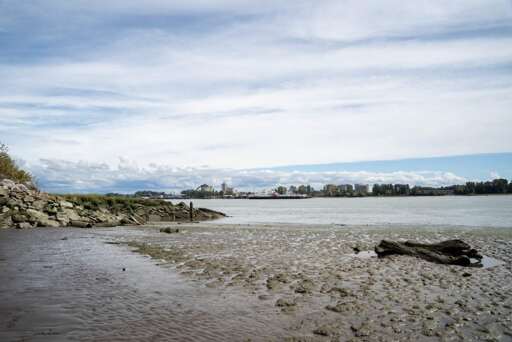
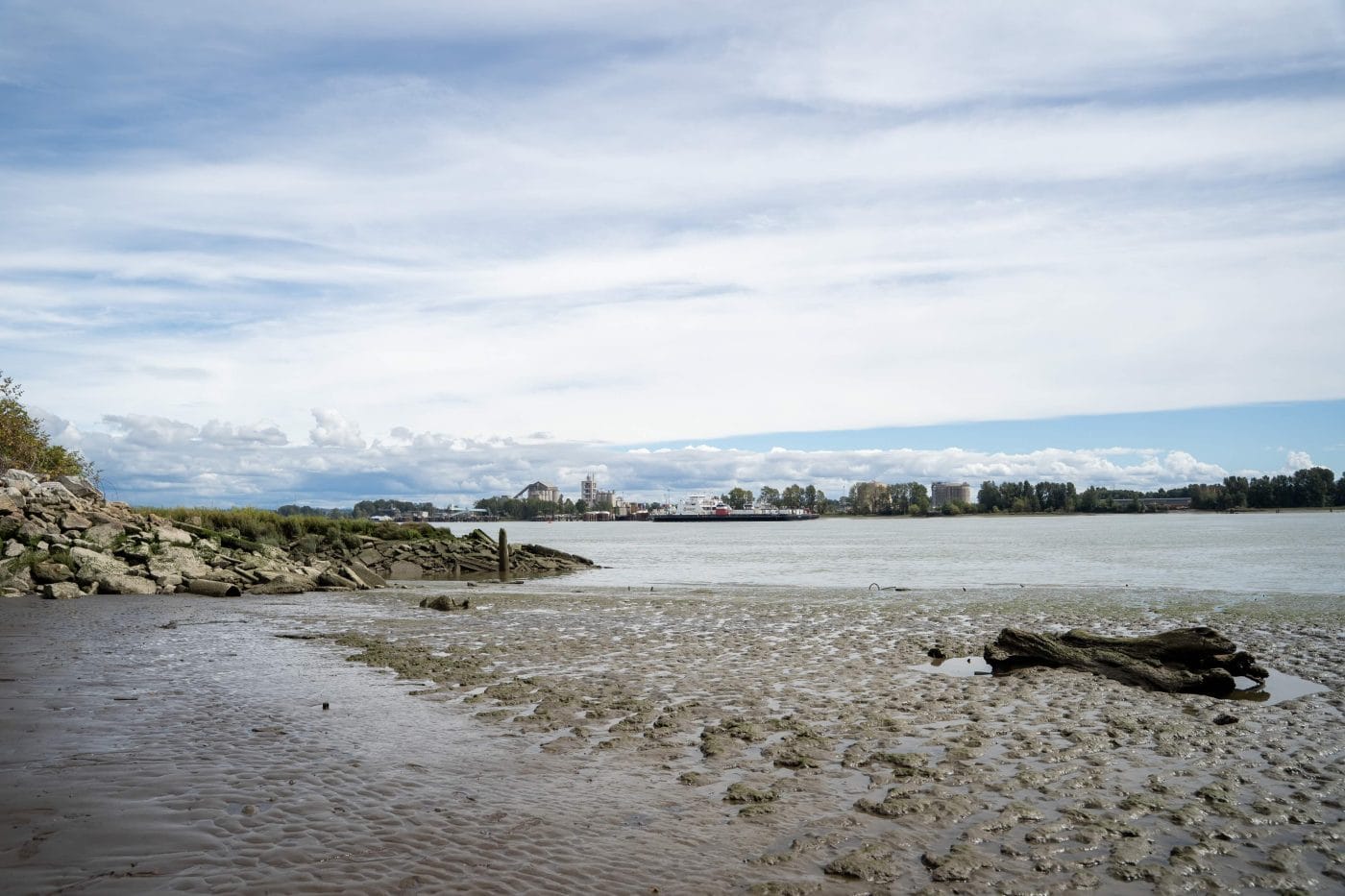
It sits on the banks of the Fraser River, just across the water from the Richmond and downstream from New Westminster, making it the only urban LNG facility in the province. Highway 17, one of the Lower Mainland’s major transportation corridors, runs right alongside it.
“It is a 10-minute walk … to the nearest brewery,” Anna Barford, Oceans campaigner for Stand.earth, says in an interview.
Loaded LNG tankers leaving the Tilbury facility will have to transit the south arm of the Fraser River mouth to make their way out into the Salish Sea, a busy shipping corridor that could become much more crowded over the next few years if and when a number of other projects come to fruition.
How does this fit into a bigger conversation about shipping traffic?
At Roberts Bank, just south of where LNG tankers from Tilbury would enter the Salish Sea, the Port of Vancouver is planning to expand its existing container port by 50 per cent. If that $3.5-billion proposed expansion goes ahead, the port location could handle an additional 2.4 million 20-foot (six-metre) shipping containers each year, adding hundreds of container ship transits to the Salish Sea’s waters.
Meanwhile, the completed Trans Mountain pipeline expansion is expected to increase tanker traffic in the area by nearly 350 tankers per year.
And then there’s Alberta’s proposed pipeline to the Pacific coast, which would also terminate at Roberts Bank. The tanker terminal would be built to accommodate very large crude oil carriers, massive ships capable of carrying 2.2 million barrels of oil that are longer than three World Cup soccer pitches laid end to end.
“These are enormous vessels that the Tilbury tankers are going to navigate around — they will each need to sort of make way for each other,” Barford said. “This is also critical habitat for southern resident killer whales, who we know vessel traffic is a problem for.”
The Environmental Assessment Office will consider potential impacts on southern resident killer whales and other local species and their habitats as part of its evaluation of the Tilbury LNG Phase 2 proposal. Measures by FortisBC to mitigate those impacts will also be assessed.
What exactly will the expansion look like?
To enable the facility to process more gas, the Phase 2 expansion includes a ground flare — basically, an outlet to burn off excess gas when needed. Instead of a flare stack like the one high above the LNG Canada facility in Kitimat, B.C., Tilbury LNG will burn off excess gas at ground level.
The ground flare option was chosen because it “limits the opportunity for wildlife interactions with flames and greatly reduces noise and flame-related visual effects,” a FortisBC spokesperson said in an email.
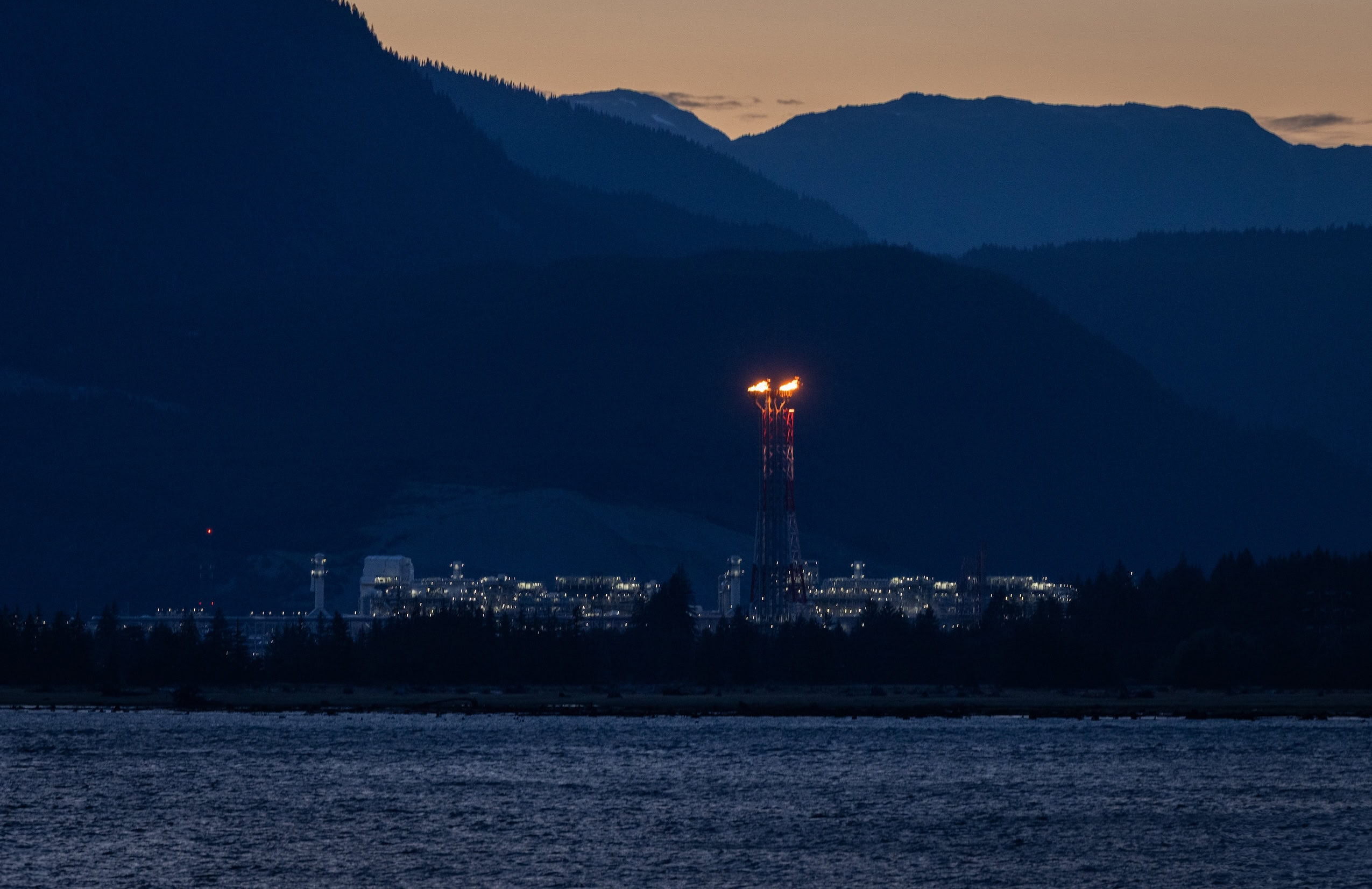
The Tilbury LNG expansion will include a flare. Unlike the towering flare stack at LNG Canada’s facility in Kitimat, B.C., seen here, Tilbury’s would be a ground flare. Photo: Province of B.C. / Flickr
The expansion would increase Tilbury LNG’s emissions to one million tonnes per year, according to a report from the Pembina Institute. Most of those emissions — 0.7 million tonnes — would come from so-called upstream emissions, related to the fracked gas and its transportation to Tilbury LNG via pipelines. The other 0.3 million tonnes of emissions would come from the facility’s operations.
However, the assessment excludes emissions during the start-up phase, a time when LNG facilities often flare more gas than they would once they are established. Flaring involves burning off gas as waste rather than shipping it or using it. LNG Canada, which has been operational for two years now, has been flaring up to 15 times more gas than it was expected to, due at least in part to an issue with the facility’s flare tip. LNG Canada reported flaring 350 million cubic metres of gas in 2025, according to figures reported to the BC Energy Regulator — 10 per cent of all the gas transported to the plant that year.
What are the possible health impacts for people living near the project?
Experts say significantly expanding an LNG facility in an urban area raises a range of concerns, including possible impacts on human health.
Emissions from an expanded Tilbury LNG will be entering an airshed already permeated with pollution, Tim Takaro, a physician-scientist in environmental medicine, says. Exhaust from vehicles, including heavy trucks travelling to and from port facilities, mingle with emissions from industrial operations along the Fraser River.
“There’s just no reason to build a new fossil energy facility in a populated area,” he says.
New Westminster and Richmond had some of the highest levels of nitrogen dioxide of any community in B.C. in 2024, according to a report from the BC Lung Foundation. Nitrogen dioxide is a product of high-temperature fossil fuel combustion and is pushed into the air from vehicle tailpipes and industrial smokestacks. Long-term exposure is linked to impaired lung growth in children and more frequent asthma attacks.
For Takaro, who is a member of the Canadian Association of Physicians for the Environment, Tilbury LNG’s impact needs to be considered in the context of existing air quality conditions.
“What does this facility add to the existing air quality?” he says. “Because that’s what people breathe — they don’t just breathe the new part.”
The Tilbury expansion’s ground flare is also a point of concern for Takaro.
“Their flare is going to be at ground level, which is, of course, where people live,” he says.
Ground flares are often about the height of a single-story building, says Tim Doty, a former employee of Texas’ environmental agency who spent years inspecting oil and gas facilities across the state.
“In theory, that’s going to bring the emissions closer to the community,” he says.
“I would expect this facility, as it expands, to further impact the community and air quality around Delta and the Vancouver [area].”
Tilbury Phase 2’s environmental assessment takes into account current air quality and modelling of the expansion’s effects, according to an emailed statement from the assessment office.
What are the next steps for the proposed expansion?
B.C.’s Environmental Assessment Office is in the final stages of evaluating the Phase 2 expansion. The last public comment period ended in July and the office received 631 completed surveys about the project.One of the survey’s 18 questions asked respondents to select any issues they believed had not been appropriately assessed or that lacked information. A majority of respondents flagged greenhouse gas emissions as an area of concern. Impacts on wildlife, fish and habitat were also selected on a majority of surveys.
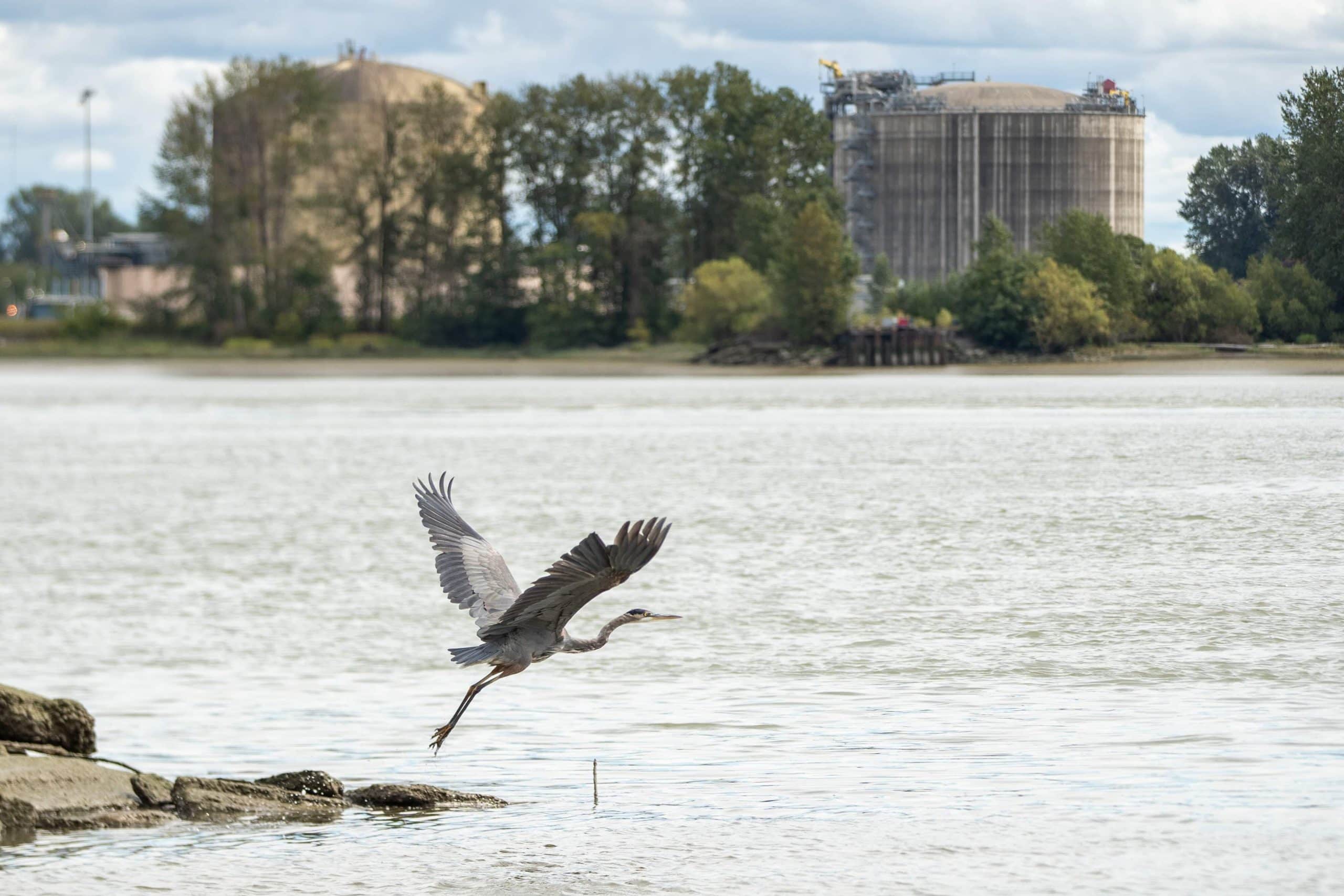
A great blue heron is photographed in Richmond, B.C., across the Fraser River from the Tilbury LNG facility. Photo: Kayla Isomura / The Narwhal
The assessment office received more than 4,400 written comments, many of which detail concerns about how the project could impact salmon and orca populations, as well as the need to reduce greenhouse gas emissions in the face of global warming. Of the hundreds of comments reviewed by The Narwhal, the handful in support of the expansion focused on the global market for LNG and the importance of reducing market reliance on the United States.
Once the assessment office completes its evaluation, the ministers of energy and environment will receive a recommendation on whether to issue an environmental assessment certificate to the project. The ministers expect to make a decision by the end of the year, according to a July press release.
The Narwhal’s reporters are telling environment stories you won’t read about anywhere else. Stay in the loop by signing up for our free weekly dose of independent journalism.
From The Narwhal | News on Climate Change, Environmental Issues in Canada via This RSS Feed.