

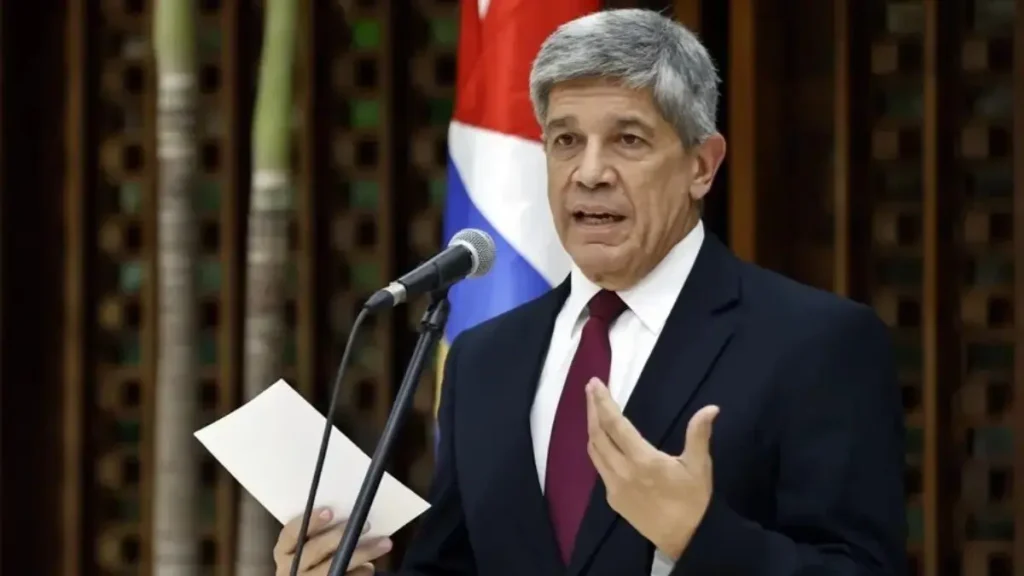
Carlos Fernández de Cossío says U.S.-backed media coverage seeks to portray military action against Cuba as inevitable.
Cuban Deputy Foreign Minister Carlos Fernández de Cossío accused the United States on Sunday of sponsoring media coverage intended to legitimize a military attack on Cuba, amid what he described as military activity in Puerto Rico.
RELATED: Cuba’s Partial Disconnection Hits East as U.S. Fuel Blockade Deepens Energy Crisis
In a post on X, Fernández de Cossío said that reports about the “military movements and maneuvers in Puerto Rico” had become the dominant news story. But he criticized the articles for failing to examine the legality of what he described as a criminal act being promoted.
He said the reports made no mention of a possible justification for an attack, the loss of life and destruction it could cause, or the regional instability that could follow. He also criticized the absence of any discussion of what he called “the deeply immoral nature of the undertaking.”
Gob EEUU continúa con su campaña de calumnias contra Cuba. Contrataron ahora a otro mentiroso llamado Gordon Chang quien publicó en la revista The Hill una columna preñada de los mismos infundios disparatados sobre supuestas bases militares extranjeras en Cuba.
— Carlos F. de Cossio (@CarlosFdeCossio) August 26, 2026
Text Reads: The U.S. government continues its campaign of slander against Cuba. They have now hired another liar named Gordon Chang, who published in The Hill magazine a column pregnant with the same absurd fabrications about alleged foreign military bases in Cuba.
Fernández de Cossío also accused the U.S. government of supporting the campaign through opinion pieces written by what he called “contracted liars,” whose purpose, he said, was to exaggerate “the fallacy that Cuba constitutes or could constitute a threat to the United States.”
He said that claim was absurd given the disparity in military power between the two countries. The United States, he noted, is the world’s leading nuclear power, with 5,200 nuclear warheads, 11 aircraft carriers, military bases or a military presence across the Western Hemisphere, and far-reaching intelligence agencies.
The Cuban official also pointed to Washington’s ability to exert economic and commercial pressure on almost any country, saying this made the portrayal of Cuba as a danger to the United States even more difficult to justify.
Fernández de Cossío concluded that the U.S. media campaign was aimed at “convincing the public of the inevitability, natural materialization and eventual execution of a military aggression against Cuba.”
He warned of the risks posed by what he described as an escalation in propaganda, arguing that the campaign was helping create an environment in which military action against Cuba could be presented as an inevitable development.
From teleSUR English via This RSS Feed.