

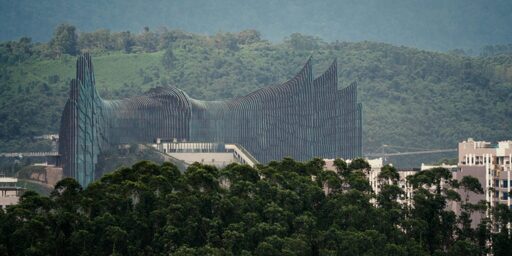
Founder’s Briefs: An occasional series where Mongabay founder Rhett Ayers Butler shares analysis, perspectives and story summaries. In the forests around Pemaluan in East Kalimantan, Indonesian Borneo, researchers led by Wendy Erb at the Cornell K. Lisa Yang Center for Conservation Bioacoustics in the U.S. have placed audio recorders on mountains, beside caves, and among mangroves. Over 18 months, they sampled 20 sites, collecting the calls of gibbons, frogs, hornbills, insects, and other wildlife. They want to establish a baseline before Nusantara, Indonesia’s new capital city, alters the surrounding landscape, according to a video produced by Mongabay, Scientific American, and Project Multatuli. Nusantara is being built in East Kalimantan province to relieve some of Jakarta’s congestion and pressure from land subsidence. Its planners describe a “smart forest city” where development and biodiversity can coexist. Roads, apartment buildings, a hotel, and a presidential palace have already appeared. Construction and chainsaws are becoming part of the local soundscape. The recordings will allow scientists to compare conditions over time. They may show where species remain, where they decline, and whether development is pushing wildlife into other areas. The findings could also help identify places where conservation measures are most needed. The project also records knowledge held by the Indigenous Balik people. Animal calls have long helped them interpret the forest. Gibbons marked the approach of dawn and, in unusual circumstances, were thought to warn of a death in the village. The great argus (Argusianus argus), a large pheasant native to the island’s forests,…This article was originally published on Mongabay
From Conservation news via This RSS Feed.