

African Union peace architecture reform: Youssouf calls for early warning, sustainable financing, UNSC Resolution 2719 at Luanda Summit. Explore Sahel, DRC, Somalia crises.
related: Africa To Employ 3 Million Health Workers by 2035
African Union Peace Architecture Reform: Youssouf Calls for Urgent Overhaul at Luanda Summit
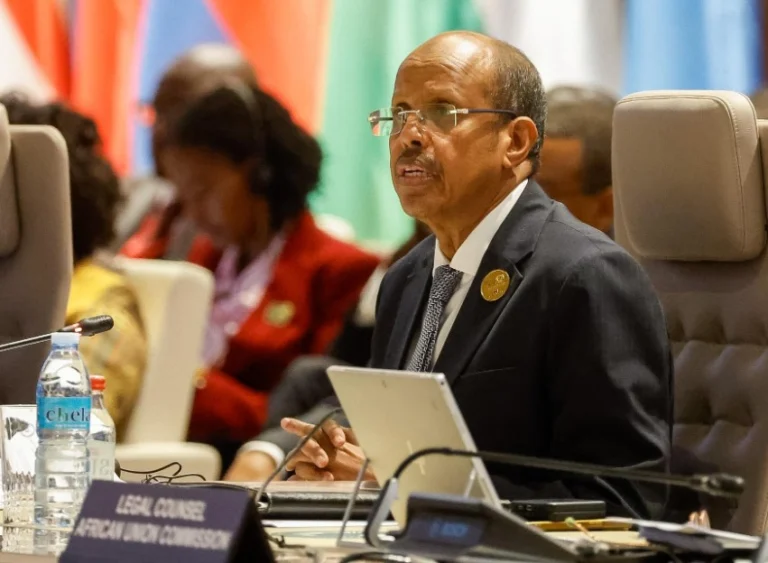
The African Union peace architecture reform took center stage on August 30, 2026, as AU Commission Chairperson Mahmoud Ali Youssouf addressed the 21st Extraordinary Session of the AU Assembly in Luanda, Angola, calling for urgent and deep reforms to strengthen the continent’s capacity to guarantee its own peace and security. Speaking before assembled heads of state and government, Youssouf presented a critical map of the continental situation, referencing instability hotspots extending from eastern and southern Democratic Republic of Congo (DRC) to Somalia, the Sahel, Libya, northern Mozambique, and Madagascar, while emphasizing that conflict prevention remains the organization’s main “Achilles’ heel” requiring immediate attention.[au][apanews][telesurtv][africa.dailynewsegypt]
Youssouf declared that transnational crime and international geopolitical competition are only aggravating Africa’s crises, asserting that “the time has come to undertake reforms” and urging leaders to take necessary decisions to reinforce Africa’s collective capacity. The Commission Chairperson emphasized that prevention must become the priority, calling for a strengthened continental early-warning system, more effective implementation of AU decisions, sustainable financing for peace operations, and a fully operational Peace Fund. He also stressed that partnerships, including with the United Nations, must reflect Africa’s realities and expectations, with the implementation of UN Security Council Resolution 2719 representing a legitimate and urgent call for predictable, sustainable, and flexible financing for AU-led peace support operations.[au][africa.dailynewsegypt][dailynewsegypt][pulseofafrica]
African Union Peace Architecture Reform: Early Warning, Financing, and UNSC Resolution 2719
The African Union peace architecture reform agenda identified three particular urgencies: a more effective early warning system, better implementation of AU decisions, and sustainable financing for peace operations, with Youssouf describing the current financing structure for peace operations and the Peace Fund as “practically inoperative” and far from an effective model. The AU Commission Chairperson questioned the effectiveness of exterior alliances, affirming that partnerships with the United Nations “no longer satisfy our expectations” and demanding the legitimate application of UNSC Resolution 2719 to guarantee support for African operations. The resolution, adopted in December 2023, represents a landmark in financing AU-led peace support operations and revitalizing Chapter VIII of the UN Charter, but its implementation has been slow and partial, with assessed contributions from the UN still pending full operationalization and African states struggling to meet their own funding commitments.[au][dailynewsegypt][theglobalobservatory][fr.infosgabon]
For the AU’s official press release, see: AUC Chairperson at 21st Extraordinary Session of the Assembly on Conflict Prevention
The Continental Early Warning System (CEWS) has been identified as a critical gap in the African Peace and Security Architecture (APSA), with the AU Peace and Security Council (PSC) convening its 1364th meeting on August 24, 2026, to discuss coordination between the AU Counter Terrorism Centre (AUCTC), African Peer Review Mechanism (APRM), Committee of Intelligence and Security Services of Africa (CISSA), and AFRIPOL on validating the Continental Threats Assessment and Risks Mapping Tool. The PSC reiterated its request to the AU Commission to collaborate with these bodies to introduce and institutionalize a dynamic tool for mapping risks and threats to peace and security in Africa, as adopted through communiqué PSC/PR/COMM.1298 (2025) of August 27, 2025, to enable the Council to enhance its conflict prevention efforts. The proposed AU Model on Trigger Mechanism for Early Warning and Early Action, consulted at the Committee of Experts level in July 2026, seeks to strengthen timely and proportionate AU responses by establishing clear triggers, thresholds, and response options to address emerging risks before they escalate into violent conflict.[au][fr.infosgabon][amaniafrica-et][ventdafrique]
For ISS Africa’s analysis of the summit, see: The AU’s Luanda Summit Mustn’t Be Another Talk Shop on Peace
Youssouf also advocated for consolidating preventive diplomacy by relying on the central role of Regional Economic Communities (RECs) and constant consultation between the Peace and Security Council, the Commission, and Member States. The AU’s Regional Economic Communities and Regional Mechanisms remain central to preventive diplomacy, but coordination challenges persist, with multiple mediation initiatives in places like eastern DRC creating overlapping processes that require AU coordination as the continental body. The Global Terrorism Index 2026 report recorded 5,582 terrorism deaths across 2,944 incidents in 2025, a 28% fall from the previous year, but Sub-Saharan Africa remains the global epicenter, accounting for over half of all terrorism fatalities, with six of the ten most-impacted countries located on the continent: Burkina Faso, Niger, Nigeria, Mali, Somalia, and the DRC. Fatalities linked to militant Islamist violence in Africa surpassed 20,000 for the fourth consecutive year, spread across the Sahel, Somalia, the Lake Chad Basin, and Mozambique, underscoring the urgency of early warning and preventive action.[au][africa.dailynewsegypt][amaniafrica-et][channelafrica.co]
Regarding emerging threats such as terrorism, violent extremism, piracy, and mistreatment of migrants, the high official noted that pooling resources and active solidarity are mandatory steps. On the issue of coups d’état and disruption of democratic order, he ratified that the AU’s position remains unalterable: “firmness based on our norms, while offering dialogue and accompaniment.” The AU has suspended several member states following unconstitutional changes of government, including Sudan, Mali, Burkina Faso, Niger, and Guinea, but reintegration pathways remain unclear, with junta leaders resisting pressure to restore civilian rule and regional mediators struggling to find leverage. The Commission Chairperson emphasized that no single country can confront these threats alone, with solidarity, pooled resources, and greater Pan-African sovereignty in peace and security being imperative for Silencing the Guns by 2030, the AU’s flagship goal.[au][africa.dailynewsegypt][dailynewsegypt][pulseofafrica]
Geopolitical Context: African Sovereignty, External Partnerships, and Great Power Competition
The African Union peace architecture reform unfolds against a backdrop of intensifying great power competition in Africa, where the U.S., China, Russia, and European powers are vying for influence through security partnerships, economic investments, and diplomatic engagement. The AU’s call for “Pan-African sovereignty” in peace and security reflects a broader desire to reduce dependency on external actors and assert African agency in conflict prevention, mediation, and peacekeeping, but this ambition faces significant financial and operational constraints. The AU Peace Fund, established to finance AU-led peace operations, remains undercapitalized, with member states contributing less than 10% of assessed dues and external donors providing the bulk of funding, creating vulnerabilities and conditionality that undermine African ownership. The implementation of UNSC Resolution 2719, which allows the UN to assess contributions for AU-led operations authorized by the Security Council, represents a potential breakthrough, but negotiations over funding levels, oversight mechanisms, and operational control remain contentious, with Western powers demanding accountability and African states insisting on flexibility.[au][africa.dailynewsegypt][dailynewsegypt][theglobalobservatory]
Regionally, the African Union peace architecture reform addresses multiple overlapping crises that have stretched AU capacity and exposed institutional weaknesses. The war in Sudan, which erupted in April 2023 between the Sudanese Armed Forces (SAF) and Rapid Support Forces (RSF), has killed tens of thousands, displaced millions, and created a humanitarian catastrophe that the AU has struggled to address due to divisions among member states and limited leverage over the warring parties. The conflict in eastern DRC, where over 100 armed groups operate alongside M23 rebels backed by Rwanda, has defied regional mediation efforts by the East African Community (EAC) and Southern African Development Community (SADC), with AU peacekeeping missions under-resourced and under-mandated. The Sahel crisis, marked by militant Islamist insurgencies, military coups, and state collapse in Mali, Burkina Faso, and Niger, has spread southward to coastal West Africa, threatening Ghana, Togo, Benin, and Côte d’Ivoire, while AU and ECOWAS responses have been hampered by sanctions fatigue, junta resistance, and competing regional initiatives.[africa.dailynewsegypt][amaniafrica-et][ventdafrique][channelafrica.co]
Uganda es declarada libre de ébola tras superar el período de vigilancia de 42 días#teleSUR #Uganda #Ébola #África pic.twitter.com/oS78owwU79
— teleSUR TV (@teleSURtv) August 27, 2026
Globally, the African Union peace architecture reform carries implications for multilateralism, burden-sharing, and the future of peace operations in an era of shrinking Western engagement and rising multipolarity. The UN Secretary-General’s Peace Operations Review, launched in 2025, calls for a renewed partnership between the UN and regional organizations, with particular weight given to Resolution 2719 as a landmark in financing AU-led operations and revitalizing Chapter VIII of the UN Charter. However, the review also emphasizes the need for the AU to articulate its own vision for the partnership, with clear priorities, comparative advantages, and accountability mechanisms to ensure complementarity rather than competition between UN and AU operations. The AU’s Luanda Summit is expected to adopt a binding action plan and implementation matrix to accelerate conflict prevention, with new operational directives for APSA and the AU Peace Fund, but analysts warn that without political will, sustainable financing, and enforcement mechanisms, the summit risks becoming “another talk shop” that produces declarations rather than results.[au][africa.dailynewsegypt][theglobalobservatory][issafrica]
The intersection of security and development further complicates efforts to achieve Silencing the Guns by 2030, as legal experts like Dr. Tolu Aderemi have argued that conflict prevention must be prioritized over trade-led recovery, with the African Continental Free Trade Area (AfCFTA) projected to add $450 billion to regional income by 2035 remaining fiction while conflict persists across the Sahel, eastern DRC, and Sudan. Aderemi called for substantially increased funding for the Continental Early Warning System, urging the African Development Bank to restructure development financing to condition trade-linked disbursements on measurable peace and institutional benchmarks, rather than treating trade and stability as parallel, unrelated tracks. The AU’s February 2026 Assembly decision called for the full operationalization of Continental Security Cartography, directing the AU Commission, together with AUCTC, AFRIPOL, CISSA, and APRM, to establish a dynamic and continuously updated risk-mapping tool capable of providing the PSC with a consolidated picture of threats, vulnerabilities, and potential triggers, with a matrix of risks and threats to be finalized by the end of 2026 as a tool of the Continental Early Warning System.[africa.dailynewsegypt][amaniafrica-et][ventdafrique][independent]
Furthermore, the African Union peace architecture reform reflects broader debates about African agency, institutional effectiveness, and the balance between sovereignty and accountability in continental governance. The AU’s firm stance on unconstitutional changes of government has been praised by democracy advocates but criticized by junta leaders who view it as interference in internal affairs, while civil society organizations have called for greater inclusion of women, youth, and marginalized communities in peace processes and decision-making. The tribute paid to Angolan President João Lourenço as AU Champion for Reconciliation underscores the role of individual leaders in mediating conflicts and promoting dialogue, but also highlights the limitations of personality-driven diplomacy in addressing structural drivers of conflict such as inequality, exclusion, and resource competition. The Luanda Summit’s outcomes will be closely watched by African publics, international partners, and conflict-affected communities, with expectations high for concrete commitments, measurable targets, and accountability mechanisms that can translate rhetoric into results and deliver peace to millions across the continent.[au][africa.dailynewsegypt][ventdafrique][channelafrica.co]
From teleSUR English via This RSS Feed.