

Iran leader US Israel enemies: Khamenei calls Muslim unity against ‘criminal’ powers. Explore Islamic Unity Week message, Gulf rulers response, and regional implications.
Related: 7 Alarming Facts on US Military Budget Iran War Funding Crisis
Iran Leader US Israel Enemies: Khamenei Calls for Muslim Unity Against “Criminal” Powers
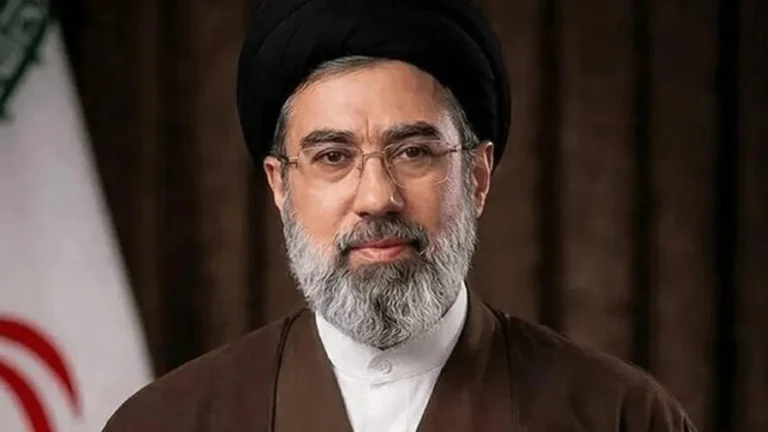
The Iran leader US Israel enemies designation was formally issued on August 30, 2026, by Ayatollah Mojtabá Khamenei, Iran’s Supreme Leader, who in a message marking Islamic Unity Week declared the United States and Israel as “criminal” enemies not only of the Islamic Republic of Iran but of the entire global Muslim community (Ummah). Speaking through a written statement published on his official website and Telegram channel, Khamenei urged rulers of Islamic countries, particularly those in West Asia and the Persian Gulf, to “know their true enemy, understand its plan and confront it,” warning that divisions among Muslims serve the interests of their adversaries and enable Western and Zionist domination over the region.[taghribnews][en.mehrnews][tasnimnews][reuters]
The message, delivered on the birth anniversary of Prophet Muhammad (PBUH) and the 40th Islamic Unity Conference, emphasized that the solution to the problems of the Muslim Ummah lies in unity of purpose, friendship, and mutual defense, with Khamenei asserting that “we are witnessing with our own eyes the horizon of Muslim victory over their enemies.” The Supreme Leader highlighted that historical division has left peoples like the Palestinians defenseless, and that “arrogant powers” use offensive language toward Muslim leaders while instrumentalizing racial, cultural, political, economic, and geographical differences to fragment and weaken the Islamic world.[taghribnews][en.mehrnews][tehrantimes][presstv.co]
Iran Leader US Israel Enemies: Islamic Unity Week, Gulf Rulers, and Regional Stability
The Iran leader US Israel enemies message comes as the war between Iran and the U.S.-Israel coalition enters its seventh month without the victory promised by President Donald Trump, who launched Operation Epic Fury on February 28, 2026, in a joint military operation that reportedly killed former Supreme Leader Ali Khamenei and triggered hundreds of retaliatory missiles and thousands of drones from Iran across the Middle East. The current Supreme Leader, Mojtabá Khamenei, has maintained a low public profile since assuming leadership, with Reuters noting he has not been seen in months, but his August 30 message signals a renewed effort to rally regional support amid ongoing hostilities, ceasefire collapses, and heightened tensions with Gulf Arab states.[reuters][britannica][arabtimesonline][dailysabah]
For Reuters’ coverage of Khamenei’s message, see: Iran’s Khamenei Urges Gulf Rulers in Written Message to Confront ‘Real Enemy’
Khamenei reminded audiences that the Islamic Unity Week initiative was originally promoted by the late Imam Ruhollah Khomeini from his exile in 1978 during the uprising against the Pahlavi regime, a measure that continues to generate concern among regional adversaries. The week-long observance, which coincides with the Prophet’s birthday, was officially established after the Islamic Revolution’s victory and has become a platform for calling Muslim unity against foreign intervention, sectarian division, and imperialist aggression. Khamenei emphasized that unity means making commonalities the core foundation for Islamic societies, with defending one another against disbelief and pursuing cooperation in wealth, security, knowledge, and progress leading ultimately to a new Islamic civilization.[taghribnews][en.mehrnews][tasnimnews][tehrantimes]
For Tasnim News Agency’s full text of the message, see: Leader: US, Zionist Regime Are Sworn Enemies of Muslim Unity
The Supreme Leader’s advice to rulers of Islamic countries, especially those in West Asia and along the Persian Gulf, was emphatic and repeated: “You must know who your true enemy is, understand their plots, and confront them.” Khamenei clarified that the criminal rulers of the U.S. and the illegitimate Zionist regime are sworn enemies of Muslim unity and friendship, holding enmity toward the entire Islamic Ummah, including nations in West Asia and North Africa, and that not even rulers considered U.S. allies are exempt from this hostility, citing blatant disrespect and derogatory remarks by Global Arrogance leaders toward certain Islamic country leaders as evidence. He concluded by warning that anyone who creates strife within the Islamic community—intentionally or unintentionally—has advanced the agenda of Islam’s enemies, and ratified Tehran’s commitment to regional stability: “As a servant of the people, I will not allow any dispute among the nation’s children,” he emphasized.[taghribnews][en.mehrnews][tasnimnews][presstv.co]
The timing of the message is significant, as it comes amid heightened tensions between Iran and Gulf Arab states, including Saudi Arabia, the UAE, and Bahrain, which have normalized relations with Israel through the Abraham Accords and maintain security cooperation with the United States despite Iran’s calls for Muslim unity. The Arab Times Online noted that Khamenei’s message represents a play of the “Muslim card” while he remains unseen for six months, suggesting an attempt to reassert ideological leadership over the Sunni-majority Gulf states that have drifted toward Washington and Tel Aviv in recent years. The message also comes as the U.S.-Iran ceasefire has collapsed, with Trump threatening “economic D-Day” sanctions and the Pentagon reporting severe financial strain from the prolonged conflict, creating uncertainty about the war’s trajectory and regional power balances.[britannica][arabtimesonline][dailysabah][en.yenisafak]
Geopolitical Context: Muslim Unity, Sectarian Division, and Great Power Competition
The Iran leader US Israel enemies message unfolds against a backdrop of intensifying great power competition in the Middle East, where the U.S., Israel, Iran, and Gulf Arab states are engaged in a complex struggle for regional dominance that intersects with sectarian, ideological, and economic rivalries. The war that began in February 2026 has reshaped alliances, with Iran’s Resistance Front (including Hezbollah, Hamas, and various Iraqi and Yemeni militias) confronting U.S.-Israeli military operations that have targeted Iranian nuclear facilities, military command structures, and proxy networks across the region. The killing of former Supreme Leader Ali Khamenei in the opening salvo marked an unprecedented escalation, triggering massive Iranian retaliation and raising questions about succession, legitimacy, and strategic continuity under Mojtabá Khamenei’s leadership.[reuters][britannica][arabtimesonline][dailysabah]
Regionally, the Iran leader US Israel enemies call for Muslim unity faces significant obstacles, as Sunni-Shia divisions, Arab-Persian rivalries, and competing national interests have fragmented the Islamic world for decades. The Gulf Arab states, particularly Saudi Arabia and the UAE, have prioritized security cooperation with the U.S. and Israel over ideological solidarity with Iran, viewing Tehran’s regional ambitions as a greater threat than Western or Israeli influence. The normalization of relations with Israel through the Abraham Accords has further complicated Iran’s efforts to rally Muslim unity, as Arab publics remain divided between support for Palestine and pragmatic acceptance of Israeli statehood as a counterweight to Iranian expansion.[taghribnews][en.mehrnews][tehrantimes][arabtimesonline]
Globally, the Iran leader US Israel enemies message reflects broader debates about Islamic civilization, anti-imperialism, and the role of religion in international relations. Khamenei’s framing of Muslim unity as the cornerstone for achieving a triumphant Islamic civilization echoes pan-Islamic ideologies promoted by thinkers like Jamal al-Din al-Afghani, Muhammad Abduh, and Sayyid Qutb, who envisioned a united Muslim world capable of resisting Western domination and reviving Islamic glory. However, the reality of Muslim-majority states is one of fragmentation, authoritarianism, and dependency on Western security guarantees, economic aid, and technological transfers, making genuine unity elusive despite rhetorical appeals. The UN and international human rights organizations have criticized both sides in the Iran-U.S.-Israel conflict for civilian casualties, infrastructure destruction, and violations of international humanitarian law, but diplomatic efforts to broker ceasefires have repeatedly collapsed, leaving millions of civilians in Yemen, Lebanon, Syria, and Gaza caught in the crossfire of proxy warfare.[taghribnews][en.mehrnews][tehrantimes][dailysabah]
The intersection of sectarianism and geopolitics further complicates efforts to achieve Muslim unity, as Sunni-majority Gulf states view Iran’s Shia-led government with suspicion and hostility, accusing Tehran of exporting revolution, supporting terrorism, and destabilizing the region through proxy militias and ideological subversion. Iran, in turn, accuses Gulf rulers of collaborating with “Global Arrogance” (a term for the U.S. and its allies) to contain Iranian influence and suppress Shia communities across the Middle East. The Khamenei message attempts to transcend sectarian divisions by framing the U.S. and Israel as common enemies of all Muslims, but this narrative faces skepticism in Sunni-majority countries where anti-Shia sentiment and fear of Iranian hegemony remain deeply entrenched.[taghribnews][en.mehrnews][tasnimnews][tehrantimes]
Furthermore, the Iran leader US Israel enemies designation carries implications for Iran’s domestic politics, as Mojtabá Khamenei seeks to consolidate his authority following the death of his predecessor and the ongoing war. The emphasis on unity and stability reflects concerns about internal dissent, economic hardship, and military fatigue after six months of conflict, with Iranian publics increasingly questioning the costs of regional adventurism and confrontation with the U.S. The Supreme Leader’s warning against internal strife suggests awareness of potential fractures within the Iranian elite, particularly between hardliners advocating continued confrontation and pragmatists seeking negotiated settlements to alleviate sanctions and rebuild the economy. The message also serves as a signal to Iran’s regional allies—including Hezbollah, Hamas, and the Houthis—that Tehran remains committed to the Resistance Front despite military setbacks and financial strain, reinforcing the ideological foundations of Iran’s foreign policy doctrine.[reuters][britannica][arabtimesonline][dailysabah]
From teleSUR English via This RSS Feed.