

Chocó humanitarian crisis: Armed violence, earthquake, mining converge. 3,000 confined, 652 families displaced. Explore Defensoría warnings and UN response gaps.
Related: Magnitude 4.3 Earthquake Strikes Colombia Near Totoró
Chocó Humanitarian Crisis: Armed Violence and Earthquake Converge to Displace Thousands
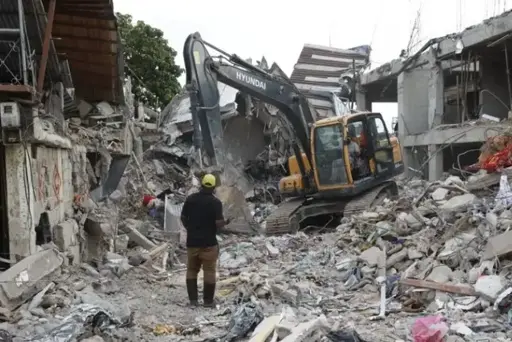
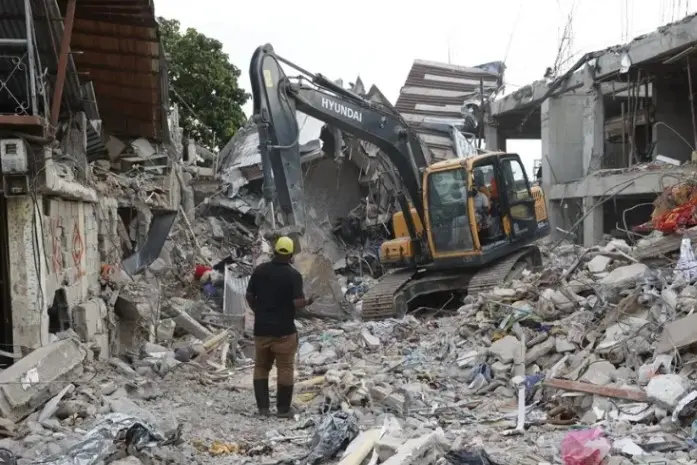
The Chocó humanitarian crisis has reached critical levels as Colombia’s Pacific department faces a complex emergency resulting from the convergence of armed violence, forced displacements, confinements, environmental degradation, and the devastating impacts of the magnitude 7.4 earthquake that struck on August 10, 2026, with its epicenter in San José del Palmar. The Office of the People’s Defender (Defensoría del Pueblo) issued a public statement on August 29, urging national and local authorities to immediately activate emergency response protocols, warning that the multiple emergencies are disproportionately and severely impacting ethnic communities (Afro-descendant and Indigenous) and rural populations across the region.[elnuevosiglo.com][infobae][infobae][elespectador]
According to the oversight body, since the earthquake occurred, there has been a progressive deterioration of security, particularly in the San Juan subregion, where the Clan del Golfo has established a prolonged presence in communities like San Agustín (Sipí), preventing traditional production activities and advancing toward Puerto Murillo in Middle San Juan. Simultaneously, fierce confrontations between the Clan del Golfo and the National Liberation Army (ELN) have been verified in territories of the General Community Council of San Juan (Acadesan) and in rural areas of Nóvita and Sipí, with drone attacks and explosive devices causing civilian casualties and mass displacements.[infobae][infobae][infobae][elpais.com]
Chocó Humanitarian Crisis: Armed Confrontations, Displacements, and Confinements
The Chocó humanitarian crisis has been exacerbated by intensified armed confrontations between the Clan del Golfo and the ELN, which have displaced hundreds of families and confined thousands more in territories where mobility restrictions and fear of violence prevent access to basic services. On August 23, fighting and drone attacks in Charco Hondo, Sipí, left three civilians injured and triggered the forced displacement of 65 families to Barrancón, with preliminary reports indicating that 652 families (approximately 3,000 people) remain confined in areas including Barrancón, Charco Hondo, Charco Largo (Sipí), and Torrá, Cajón, Santa Bárbara (Nóvita).[infobae][elespectador][infobae][lafm.com]
External link (dofollow): For Infobae’s detailed coverage of the Defensoría’s alert, see: Defensoría Emitió Alarma por Crisis Humanitaria en Chocó a Raíz del Terremoto y la Violencia
During a humanitarian mission conducted on August 25 along the Nóvita–Sipí corridor, the Defensoría verified severe damage to housing and collective property caused by gunfire and explosive materials, in addition to severe psychological impacts on the population. The agency accompanied the evacuation of 40 displaced persons to Nóvita and Istmina and documented earthquake-related damage at the Acadesan ethnic shelter, where structural cracks and collapsed roofs have rendered the facility partially unusable for families seeking refuge from both seismic destruction and armed violence. The Defensoría reported that 384 families and 1,339 people have been directly affected by the fighting, with six ethnic communities in Nóvita and Sipí facing imminent risk of further displacement if hostilities continue.[elnuevosiglo.com][infobae][elespectador][caracol.com]
For ReliefWeb’s situation overview, see: Colombia: Flash Update 009 – Update on the Impact of the Earthquake in Colombia – August 24, 2026
The mobility crisis extends to other parts of Chocó’s geography. Along the Quibdó–Medellín highway, Indigenous communities have been forced to displace due to increased armed activities, while in the lower Tamaná River basin, pressure from the Clan del Golfo is generating anxiety and mobility restrictions that directly affect 129 families (301 people) in localities such as Paimadó, San Gerónimo, and El Tigre. The Defensoría also reported that confinements remain active in the Alto Baudó and Bajo Baudó subregions, while an imminent risk of displacement and isolation persists for ethnic communities in Juradó, Nuquí, and Bojayá, where coastal and riverine access is the primary means of transportation and supply delivery.[infobae][elespectador][elpais.com][lafm.com]
The lack of a definitive census by authorities following the August 10 earthquake has prevented accurate assessment of material damage and left numerous rural areas isolated, making it impossible to send and deliver basic humanitarian aid. The National Unit for Disaster Risk Management (UNGRD) reports that 406,963 people (196,614 families) have been affected across 15 departments and 496 municipalities, with 331 deaths, 152 missing, 4,449 injured, and 364 rescued as of August 28. However, in Chocó specifically, the combination of seismic damage, armed violence, and geographic isolation has created logistical bottlenecks that delay aid delivery and leave thousands without food, water, shelter, or medical care.[telesurenglish][reliefweb][infobae][pulzo]
Geopolitical Context: Armed Conflict, Environmental Destruction, and International Response Gaps
The Chocó humanitarian crisis unfolds against a backdrop of intensifying armed conflict in Colombia’s Pacific region, where the Clan del Golfo and the ELN are engaged in a violent struggle for territorial control over drug trafficking routes, illegal mining operations, and extortion networks. The August 10 earthquake, which killed 331 people nationwide and left over 406,000 affected, has exacerbated pre-existing vulnerabilities in Chocó, where decades of state absence, poverty, and environmental degradation have left communities ill-equipped to respond to compound emergencies. The UN Office for the Coordination of Humanitarian Affairs (OCHA) estimates that 1.2 million people need assistance across Colombia following the earthquake, with 127,000 identified as most severely affected, but only 40% of the $148.1 million required has been received, creating critical funding gaps that limit response capacity.[telesurenglish][infobae][pulzo][news.un]
Regionally, the Chocó humanitarian crisis highlights the intersection of natural disasters and armed conflict, a phenomenon increasingly common in Latin America’s conflict zones, where earthquakes, floods, and landslides compound the humanitarian impacts of violence, displacement, and state neglect. The UN warned on August 28 that the earthquake could increase the risk of child recruitment by armed groups in Chocó and Valle del Cauca, where thousands of children remain out of school in areas already affected by conflict, making them vulnerable targets for recruitment, exploitation, and forced displacement. The Defensoría’s report confirms that armed groups are exploiting the post-earthquake chaos to expand territorial control, with the Clan del Golfo using the disaster to justify increased presence in communities under the guise of humanitarian assistance, while the ELN responds with military operations to contest that control, trapping civilians in the crossfire.[elnuevosiglo.com][infobae][elespectador][news.un]
The environmental dimension of the crisis is equally severe, as unrestricted illegal mining with heavy machinery and mining tables has advanced in sectors of Lloró, Bagadó, and the Noanamá–Cucurrupí corridor, directly affecting 18 communities (11 Afro-descendant and 7 Indigenous), totaling approximately 3,800 people (920 families). This activity not only causes serious and irreversible ecological damage to local ecosystems, including deforestation, river contamination, and biodiversity loss, but has also become a new and lucrative arena for territorial dispute between armed groups, which tax mining operations, extort miners, and fight for control of extraction sites. The UN Environment Programme (UNEP) has documented that illegal mining in Chocó is responsible for 80% of the department’s deforestation, with mercury contamination affecting fish stocks that Indigenous and Afro-descendant communities depend on for food and income.[infobae][infobae][elespectador][abcolombia.org]
The international response has been insufficient relative to the scale of need, with humanitarian organizations reporting access constraints, security risks, and funding shortfalls that limit their ability to reach isolated communities in Chocó. The UN system and humanitarian partners have reached approximately 72,000 people in 36 municipalities across Chocó, Valle del Cauca, Risaralda, and Caldas with food, water, medical care, medicines, shelter, psychosocial support, protection, and education services, but this represents only a fraction of the 406,963 affected nationwide. The Defensoría has called on armed groups (Clan del Golfo and ELN) to strictly comply with International Humanitarian Law (IHL) and the principles of distinction and precaution, demanding the cessation of actions that endanger the lives, integrity, mobility, and property of the civilian population. However, compliance remains minimal, with both groups continuing hostilities despite public appeals and humanitarian ceasefires.[infobae][elespectador][news.un][abcolombia.org]
The Defensoría has also urged the National Government, Chocó Governor’s Office, and UNGRD to immediately activate humanitarian response protocols, guarantee security conditions for mobility, provide food, health, and temporary shelter to victims, and urgently complete the census of earthquake victims in isolated rural areas. The Chocó Governor, Nubia Carolina Córdoba, announced on August 23 that the first phase of humanitarian aid delivery had reached 100% of affected municipalities, but community leaders dispute this claim, noting that many rural and ethnic territories remain unreachable due to armed violence, damaged infrastructure, and lack of transportation. The tension between official narratives and ground realities underscores the governance challenges in Chocó, where state presence is weak, armed groups fill the vacuum, and humanitarian access is contingent on negotiations with non-state actors who often prioritize military objectives over civilian protection.[infobae][elespectador][infobae][pulzo]
Furthermore, the Chocó humanitarian crisis reflects broader patterns of environmental racism and structural inequality in Colombia, where Afro-descendant and Indigenous communities bear the disproportionate burden of armed conflict, extractive industries, and climate disasters despite having minimal responsibility for causing these crises. The 1991 Constitution recognizes ethnic territories and collective land rights, but in practice, these protections are routinely violated by armed groups, mining companies, and state agencies that prioritize economic interests over human rights. The Defensoría’s call for IHL compliance is a necessary but insufficient step, as long-term solutions require addressing the root causes of the crisis: state absence, poverty, environmental destruction, and the political economy of armed conflict that sustains violence in Chocó and other marginalized regions.[elnuevosiglo.com][infobae][elespectador][abcolombia.org]
El Chocó enfrenta una crisis extrema tras un terremoto de 7.4 que dejó miles de damnificados y aislamiento total. Las réplicas continúan y la ayuda médica aún no logra llegar a las zonas críticas.#EstamosConColombia #teleSUR #ElChoco #Terremoto #ParaTi #14Ago pic.twitter.com/zGh6hkVd8I
— teleSUR TV (@teleSURtv) August 14, 2026
From teleSUR English via This RSS Feed.