

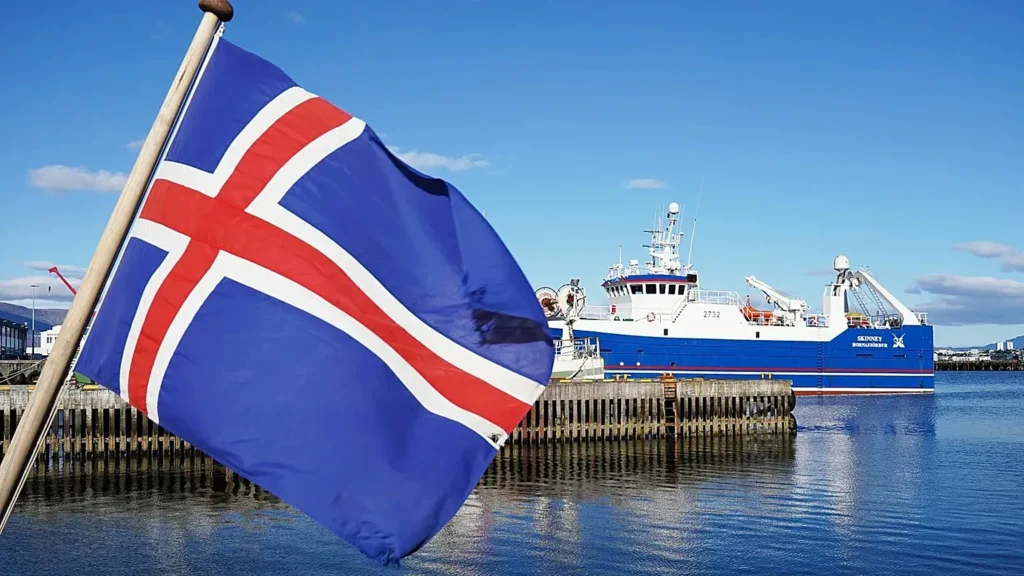
The “no” vote has won in yesterday’s Icelandic referendum on resuming accession negotiations with the European Union (EU) by more than five points, with 52.8% against 47.2%, after 100% of the votes were counted this Sunday.
[Icelanders Vote to Decide If Resume Negotiations to Join the EU: Icelanders Reject to Resume Talks to Join the EU](https://www.telesurenglish.net/icelanders-reject-to-resume-talks-to-join-the-eu/)
Opponents of resuming talks with Brussels, which were interrupted in 2013, totaled 118,040 votes compared to 105,339 for those in favor of “yes,” in a consultative referendum whose result the center-left government that called it has promised to respect.
The triumph of “no” was almost a certainty a few hours ago, with close to 90% of the votes counted and awaiting the final count in the southwestern constituency, the most populated and which includes the towns in the Reykjavik area, and in which those against negotiating with Brussels led the partial count by three points (51.5% against 48.5%).
In the nearly 32,000 votes that remained to be counted in that constituency, the “yes” would have had to obtain 65% to overcome the disadvantage, which minimized its options.
The National Electoral Commission attributed the delay in the last constituency to a discrepancy in the votes in the town of Kópavogur, which forced a recount, reported the public broadcaster Rúv.
Turnout reached 82.5%, the highest figure since the 2009 legislative elections, held just after the economic crisis that shook the country and brought down the government.
Iceland: European Union membership negotiations referendum
#Iceland
Icelandic voters have rejected reopening EU accession negotiations. The final result:
Yes: 47.17%
No: 52.83%Explore: https://t.co/AoULaq5ZGj pic.twitter.com/iNQtg1XP6t
— Europe Elects (@EuropeElects) August 30, 2026
Supporters of resuming talks with Brussels were in the lead for much of the vote count, but the trend began to shift in the final hours.
The “yes” won in the two Reykjavik constituencies, but not by a sufficient difference to compensate for the expected triumphs of “no” in the three corresponding rural areas (south, northwest and northeast), to which it also added the southwest.
Previous polls predicted a very close result that made predictions difficult.
Iceland applied for EU membership in 2009, but paralyzed negotiations four years later amidst an adverse climate towards Brussels, and the subsequent Government born from the 2013 elections announced in 2015 that this Nordic country was no longer a candidate.
The center-left coalition that has governed since 2024 included in its pact calling a referendum to decide whether to continue the process, arguing that there had never been a consultation.
In the event of a “yes” victory, another referendum had been promised on the hypothetical agreement reached by Reykjavik and Brussels.
The previous discussion has been dominated by issues such as national sovereignty, control of natural resources – especially fishing – and the cost of living in a context of uncertainty due to US President Donald Trump’s threats of annexation to neighboring Greenland.
Social Democratic Prime Minister Kristrún Frostadóttir, Foreign Minister Þorgerður Katrín Gunnarsdóttir, and Education Minister Inga Sæland – the leaders of the three parties that make up the governing coalition – have called a press conference this Sunday at 13:00 GMT in Reykjavik to comment on the referendum result.
From teleSUR English via This RSS Feed.