

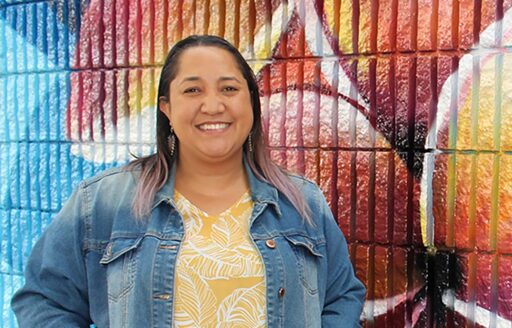

“Discussions about online harm often focus on restricting the children’s behaviour rather than regulating the practices of the companies that shape the digital environment,” writes Dr Jean M Uasike Allen.
A social media ban won’t keep children safe or help prepare them for an increasingly digitised world, writes Auckland-based academic Dr Jean M Uasike Allen. For young Pacific people in particular, a ban would also cut off an important site of connection.
As New Zealand moves closer to introducing a social media ban for under-16s, the debate is often framed as a simple choice: protect young people online or leave them exposed to harm.
The reality is far more complex.
The concerns driving calls for restrictions are understandable. Parents, educators and researchers have seen evidence of cyberbullying, harmful content, unrealistic social comparisons and the impact excessive screen time can have on young people’s wellbeing. We all want children to be safe online.
But when policy responses focus primarily on prohibition, we need to ask whether we’re addressing the causes of harm, or simply treating the symptoms.
Early indications from Australia, which has already introduced restrictions for young users, suggest that many young people continue to access social media despite the rules. That shouldn’t surprise anyone. Young people have always found ways to get around barriers, particularly in digital environments. The question is whether bans reduce harm, or whether they simply push young people into less visible online spaces where support, guidance, and oversight are harder to provide.
If that happens, we may end up making the problem more difficult to address rather than solving it.
For Pacific communities, this conversation carries additional dimensions that are often overlooked.
Across the Pacific diaspora, digital platforms do much more than provide entertainment. They help maintain relationships across oceans, borders and generations. Social media allows young people to stay connected with grandparents, cousins, and wider family networks living overseas. It provides spaces where they can engage with language, culture and community, explore their identities and find a sense of belonging.
Research on Pacific peoples’ experiences in digital environments shows that online spaces frequently serve as important sites of relationship-building and community connection. This is particularly significant for young Pacific people navigating multiple cultural worlds and seeking connections with others who share similar experiences.
When we discuss banning access, we must also consider what could be lost.
This doesn’t mean ignoring the real risks that exist online. Harmful content, misinformation, exploitation, and cyberbullying are genuine concerns. But a ban risks framing young people as the problem, rather than examining the systems that create many of these challenges.
Perhaps the most important question is this: Where does responsibility sit?
Current proposals place much of the burden on young people and their families. Parents are expected to monitor access. Schools are expected to provide guidance. Young people are expected to comply.
Meanwhile, technology companies continue to design, operate, and profit from the platforms in question.
These companies invest enormous resources into creating products that capture and retain attention. Algorithms are designed to maximise engagement. Features are engineered to encourage continued use. Yet discussions about online harm often focus on restricting the children’s behaviour rather than regulating the practices of the companies that shape the digital environment.
A social media ban risks letting Big Tech off the hook.
If governments are serious about protecting young people, greater attention must be paid to platform accountability. This means requiring technology companies to create safer products, reduce harmful design features, strengthen content moderation systems, and prioritise user wellbeing over engagement metrics.
The responsibility for online safety cannot rest solely with families.
At the same time, we need to invest in something that is often less politically attractive but potentially more effective: education.
Digital literacy is no longer optional. It is an essential life skill. Young people need support to critically evaluate information, recognise harmful content, manage online interactions, and understand how digital platforms operate. Families need resources to help them have informed conversations about online experiences. Communities need opportunities to engage with emerging technologies rather than simply fear them.
These approaches may not generate the headlines a ban does, but they are more likely to create lasting change.
Most importantly, education opens conversations rather than closes them.
Young people are growing up in a digital world. Technology is not disappearing, and neither are the challenges that come with it. The goal shouldn’t simply be to keep young people away from technology. It should be to equip them with the knowledge, confidence and support they need to navigate online spaces safely and responsibly.
For Pacific communities in particular, we must ensure that efforts to reduce harm don’t unintentionally weaken the connections, support networks and sense of belonging that many young people find online.
The challenge before us isn’t choosing between safety and connection. It’s creating digital environments where both can exist.
That means looking beyond bans and asking harder questions about accountability, education, and the responsibilities of the technology companies whose platforms shape so much of modern life.
Only then will we begin to address the problem at its source.
Dr Jean M Uasike Allen (Makaunga and Kolovai, Tongatapu. Tefisi, Vava*‘*u) is a Tongan and Pākehā academic from South Auckland whose research explores how Pacific peoples connect, belong, and thrive in digital worlds. As a senior lecturer at the University of Auckland and an award-winning educator, she examines the intersections of identity, wellbeing, culture and technology. Her work amplifies Pacific voices and perspectives, highlighting the creativity, resilience and innovation of Pacific communities across Aotearoa and the wider Moana.
The post Social media bans won’t solve the problem appeared first on E-Tangata.
From E-Tangata via This RSS Feed.