


Captain Cook and the Unsettled Afterlives of Empire, by Tony Ballantyne, published by Bridget Williams Books.
The way Captain Cook overlaid English names on Māori whenua was a powerful means of claiming intellectual and political sovereignty, writes Tony Ballantyne in this extract from his latest book, Captain Cook and the Unsettled Afterlives of Empire*.*
Putting Māori place names back where they belong, and recognising those sites as Māori places, is an important part of decentring Cook and asserting the mana and vitality of Māori ways of understanding the past.
Cultural memory is made in place and it in turn shapes our sense of place. These understandings of the past are dynamic; they are shaped by ever-changing cultural currents and shifts in political power.
Changing representations of Meretoto Ship Cove and Tōtaranui Queen Charlotte Sound exemplify these dynamics and demonstrate how understandings of the past have been actively reshaped in these islands.
These were crucial sites for Captain Cook; he would return to Meretoto Ship Cove five times across his three Pacific voyages, seeking water, wood, and fresh food, opportunities for trade, and to repair and maintain his vessels.
Some colonists deeply valued the associations of these places with Cook. In 1845 the chief surveyor of Nelson, Samuel Stephens, described his pleasure in exploring Meretoto, “the favourite resort of the famed navigator Captain Cook”. Stephens suggested that the men in his party of travellers remained in thrall to Cook, who had entranced their “boyish days”.
Meretoto Ship Cove was understood early on as an important location for memorialising Cook. The monument there to Cook was inaugurated by the governor, Lord Liverpool, in 1913, and it also featured prominently in the 1969 programme marking the 200th anniversary of the arrival of the Endeavour. Twentieth-century celebrations centred on Cook’s prominence in these locations, pushing aside their importance to tangata whenua and in Māori history.
Since 2000, however, the site has been significantly reframed. In 2006, Department of Conservation funding enabled the installation of tohu whenua that offered new ways of thinking about the location’s history, recontextualising the stolid and severe form of the old Cook memorial.
Ngāti Apa ki te Rā Tō, Ngāti Kuia, Rangitāne and Te Ātiawa were actively involved in this redesign, and played a critical role in the reframing of Meretoto as a bicultural space.
Explicitly Māori elements are woven into the site. The bridge that crosses the stream had new carvings affixed, representing Rangitāne and Te Ātiawa, blending forms from ferns and ships’ hawsers, suggesting the intersection of cultures.
Most significantly, a pou whenua carved by Reg Thompsett (Ngāti Maniapoto) was erected at the southern end of the reserve, providing a telling counterpoint to the older Cook monument across the stream on the northern side of the bay. The pou depicts Kupe and Te Wheke o Muturangi (the octopus belonging to Muturangi, a chief of Hawaiki), central figures in Māori narratives relating to the region that recount how Kupe, his wife Hine-te-Aparangi and their kin pursued the wheke in their waka across the Pacific to Tōtaranui Queen Charlotte Sound. There, an epic battle played out, shaping the nearby landscape.
At the opening of the refurbished Meretoto Ship Cove site in November 2006, Anne Salmond, speaking in her capacity as chair of the New Zealand Historic Places Trust, emphasised the importance of the site in Māori history. She noted that long before the arrival of any European, the site was a key connection point between the islands and a commercial hub: “It was the maritime equivalent of Grand Central Station.”
This point was reinforced by the new interpretative panels, which emphasise the significance of Meretoto Ship Cove both to Cook and to Māori:
Totaranui (Queen Charlotte Sound) was a very important place for Māori. It was a point of arrival and departure for waka (canoes) making the dangerous crossing across Raukawakawa (Cook Strait). Rights to Totaranui were contested and over the years different tribal groups came, fought and merged. Despite this, there was a steady flow of goods and people across the Strait.
This text underlines a key point: this place has a past that predates and is independent of its connection with Cook.
It is also notable that the panel begins with the Māori name for the sound, Tōtaranui. Having the legitimacy of place names recognised and asserting the mana and vitality of Māori ways of understanding the past has been central to challenging the authority of Cook’s historical primacy.
The cartographic legacy of Cook and his officers has been profound for the geographic framework of New Zealand as a state and for Pākehā apprehensions of place and history. The way Cook overlaid English names on Te Waipounamu, Te Ika-a-Māui and the other islands that make up “New Zealand” was (and continues to be) a powerful means of claiming intellectual and political sovereignty.
But those practices never completely displaced te reo names and narratives. The poet and essayist Talia Marshall (Ngāti Kuia, Rangitāne o Wairau, Ngāti Rārua) has stressed the consequences of the “stories we write over the top of others”, a process that she traces back to Cook’s arrival in Tōtaranui:
Captain Cook arrives and the body of water is straddled by his name and his legs. The Endeavourfloats into the drowned valleys of the Sounds. Leaving radishes, nails and pigs behind but taking off somehow with the script. The dead octopus deeply forgotten and the title Queen Charlotte draped over the whenua by Cook like an antimacassar on an old person’s chair.
These forms of displacement and (partial) erasure transform understandings of place and culture. Marshall gestures towards how they produce popular misapprehensions about the relationship between space and culture: “Marlborough, a place people don’t necessarily think of as Māori.”
At a fundamental level, the recognition of Tōtaranui and Meretoto as Māori places, their connections with multiple hapū and iwi and the deep history of Pacific connections, decentre Cook and reiterate the persistence of Māori ways of knowing place and the past.
Official state recognition of place names used by Te Tauihu iwi was an essential part of the settling of the Treaty claims of those iwi. Several key sites associated with Cook have been renamed: Pickersgill Island had its te reo Māori name Matapara restored in a dual name; Ship Cove had Meretoto officially re-established within a new dual name, recognising its particular importance as a tauranga (resting place, anchorage) for waka, and as a place where hapū established kāinga, practised māhinga kai, engaged in trade, and excavated stone at rua kōhatu (quarries).
Tōtaranui, a traditional name used by the Te Tauihu iwi for a key waterway that Cook reinscribed as Queen Charlotte Sound, was recognised as the te reo name within the dual place name.
These changes have been a key part of the processes through which Te Tauihu iwi have reasserted their mana and their connections to place within the context of histories full of mobility, turbulence and conflict. While Cook is part of some of those stories, other, older narratives and associations that shape the whenua and moana have had increased public reach, creating a new cultural frame that puts Cook firmly in his place.
The iwi of Te Tauihu, especially those that affiliate to the Kurahaupō waka (Ngāti Kuia, Rangitāne o Wairau and Ngāti Apa ki te Rā Tō), engaged constructively with Tuia 250. They were central in hosting a pōwhiri at Meretoto for the flotilla, and in shaping a wider programme of events both independently and in liaison with the Tōtaranui Trust.
Raymond Smith, the environmental manager for Ngāti Kuia and co-chair of the Tōtaranui Trust, explained that Tuia 250 provided an opportunity to assert the cultural sovereignty of the iwi, for their presence to be acknowledged and their histories to be heard: “History has been written by the conquerors, but that is not necessarily a true picture of what happened here, and this applies to Cook and what followed in his wake. There is a whole other story that needs to be told, and we are part of that re-telling.”
Iwi wanted to make their rangatiratanga visible within the nation’s memory order.
In the wake of the pōwhiri at Meretoto, Kiley Nepia, Ngāti Apa ki te Rā Tō’s cultural adviser, explained that local iwi felt powerful emotions as they reflected on what flowed from the arrival of the Endeavour. Both in greeting the Tahitian va’a and thinking of Tupaia’s pivotal role on the Endeavour, the pōwhiri was also animated by what Nepia called an “instant Polynesian connection”.
The historian Peter Meihana (Ngāti Kuia, Rangitāne, Ngāti Apa ki te Rā Tō, Ngāi Tahu) has stressed the importance of the Kurahaupō iwi’s connections to Tupaia, noting that the iwi maintained his memory through waiata tangi (laments) imprinted by their tūpuna’s engagement with the traveller from Ra‘iatea.
These Pacific connections were central in Ngati Apa ki te Rā Tō’s engagement with Tuia 250, as Nepia explained: “If this was just going to be a Cook-centric gig, I doubt that we would have turned up . . . whilst we don’t agree with what happened [in the past], we need to be at the table to have the discussion.”
Rangitāne o Wairau were also deeply committed to connecting with the waka navigators and Tahitian travellers. This was inflected by a strong interest in Tupaia but also by the particular opportunity to reflect on Te Pokohiwi-o-Kupe Wairau Bar as a key site for their tūpuna and for connecting Te Waipounamu to the earliest voyagers from Hawaiki.
Rebuilding ties with the Pacific was also central in Kiley Nepia’s suggestion that addressing the pain of the past and sharing the history of iwi was empowering for Ngāti Apa ki te Rā Tō and for society as a whole. Sharing historical knowledge was, in his view, a powerful cultural salve: “[T]his is about healing, healing people, healing the collective, healing the land, healing the ocean and we [Ngāti Apa ki te Rā Tō] want to be part of that.”
What was notable at Meretoto, however, was that the New Zealand state was not strongly engaged with these conversations. At the pōwhiri, Rangitāne trustee Jeremy MacLeod acknowledged Te Tai Tonga MP Rino Tirikatene as the “lone soldier of the government” in attendance, and noted the absence of the prime minister, governor-general and minister for Māori Crown relations.
But perhaps the state’s stepping back also allowed iwi more autonomy, enhancing their ability to tell their stories, to share their perspectives on the past, and to reconnect these important locations with their Indigenous past, while also articulating powerful visions of the future. Cook no longer defined the story, allowing space for new possibilities.

Tony Ballantyne: “Having the legitimacy of place names recognised and asserting the mana and vitality of Māori ways of understanding the past has been central to challenging the authority of Cook’s historical primacy.”
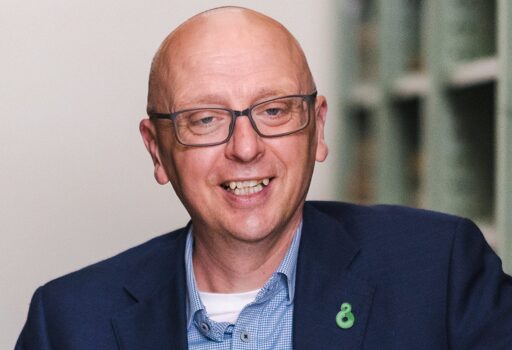
Tony Ballantyne is Distinguished Chair Poutoko Taiea in History at the University of Otago – Ōtākou Whakaihu Waka. His latest book, Captain Cook and the Unsettled Afterlives of Empire, is out now (BWB).
The post Remaking landscape and memory appeared first on E-Tangata.
From E-Tangata via This RSS Feed.