

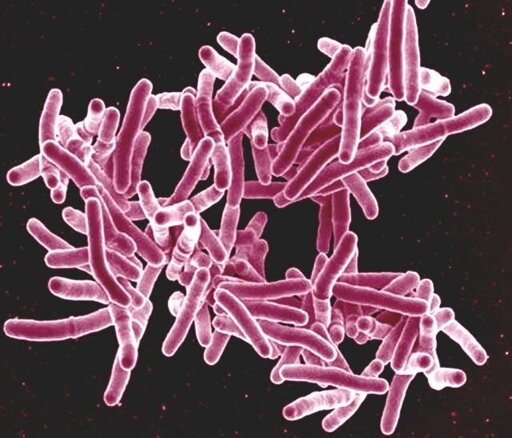
Tuberculosis bacteria released into the air from infected individuals dry out to form infectious particles that are second only to measles in contagiousness. Weill Cornell Medicine investigators have discovered specific mechanisms that enable the bacteria not only to survive drying but also to generate mutations linked to antibiotic resistance. This suggests that transmission involves more than the passive movement of bacteria between people and may be a period during which the pathogen evolves.
From Biology News - Evolution, Cell theory, Gene theory, Microbiology, Biotechnology via This RSS Feed.
You must log in or # to comment.