

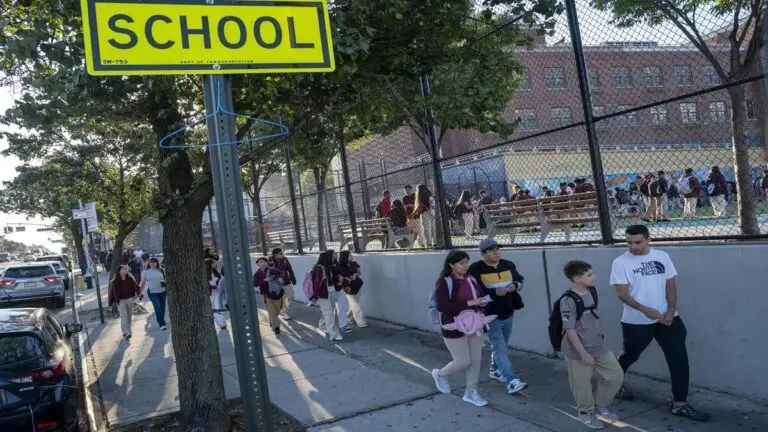
Florida schools close migrant students: 38K enrollment drop forces closures in Miami-Dade, Broward, Palm Beach. Explore TPS terminations, teacher layoffs, and budget cuts.
Related: 7 Critical Challenges for Cuba School Year 2026 Start
Florida Schools Close Migrant Students: 38,000 Enrollment Drop Forces Closures Across South Florida
Florida schools close migrant students at an unprecedented rate as the school districts of Miami-Dade, Broward, and Palm Beach counties began the 2026-2027 academic year with approximately 38,000 fewer students than the previous cycle, prompting widespread school closures, consolidations, and staffing reductions. The dramatic enrollment decline, attributed largely to reduced immigration from Venezuela and Haiti following the termination of Temporary Protected Status (TPS) during President Donald Trump’s second term, has forced districts to shut down or merge campuses, eliminate teaching positions, and cut essential services in communities that depend heavily on public education and immigrant labor.[wlrn][infobae][wlrn][elhorizonte]
Miami-Dade County, home to the third-largest school system in the United States, has already closed or merged nine schools this year and is evaluating the future of 27 additional campuses. The district reported a loss of 14,365 students during the 2025-2026 academic year, dropping from 335,474 to 321,109, and began August 2026 with an additional reduction of 18,910 students, leaving the system with 515 fewer teachers. Superintendent José Dotres estimated that only 3,000 students were admitted from abroad during the most recent academic year, compared to annual figures of 14,000 to 22,000 in previous years, reflecting the sharp decline in new immigrant arrivals following TPS terminations.[wlrn][infobae][elhorizonte][miamiherald]
Florida Schools Close Migrant Students: TPS Terminations, Enrollment Declines, and Budget Cuts
The Florida schools close migrant students crisis is directly linked to the termination of Temporary Protected Status (TPS) for Venezuelan and Haitian nationals during the second Trump administration, which stripped legal protections from hundreds of thousands of immigrants and triggered deportations, voluntary departures, and family relocations. Venezuelans lost TPS in November 2025, while Haitians were stripped of the status in summer 2026, following a Supreme Court ruling in Mullin v. Doe that allowed the administration to end TPS for 13 countries, threatening approximately 1.045 million people who had been legally permitted to live and work in the United States.[infobae][amp.dw][longisland.news12][wsws]
For details on TPS terminations, see ACLU Maine’s explainer: Temporary Protected Status
The enrollment collapse has hit Miami-Dade hardest, where 172,186 students communicate in Spanish at home, representing more than half the total, and an additional 8,513 speak Haitian Creole. The district’s English as a Second Language (ESL) program lost the equivalent of 22,084 full-time students in a single academic year, according to the Florida Office of Economic and Demographic Research, the state’s official forecasting agency. In Broward County, the official count on the tenth day of classes recorded 223,890 students, representing 12,658 fewer than the same date in the previous year, with officials estimating 60,000 vacant seats across the district.[infobae][wlrn][elhorizonte][wsws]
For WLRN’s analysis of Miami-Dade’s enrollment decline, see: Miami-Dade County Schools Shrunk by About 19,000 Students
Palm Beach County experienced a decrease of 6,959 students, more than double the 2,900 it had budgeted for, forcing the district to freeze hiring and eliminate 76 school library positions. The August 2026 enrollment count showed 173,155 students across district-operated and charter schools, down from 179,241 the previous year. District officials cited declining birth rates, demographic changes, the high cost of living in Palm Beach County, and the increasing use of taxpayer-funded private school vouchers as contributing factors, but acknowledged that immigration policy changes played a significant role in the steeper-than-expected decline.[wlrn][elhorizonte][palmbeachpost]
The closure of schools has sparked community backlash, with parents, teachers, and activists arguing that the districts are moving too quickly to consolidate campuses without adequately considering the impact on vulnerable students. In Miami-Dade, some schools have seen enrollment drops exceeding 85%, such as Killian High School, which went from 3,700 students in 2004 to just 430 at the start of the 2026-2027 year. Superintendent Dotres admitted that consolidations will increase in number, while his successor-designate, Rafael Villalobos, stated that the district must “do a little bit more, a little bit faster,” despite concerns about displacing students, disrupting communities, and eroding trust in public education.[elhorizonte][miamiherald][miamiherald]
The loss of 38,000 students translates into millions of dollars in reduced state funding, as Florida allocates resources based on per-pupil enrollment counts. The October statewide count will determine final budget allocations, but preliminary data suggests that Miami-Dade, Broward, and Palm Beach will face significant shortfalls, forcing further cuts to programs, staff, and facilities. The Florida Education Finance Program (FEFP) distributes funds based on Full-Time Equivalent (FTE) student counts, meaning that each lost student represents a direct reduction in revenue, compounding the financial strain on districts already grappling with inflation, teacher shortages, and infrastructure maintenance.[wlrn][elhorizonte][palmbeachpost]
Geopolitical Context: Immigration Policy, Demographic Shifts, and Educational Equity
The Florida schools close migrant students crisis unfolds against a backdrop of intensifying immigration enforcement and demographic transformation in the United States, where TPS terminations, deportation flights, and border restrictions have reduced immigrant arrivals and accelerated departures from communities that have long relied on foreign-born labor and enrollment. The Trump administration’s termination of TPS for 13 countries—including Venezuela, Haiti, Afghanistan, Yemen, and Syria—has threatened over 1 million people with deportation, disrupting families, workplaces, and schools across Florida, California, Texas, and New York.[amp.dw][longisland.news12][wsws][aclumaine]
Regionally, the Florida schools close migrant students exodus reflects broader demographic shifts in South Florida, where Venezuelan and Haitian communities constitute the largest concentrations in the United States. The loss of TPS has forced many families to return to countries facing political instability, economic collapse, and gang violence, particularly in Haiti, where nearly 200,000 forced returnees have been received amid surging insecurity and humanitarian crisis. The UN Security Council convened an emergency meeting to discuss the situation following a deadly gang attack in Kenscoff, just days after the first U.S. deportation flight landed in Port-au-Prince after the TPS termination.[amp.dw][wsws][havanatimes][sdvoice]
Globally, the Florida schools close migrant students trend underscores the intersection of immigration policy and educational equity, as reduced enrollment disproportionately affects minority, low-income, and English-language learner populations who rely on public schools for stability, nutrition, and social services. The closure of campuses in Miami-Dade, Broward, and Palm Beach risks eroding community cohesion, displacing vulnerable students, and widening achievement gaps for those who remain in under-resourced schools. The Supreme Court’s Mullin v. Doe decision has drawn condemnation from human rights organizations, who warn that ending TPS without adequate safeguards violates international obligations and endangers lives in countries facing armed conflict, natural disasters, and systemic violence.[aclumaine][sdvoice][abcnews][globalrefuge]
The enrollment decline also highlights the growing reliance on private school vouchers as an alternative to public education, a trend that exacerbates segregation and diverts public funds to private institutions that are not accountable to the same standards as public schools. In Florida, the expansion of voucher programs under the Trump administration has accelerated the shift from public to private education, particularly among middle-class families who can afford supplemental costs, leaving public schools with higher concentrations of poverty, special needs, and English-language learners. This two-tiered system undermines the principle of universal access and deepens inequality in communities already struggling with economic precarity and immigration enforcement.[elhorizonte][palmbeachpost][miamiherald]
Furthermore, the Florida schools close migrant students crisis reflects a broader national trend of declining birth rates, aging populations, and reduced immigration, which together are reshaping the demographic landscape of American education. The U.S. Census Bureau projects that school-age populations will continue to shrink in many regions, particularly in urban areas that have historically relied on immigrant families to sustain enrollment. The closure of schools in South Florida may serve as a harbinger for other districts facing similar pressures, raising questions about the long-term viability of public education in a demographically transitioning nation.[wlrn][elhorizonte][miamiherald][miamiherald]
From teleSUR English via This RSS Feed.