

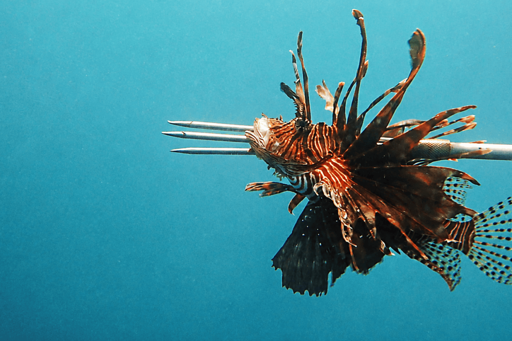
TELA, Honduras — Mario never set out to become a lionfish hunter. An engineer by training and founder of the local dive center Tela Divers, he simply wanted to do something about the growing number of invasive lionfish appearing on the reef where he learned to dive. Native to the Indo-Pacific and thought to have arrived in the Caribbean through the aquarium trade, lionfish have spread rapidly across the region. With few natural predators, they consume large numbers of native reef fish. In Tela, Mario and a group of fellow divers began experimenting with their own specialized spears, then turned their hunts into community derbies, with teams competing to catch the biggest, smallest and greatest number of lionfish. It was a fun way to get more people involved. Regular, community-led hunting is one of the most effective ways of helping keep local populations in check. But the fight is a constant one. By the time the divers return to a site they’ve already hunted, lionfish may have repopulated it. Now they’re looking for other ways to keep the pressure on, including encouraging local fishers to catch lionfish for restaurants. For Mario, it’s a long-term effort to protect the reef he calls home. Mongabay’s Video Team wants to cover questions and topics that matter to you. Are there any inspiring people, urgent issues, or local stories that you’d like us to cover? We want to hear from you. Be a part of our reporting process—get in touch with us here! Banner…This article was originally published on Mongabay
From Conservation news via This RSS Feed.