

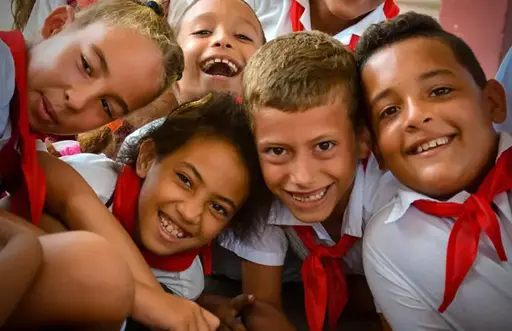
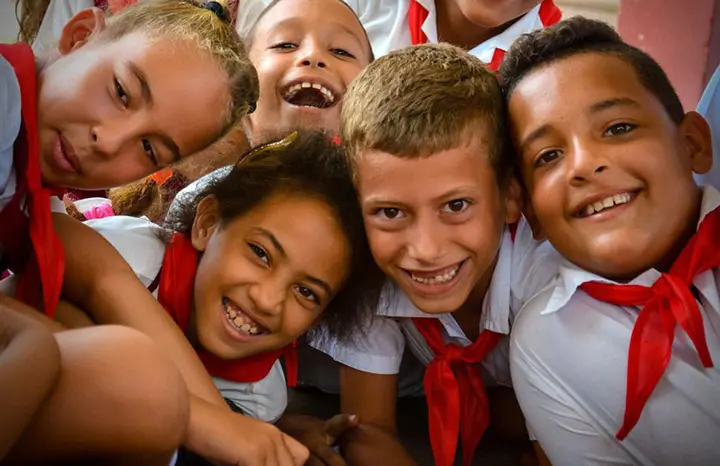
Cuba school year 2026 begins Sept 1: 1.4M students, 10K+ schools open despite teacher deficit, uniform shortages, and energy crisis. Explore government strategies and community role.
Related: 1.5 Million Cuban Children and Adolescents to Begin School Year
Cuba School Year 2026: 1.4 Million Students Return Amid Economic and Energy Crisis
The Cuba school year 2026 officially begins on Tuesday, September 1, as more than 1.4 million Cuban students nationwide prepare to return to classrooms across over 10,000 general education institutions, according to Education Minister Nayma Ariatne Trujillo. Despite severe economic complexities and an ongoing energy crisis that has caused widespread blackouts, the Cuban government has prioritized in-person education to strengthen the human and intellectual development of students, deploying a teaching workforce of over 135,000 educators distributed across all levels of instruction throughout the territory.[en.cibercuba][cubadebate][japantimes.co][telesurtv]
Trujillo confirmed that the 2026-2027 academic cycle will operate with flexible attendance policies, adjusted schedules, and relaxed uniform requirements to accommodate the structural challenges facing the educational system. The minister emphasized that preserving in-person learning remains the top governmental priority for this school period, even as authorities implement alternative strategies to address the teacher deficit, including the voluntary incorporation of university students, the rehiring of retirees, and the recruitment of professionals from diverse sectors.[en.cibercuba][japantimes.co][infobae][upi]
Cuba School Year 2026: Teacher Shortages, Uniform Deficits, and Energy Constraints
The Cuba school year 2026 unfolds against a backdrop of critical resource shortages, with the Education Ministry acknowledging that only 73% of teaching positions are currently covered nationwide, leaving a structural deficit of approximately 24,000 teachers. To mitigate this gap, authorities are deploying multi-sectoral recruitment drives, offering additional compensation, and relocating teachers from eastern provinces to western regions like Havana, where staffing shortages are most acute.[japantimes.co][infobae][upi][elpais]
For details on teacher coverage, see El País’ coverage: Cuba iniciará el curso escolar lastrada por la escasez de profesores y el déficit de uniformes
The uniform shortage represents another significant challenge, with Trujillo admitting that only 20% of students will receive new uniforms at the start of the school year. Textile production reached between 2.2 and 2.3 million garments against a national demand of 3.6 million, meaning eight out of every ten Cuban students will begin classes without new school attire. In some provinces like Ciego de Ávila, uniforms will be prioritized solely for preschool, fifth, and seventh grades, while other regions rely on community donations and second-hand exchanges facilitated through Facebook groups.[en.cibercuba][cibercuba][en.cibercuba][en.cibercuba]
For uniform production data, see Cuba Headlines: Education Minister Claims School Year Kickoff Will Be a “Celebration”
The energy crisis further complicates the Cuba school year 2026, with blackouts lasting up to 30 hours daily in Havana and even longer in rural areas. Schools are implementing energy-saving strategies and reorganizing essential services to maintain operations, but many institutions face intermittent electricity, inadequate facilities, and limited transportation. The previous school year was cut short in June 2026 due to fuel shortages, and seven total blackouts have already been recorded nationwide in 2026, raising concerns about classroom continuity and student safety.[japantimes.co][infobae][lanacion.com][freemalaysiatoday]
Despite these challenges, sports initiation schools will welcome more than 13,000 young athletes focused on consolidating their physical and intellectual preparation, while the Ministry of Culture has ratified the opening of over 40 artistic training centers dedicated to creative specialties and profiles. The cultural sector registered enrollment exceeding 2,000 new students who will join community workshops and specialized academies, underscoring the government’s commitment to holistic education even amid material constraints.[cubadebate][telesurtv][cubainformacion]
Cuban authorities emphasized that the start of the school cycle represents a political priority in favor of social inclusion and community equity, with active family and local community participation deemed determinant for sustaining pedagogical activities despite existing limitations. President Miguel Díaz-Canel addressed critics of the government, stating on social media: “To those who talk about collapse in Cuba: More than 1.5 million children and adolescents return to classrooms on Sept. 1,” framing the school reopening as evidence of institutional resilience and state capacity under adverse conditions.[telesurtv][upi][en.cibercuba]
The Reality Behind the Numbers: Teacher Deficits and Infrastructure Decay
While the Cuban government celebrates the reopening of over 10,000 schools for the Cuba school year 2026, independent analyses reveal a far more precarious reality beneath official statistics. The 27% teacher vacancy rate—equivalent to approximately 24,000 unfilled positions—represents not a temporary gap but a structural collapse of the teaching workforce, driven by mass emigration, low salaries, and deteriorating working conditions.infobae+1
In provinces like Camagüey, the deficit reaches nearly 3,000 teachers for 95,000 students across 690 schools, forcing administrators to combine grades, reduce instructional hours, or cancel classes entirely. The strategy of recruiting university students and rehiring retirees addresses quantity but not quality, as many replacements lack pedagogical training or subject-matter expertise. A mathematics teacher in Havana noted anonymously: “We are filling slots, not educating children. A retiree who hasn’t taught in 15 years cannot manage a classroom of 40 teenagers.”upi
The infrastructure crisis compounds these challenges. Schools operate with intermittent electricity, broken plumbing, and inadequate ventilation, conditions exacerbated by blackouts lasting up to 30 hours daily. In rural areas, some institutions rely on kerosene lamps and handwritten notes when power fails during exams. The early closure of the 2025-2026 school year in June due to fuel shortages resulted in lost instructional time that the government has not recovered, leaving students weeks behind curriculum benchmarks.cubainformacion
Uniform Shortages as Symptom of Broader Economic Breakdown
The uniform deficit—with only 12-20% of students receiving new garments—is not merely a logistical failure but a symptom of Cuba’s broader economic breakdown. Textile production collapsed from 4.5 million uniforms annually in 2019 to 2.2 million in 2026, reflecting import restrictions, energy shortages, and the exodus of skilled labor. The government’s admission that eight out of ten students will start school without new uniforms contradicts years of official rhetoric promising universal access and equality.infobae
In practice, the shortage has stratified access along socioeconomic lines. Families with remittances from abroad purchase uniforms on the black market at inflated prices, while low-income households rely on donations, second-hand exchanges, or makeshift repairs. In some provinces, schools have relaxed enforcement of uniform policies, but this creates stigmatization and social pressure for students who cannot comply. A mother in Santiago de Cuba told reporters: “My children will wear the same clothes for weeks. If they get dirty, they go to school anyway. What choice do I have?”infobae
The prioritization of uniforms for preschool, fifth, and seventh grades in provinces like Ciego de Ávila reflects a triage approach that leaves older students—particularly those in high school, where dropout rates are highest—without adequate attire. This selective provisioning undermines the government’s claim of equity and inclusion, revealing instead a system in survival mode, allocating scarce resources to visible symbols of compliance while neglecting substantive educational quality.cubainformacion
Energy Crisis and the Erosion of Learning Conditions
The energy crisis represents perhaps the most debilitating factor for the Cuba school year 2026, with seven nationwide blackouts already recorded in 2026 and daily outages exceeding 18 hours in many regions. Schools are mandated to prioritize electricity for classrooms, but this often means sacrificing lighting, ventilation, and kitchen facilities, creating uninhabitable learning environments. In Havana, students report studying in sweltering rooms with no fans or natural light, while rural schools face multi-day closures when generators fail.
The impact on learning outcomes is severe. Teachers describe rushing through lessons to finish before power cuts, canceling labs and computer classes, and assigning homework that students cannot complete at home due to lack of electricity or internet. The Ministry of Education’s flexible attendance policies—allowing students to arrive late or leave early during blackouts—acknowledge the crisis but also normalize disruption, eroding the structure and discipline essential for academic achievement.upi+1
UNESCO’s warning about risks to students’ futures is not hyperbole. Studies from 2024-2025 show declining literacy and numeracy rates, increased dropout rates in secondary education, and reduced university enrollment, trends that the 2026 crisis will likely accelerate. The loss of instructional time from early school closures, blackouts, and teacher absences creates a compounding deficit that remedial programs cannot address, particularly for low-income students without private tutoring or digital access.
Y así, con gran entusiasmo y motivación, estudiantes familias y trabajadores del sector se suman en cada institución educativa del país a las actividades de limpieza, embellecimiento y organización, de cara al inicio del curso escolar este #1deSeptiembre.
#ConFidelEnCadaAula pic.twitter.com/ODo8X0G4DH— MINED (@CubaMined) August 27, 2026
The Political Economy of Education: Rhetoric vs. Reality
President Díaz-Canel’s assertion that schools reopening disproves collapse narratives reflects a political calculus that prioritizes symbolic victories over substantive reform. The government frames the Cuba school year 2026 as evidence of institutional resilience, but this narrative ignores the material conditions that determine educational quality. Universal access means little if classrooms lack teachers, uniforms, or electricity, and enrollment statistics obscure the reality of learning loss and dropout rates.upi
The emphasis on community and family participation—while pragmatic—also reveals a retreat of the state from its constitutional obligation to provide free, quality education. By shifting responsibility to parents, neighborhoods, and Facebook groups, the government externalizes the costs of crisis, framing grassroots mobilization as revolutionary solidarity rather than systemic failure. A teacher in Holguín commented: “The state says the community must support schools. But the community is also starving. Who supports us?”upi
Internationally, the U.S. sanctions regime bears significant responsibility for the resource constraints facing Cuban education, but the government’s centralized economic model and mismanagement of imports, production, and distribution amplify these effects. The oil blockade limits fuel for generators and transportation, but corruption, inefficiency, and prioritization of tourism over social services determine how scarce resources are allocated. The uniform deficit is not solely a result of import restrictions but also of domestic textile industry collapse, driven by energy shortages, labor emigration, and lack of investment.infobae+2
Long-Term Implications: A Generation at Risk
The Cuba school year 2026 carries long-term implications for a generation of students whose educational trajectories are being derailed by crisis. Learning loss from blackouts, teacher shortages, and early closures will manifest in lower standardized test scores, reduced university admission rates, and diminished employability. The brain drain of young professionals emigrating due to limited opportunities creates a feedback loop, where education no longer guarantees mobility, further eroding faith in the system.upi+1
The psychological impact on students and teachers is profound. A high school senior in Matanzas told reporters: “I want to study medicine, but I can’t prepare for exams when the power is out every night. What future do I have?” Teachers report burnout, frustration, and helplessness, as they are expected to educate under impossible conditions without adequate resources or support. The government’s rhetoric of resilience offers little comfort to those facing daily struggles to teach, learn, and survive.upi
Ultimately, the Cuba school year 2026 is not a celebration of educational achievement but a testament to adaptation under duress. The system persists, but at what cost? Enrollment numbers obscure quality deficits, community mobilization masks state retreat, and political symbolism distracts from material deprivation. Without structural reforms, increased investment, and international cooperation, the Cuba school year 2026 may mark not a turning point but a tipping point for an education system on the brink.cubainformacion
Geopolitical Context: U.S. Sanctions, Educational Sovereignty, and Regional Comparisons
The Cuba school year 2026 unfolds within a broader geopolitical context shaped by over a decade of U.S. unilateral coercive measures, including an oil blockade that has exacerbated the energy crisis and constrained import capacity for essential educational supplies like textiles, fuel, and teaching materials. The Cuban government attributes much of the structural deficit in education to these external pressures, arguing that sanctions limit access to international markets and divert resources from social programs to crisis management.[infobae][upi][infobae]
Regionally, the Cuba school year 2026 contrasts with educational trends in Latin America, where many countries have recovered pre-pandemic enrollment levels and invested in digital infrastructure and teacher training. Cuba’s 73% teacher coverage and 12% uniform production rate stand in stark contrast to regional averages, highlighting the disproportionate impact of sanctions on a small island economy with limited diversification and high dependency on imports. However, Cuba’s universal public education model and community-based recruitment strategies reflect a distinct approach to educational sovereignty, prioritizing access over perfection in resource-constrained environments.[japantimes.co][upi][elpais]
Globally, the Cuba school year 2026 has drawn attention from UNESCO, which warned of risks to students’ futures if the energy and economic crisis persists. The UN agency highlighted concerns about learning loss, teacher retention, and infrastructure degradation, urging the Cuban government to prioritize education funding and seek international cooperation to mitigate long-term impacts. Meanwhile, the U.S. State Department maintains that sanctions target the regime, not the people, though critics argue that broad economic restrictions inevitably affect social services like education and healthcare.[upi][lanacion.com][tribune242]
The Cuba school year 2026 also reflects broader debates about socialist governance and state capacity under crisis conditions. Díaz-Canel’s assertion that schools reopening disproves collapse narratives underscores the political symbolism of education in Cuba’s revolutionary project, where universal access has long been a cornerstone of legitimacy. However, the material realities of teacher shortages, uniform deficits, and blackouts raise questions about sustainability and quality, even as the government emphasizes resilience and adaptation.[upi][infobae][en.cibercuba]
Furthermore, the Cuba school year 2026 highlights the growing role of community and family networks in filling state gaps, with Facebook groups, neighborhood exchanges, and parental improvisation becoming essential mechanisms for securing uniforms, supplies, and transportation. This grassroots mobilization reflects a hybrid model of educational provision, where state infrastructure is supplemented by civil society, raising questions about long-term equity and dependency in a context of protracted crisis.[upi][en.cibercuba][en.cibercuba]
Listos para el curso 2026-2027. La ministra @naimatrujillob supervisó aseguramientos en Ciego de Ávila y Sancti Spíritus. Frente a las dificultades, maestros y directivos garantizan el derecho a la educación con creatividad y entrega.
¡Por nuestra infancia y juventud, todo! pic.twitter.com/43kcagIBlt— MINED (@CubaMined) August 26, 2026
From teleSUR English via This RSS Feed.