

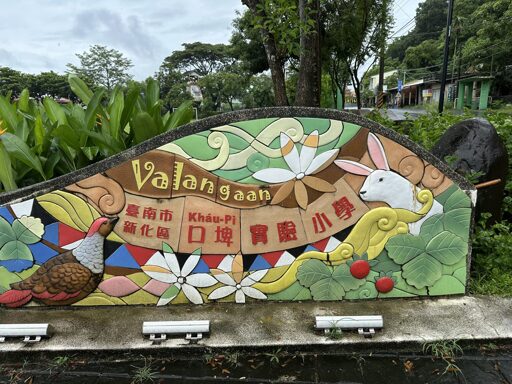
TAINAN, Taiwan — Since she was old enough to understand it, Uma Talavan has known she belongs to the Indigenous Siraya people. She knew almost nothing of her ethnicity, however, the identity of which was dissolved by centuries of forced assimilation, save for a handful of words her parents used to speak. In search of “who she is,” as she puts it, the Siraya activist decided to bring her language back to life nearly 200 years after it died out. “Language is an extremely important part of a people’s soul,” she says. “It lets us know the past and connect it to the present.” Her work to revitalize the Siraya language, which began more than 20 years ago, helped secure the community’s legal recognition as Taiwan’s 17th Indigenous group. Uma Talavan, her activist father Wan Cheng-hsiung, also known as Cheng-hiong Talavan, and other members of the community traveled from Tainan to Taipei to attend a ceremony announcing the recognition on July 30. Siraya activist Uma Talavan at Koupi Experimental Elementary School, the first school where learning Siraya is mandatory, in Sinhua district, Tainan, Taiwan, on Aug. 21, 2026. Image by Aylin Ho for Mongabay. The Siraya, one of Taiwan’s Austronesian-speaking Indigenous peoples, are the largest of the Pingpu groups, the peoples who have traditionally inhabited the island’s lowland plains and coastal areas. When the Dutch arrived in southern Taiwan in the 17th century, the Siraya were the first people they came into contact with. The story of the Siraya language’s…This article was originally published on Mongabay
From Conservation news via This RSS Feed.