

Mexico says 90% of 13,625 people located since July 2025 were found alive as authorities announce measures to strengthen searches.
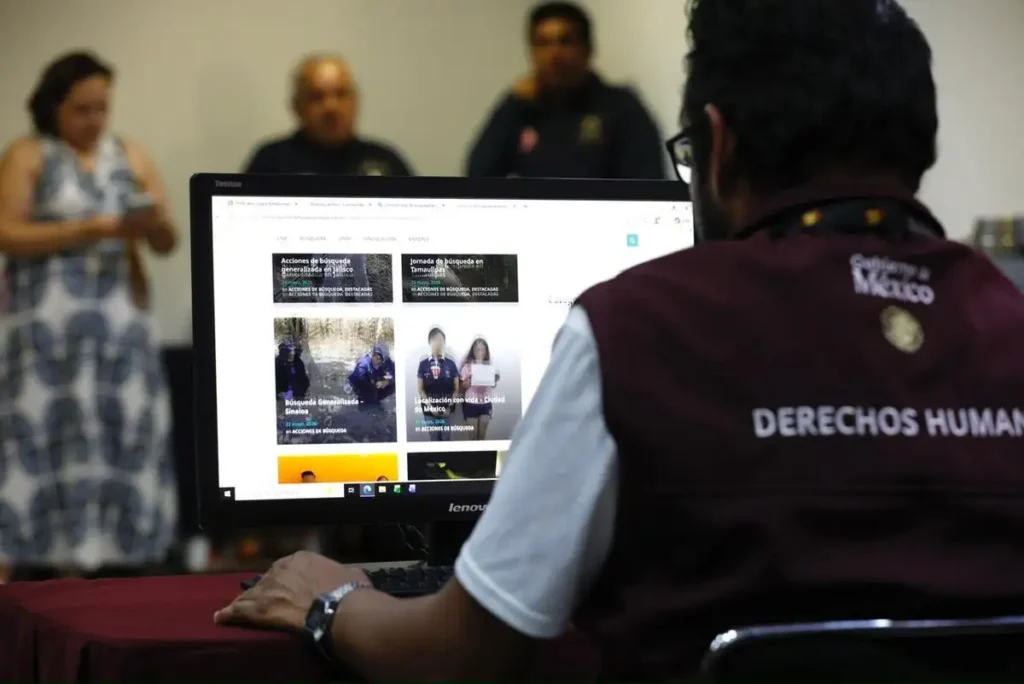
Mexico has located 13,625 people reported missing or unaccounted for since July 2025, 90% of them alive, the government said as it announced 10 measures to strengthen the country’s national search strategy.
RELATED: Red Cross Warns Mexico to Take Action On Disappearances
The measures include improving the National Registry of Missing and Unlocated Persons, ensuring that every missing person has an investigative file, tackling the forensic identification backlog and strengthening immediate search efforts.
Arturo Medina, undersecretary for Human Rights, Population and Migration, presented the figures during the launch of the National Immediate Search Alert Center.
Of the 13,625 people located, 6,939 were found through the Unified Identity Platform, 3,039 through coordination with state governments, 2,572 through the National Immediate Search Alert (ANBI) and 1,075 through searches in the field.
To improve the completeness of the national registry, authorities will bring in 10 specialists with expertise in data analysis, large-scale information processing, statistics, mathematics, artificial intelligence and programming, among other fields. The work will receive support from the United Nations Office of the High Commissioner for Human Rights.
Authorities also plan to strengthen the National Immediate Search Alert to ensure that every alert receives a response. Medina said searches would be expanded to hospitals, detention centers and other public and private institutions.
“We want no alert to go unanswered, because every minute counts,” Medina said.
Government prepares national forensic plan
The government will also implement a human-identification plan with the Attorney General’s Office to address the forensic backlog involving unidentified bodies and human remains.
“We are building a national process to handle the bodies and human remains of deceased people who have not been identified, as well as cases that are still pending analysis or identification. The goal is for each case to receive the examinations needed for identification, including the collection and processing of DNA and genetic profiles,” Medina said.
Another measure aims to prevent the recruitment and coercion of young people through digital platforms. In coordination with security institutions, authorities had identified and removed 1,072 profiles and 12,137 deceptive messages intended for recruitment as of July 31.
The government has also formed partnerships with transportation companies, retailers, airlines and other organizations to expand search alerts and strengthen prevention and response mechanisms in potential recruitment cases.
Search commission to receive more resources
The National Search Commission will receive additional personnel and specialized equipment, while authorities will strengthen support for relatives of missing people and collectives representing victims.
Officials said 13,300 meetings and other forms of assistance with families and collectives had been recorded to date. The strategy also calls for bringing search efforts directly to families across the country.
Interior Secretary Rosa Icela Rodríguez said the government had changed its approach to the search for missing people.
“We know there is still much to do, but we have not abandoned our responsibility; on the contrary, we remain committed to finding those who are absent from their homes,” Rodríguez said at a news conference.
The measures were announced ahead of the International Day of the Victims of Enforced Disappearances, observed on Aug. 30. Rodríguez said the federal government was modifying its working methods, developing new strategies, training personnel and using the necessary tools to find missing people.
From teleSUR English via This RSS Feed.