

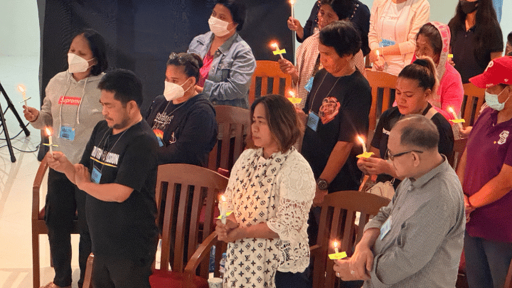
“It was easy for other people to tell me to give up the fight. But win or lose, I’ll never stop fighting. I’ll never lose hope for Darwin.”
MANILA – Mariza Hamoy, mother of extrajudicial killing victim Darwin Hamoy, has tried to go after the 16 police officers who killed her son. But her legal defeat has not deterred her search for justice, even once, even in the face of mounting threats.
“It was easy for other people to tell me to give up the fight. But win or lose, I’ll never stop fighting. I’ll never lose hope for Darwin,” she said in Filipino during the second truth-telling session of the Philippine Truth Commission, a civil society-led initiative to probe the “drug war” of Rodrigo Duterte, on Thursday, August 27.
Darwin and four of his friends were killed by the policemen in a buy-bust operation in Payatas, Quezon City, on August 15, 2016. He was 17 years old.
He was buying cigarettes for his friend William Bordios, also one of the victims, during a birthday celebration. It was the first “nanlaban” (drug suspect supposedly fought back) cases during the early years of Rodrigo Duterte’s anti-illegal drug campaign.
“My son was diligent, kind, and good at math…He was helping us work to sustain our family,” Hamoy said.
Hamoy was a street sweeper while her husband was a construction worker. Both were earning below the daily minimum wage then. “Our income was not enough. He [Darwin] was helping us buy rice and water for our daily needs,” she said.
When her son was killed, Hamoy did not immediately have access to his body. It took her eight days to find her son’s body in a funeral home in Quezon City. She was asked to pay P15,000 (US$240.72) to retrieve the remains. It took her a total of two weeks to get Darwin buried.
“I only had P2,000 (US$32.10) during that time. I told them if I could make a downpayment so I could bring Darwin home. I told them that I was a street sweeper. They refused,” Mariza recalled. “It was when I told them that I was contacting the media that they allowed me to make the downpayment. But they asked me for another P2,000 for his clothes to be used at the wake.”
Tearingly, she said that she could not afford to see Darwin for the last time with his old clothes. So she decided to buy a barong.
The legal pushback
Hamoy filed two legal cases against the 16 police officers who came from the Quezon City Police District Station 6. A 2017 Reuters investigation revealed that 39 percent of the city’s killings from anti-drug operations can be attributed to the QCPD Station 6 police officers, who reportedly called themselves “Davao Boys” since they came from or near Davao.
The first case was filed through the Commission on Human Rights (CHR) in 2017, which was later endorsed to the Office of the Ombudsman for criminal charges. But a year later, the charges were dismissed because there was “no evidence that the police used excessive force,” according to former Executive Secretary Salvador Medialdea.
Philippine Truth Commission Chairperson Raul Pangalangan, who was also a former judge of the International Criminal Court (ICC), explained the use of excessive force. He said, “There were an overwhelming number of police, considering that the victims were unarmed.”
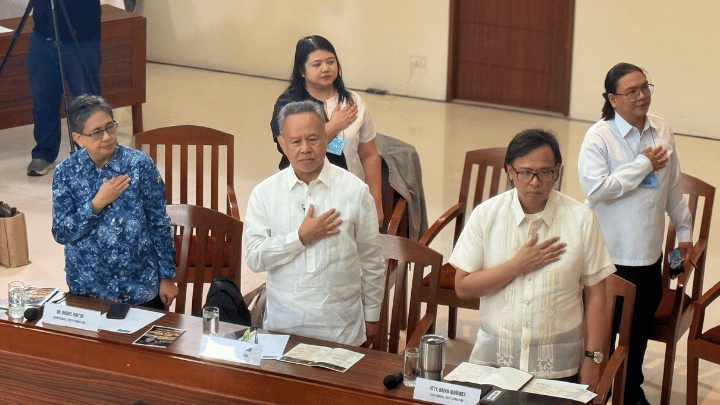
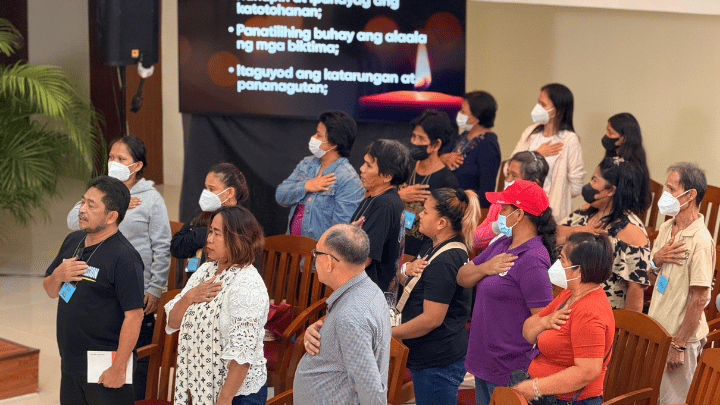
The second truth-telling session of the Philippine Truth Commission hears the case of 17-year-old extrajudicial killing victim Darwin Hamoy and the search for justice of her mother, Mariza Hamoy on August 27, 2026. Photos by Dominic Gutoman/Bulatlat
The second case was filed before the Philippine National Police Internal Affairs Service (PNP IAS) in 2017. A year after, the PNP IAS filed charges of grave misconduct and grave irregularity against the 16 policemen in 2018. It was only this year that Hamoy was informed that the charges were dismissed.
Their commander, Lito Patay, was also charged with two counts of grave neglect of duty and one count each of less grave neglect of duty and simple neglect of duty by the PNP IAS due to his leadership at the time of Hamoy’s death. But Malacañang cleared him of charges in 2022, when Duterte was still in power.
Originally, there were three complainants in the two cases. Marilyn Bordeos, aunt of extrajudicial killing victim William Bordios, and Katrina Polo, wife of extrajudicial killing victim Cherwin Polo. But the other two recanted their statements during the hearing at Ombudsman, and withdrew their cases pending before the PNP IAS.
“During the hearing, I was shocked to see them appearing with the police officers,” Hamoy recalled. “They turned their back on me. They became informants of the police.”
For her, it contributed to the impunity she had been confronting for years. Not a single individual had surfaced to provide testimony even when there were many eyewitnesses during the Payatas buy-bust incident.
It was even more difficult for her when the survivor, Harold Arevalo, was out of reach. She tried to talk to him when he was still admitted to the East Avenue Medical Center, but police officers were guarding him. The next attempt, Arevalo was already out of the hospital.
Beyond the charges
The legal fight is only the tip of the iceberg.
Hamoy’s husband Danilo was imprisoned five times since the death of their son. The first case was illegal gambling and illegal possession of drugs. It was dismissed later on, but every year, another case of illegal gambling was charged against Danilo.
All of these charges, for Hamoy, were attempts to exhaust her to withdraw the case before the PNP IAS. A person told her: “If you want the freedom of your husband as soon as possible, withdraw the case.”
“I told my husband about what happened,” she said. “But he told me not to withdraw the case of Darwin. He said that we should continue to fight.”
In the first two cases, Hamoy tried to post bail. But in the succeeding cases, she could no longer post bail for her husband because she was out of money and still had to tend to her family.
Examining the body
Forensic pathologist Raquel Fortun conducted a postmortem examination on Darwin’s body in 2021 and analyzed the existing medico-legal reports from the Philippine National Police. “This case is very complicated and challenging,” she said.
Darwin’s cause of death, based on the PNP medico-legal report, was certified as “gunshot wounds (of the) trunk.” The other four were similar to him: gunshot wounds of the trunk, while some also included the head.
“When you hit the head and trunk of a person, you are aiming for vital organs,” said Fortun. “Most likely, they were already dead. They should have not been removed from the crime scene. Why? Because you destroy the evidence.”
The description of Darwin in the PNP spot report was that “he was about 20 to 25 years old, 5”4 in height, slim built, fair complexion, clad in a blue t-shirt and camouflage short pants.” Darwin was still a minor when he was killed.
Fortun concluded that the gunshot wounds were consistent with the medico-legal report. However, she also flagged several concerns in the report, the police protocol, and the documentation: the report was not clear and most details lack specification, the body was previously embalmed before the autopsy, the trajectory of bullets and fragments were not properly described, and the hemorrhages were not identified where.
“I have so many questions I find it hard to conclude. I saw Darwin five years later, only with bones. The first doctor that saw him is the best witness and should have documented the findings properly,” Fortun said.
Based on the documents, the PNP medico-legal report was written by Police Superintendent Ruby Grace Sabino-Diangson and officially completed on August 18, 2016, three days after the incident.
“The examination is so superficial,” Fortun said. “The purpose of the laboratory examination is to determine the cause of death. But when you saw a gunshot wound to the chest, end of story. This is not forensic science. This is not forensic pathology.”
Mounting impunity
The Philippine Truth Commission will continue to conduct more truth-telling sessions about cases of extrajudicial killing victims during Duterte’s anti-illegal drugs campaign. Pangalangan, its chairperson, said that they will never stop in dispelling the narrative of “nanlaban”— that the victims fought back, prompting the police to kill them.
“The family found it hard to retrieve the body of Darwin. The harassment continues, which was stark in Mariza’s story. Her husband was repeatedly arrested. There is vilification. There is the reversal of testimonies of former complainants. Mariza found it hard to get access to justice from the government,” he said.
The International Criminal Court (ICC) Trial Chamber is set to open the trial on November 30, 2026, after the Pre-Trial Chamber I found that there are reasonable grounds to believe that he is individually responsible as an indirect co-perpetrator for the crimes against humanity of murder, committed when the Philippines was still a State Party to the Rome Statute.
The crimes are linked to the vigilante killings of the Davao Death Squad when he was still the Davao City Mayor and the drug-related extrajudicial killings during his term as the President of the Philippines.
Independent monitoring from the human rights organizations reported that there were more than 30,000 victims killed during Duterte’s time. The Philippine Truth Commission said during their launching that only five cases resulted in conviction, some of them remain on appeal.
“As long as I’m alive, I will keep on telling the truth,” Hamoy said. (AMU, RVO)
The post Unwavering, a mother of EJK victim confronts a decade of impunity appeared first on Bulatlat.
From Bulatlat via This RSS Feed.