

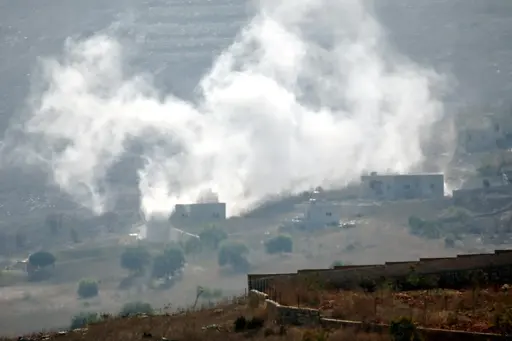
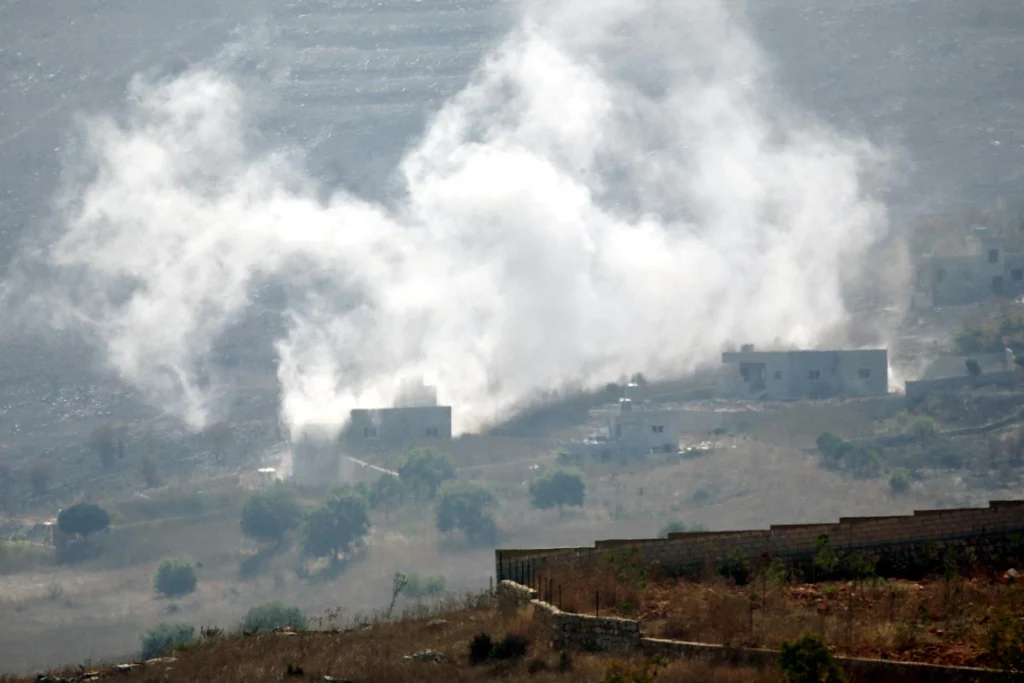
The United Nations Interim Force in Lebanon (UNIFIL) reported this Friday that it counted 1,030 projectile trajectories in southern Lebanon between August 21 and 27, an average of 147 per day, amid Israel’s intensified offensive despite ceasefire agreements.
The UNIFIL peacekeeping mission warned that, although violence levels are lower than those recorded at the beginning of this year, the situation in the region “remains fragile”.
The figures hide a continued cost for the civilian population, with homes and vital infrastructure damaged and communities struggling to recover from constant attacks by the Israeli army.
RELATED: Israel Strikes Lebanon As Civilian Death Toll Hits Over 4,300
On the same Friday, the Israeli army intensified its offensive in the region, carrying out demolitions in three localities of southern Lebanon and advancing toward the municipality of Aita al-Jabal, which caused fires in several areas. Israeli forces also subjected other nearby localities to artillery bombardment.
Lebanon’s Ministry of Health reported that in the last two days two people were killed and eight wounded in the attacks, raising the total toll since the escalation began on March 2 to 4,352 dead and 12,318 wounded.
Despite lower levels of violence than earlier this year, the situation in south Lebanon remains fragile.
From 21 to 27 August, peacekeepers recorded 1,030 projectile trajectories, an average of 147 per day. pic.twitter.com/C69Zghafdc
— UNIFIL (@UNIFIL_) August 28, 2026
A Fragile Region
These events add to an escalation that had already been intensifying since the beginning of the month. Between August 5 and 16, UNIFIL had recorded an average of 137 projectiles per day, with peaks of 208 and 185 shots during the weekend of August 15 and 16. The attacks of that period reached localities such as Haddatha, Beit Yahoun and Aita al-Jabal, and included the use of phosphorus projectiles over areas of the Tyre district, according to the Lebanese National News Agency.
Israel maintains a military presence in various areas of southern Lebanon, some of which it has occupied for decades. During an earlier round of fighting between 2023 and 2024, Israeli forces had expanded their deployment, advancing several kilometers into Lebanese territory.
These attacks occur despite the framework agreement signed between Israel and Lebanon on June 26, with United States mediation, which provides for a gradual Israeli withdrawal from occupied Lebanese territory in exchange for the deployment of the Lebanese army and measures linked to the disarmament of armed groups in the area.
UNIFIL reiterated that the commitment of Israel and Lebanon to UN Security Council Resolution 1701 “is essential to reduce tensions, restore stability and give communities the opportunity to recover”. The resolution, adopted in 2006 after a 33-day war demands a complete cessation of hostilities between both countries and the establishment of a demilitarized zone between the Litani River and the Blue Line, where only the Lebanese army and UNIFIL itself can be deployed.
Its principles include respect for the Blue Line, cessation of hostilities, the withdrawal of Israeli forces from Lebanese territory, and the extension of Lebanese state authority across its territory. pic.twitter.com/3DD0xxGUvr
— UNIFIL (@UNIFIL_) August 27, 2026
The mandate of UNIFIL in southern Lebanon is expected to expire on December 31 of this year, amid an ongoing debate about the future and mission of the peacekeeping force. The Lebanese government, for its part, insists on maintaining UNIFIL’s presence in the south of the country as a guarantee for the stability of the region.
The week’s numbers draw a map of sustained violence. 1,030 trajectories, 147 per day, 4,352 dead since March, and a fragile truce that the agreements have not been able to consolidate.
From teleSUR English via This RSS Feed.