

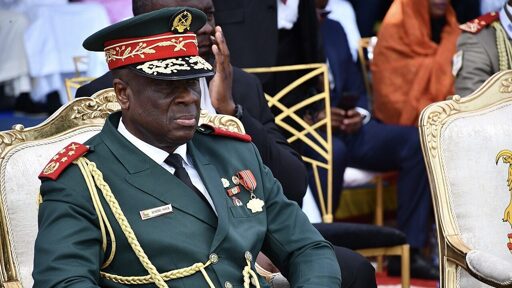

Guinea-Bissau is set to vote on a new constitution on Sunday, August 30, in a referendum that could alter the country’s political system and strengthen the powers of the presidency. The referendum comes nine months after the military seized control.
The crisis traces back to November 23, 2025, when Guinea-Bissau held presidential and parliamentary elections. Both incumbent President Umaro Sissoco Embaló and opposition candidate Fernando Dias da Costa claimed victory. Before the electoral commission could release provisional results, the military intervened on November 26, one day ahead of the announcement suspending the vote count and arresting opposition figures including PAIGC leader Domingos Simões Pereira and PRS’s Francisco da Costa. General Horta N’Tam was installed as transitional president.
What the new constitution would change
The draft marks a major rebalancing of power. Currently, the parliamentary majority largely determines the government. Under the proposed system, the president would gain authority to appoint and dismiss the prime minister and ministers, chair the Council of Ministers, restructure ministries, and dissolve Parliament under certain conditions, including once per term without needing Council of State approval.
The draft also shrinks Parliament from 102 to 61 seats and cuts electoral constituencies from 29 to 12, changes analysts warn could disadvantage locally-rooted parties and consolidate power among larger blocs.
Opposition says referendum risks consolidating military-backed rule
Zizwe Tchiguka of the African Party for the Independence of Guinea-Bissau and Cape Verde (PAIGC), speaking about the political crisis and the proposed constitutional changes to BreakThrough News, described the November 2025 military intervention as a “fake coup” designed to prevent the opposition from taking power. The coup is not seen in the same breath as the coups in the AES fight for sovereignty rather than its a safeguarding of the ruling class interests.
“The day before the election results were supposed to be announced last November 26, 2025,” Tchiguka said, “the previous illegal president, Umar Sissoko Mbalo, staged a fake coup d’etat.”
He questioned why the former president was able to leave the country while opposition figures were arrested.
“How could you have a coup d’etat but you could be interviewed by the press and then you could go and get on a plane and leave the country?” he asked. “But the opposition candidates are arrested at the same time.”
According to Tchiguka, the arrests included PAIGC leader Domingos Simões Pereira and Francisco da Costa of the Social Renewal Party (PRS), which had participated in the opposition coalition.
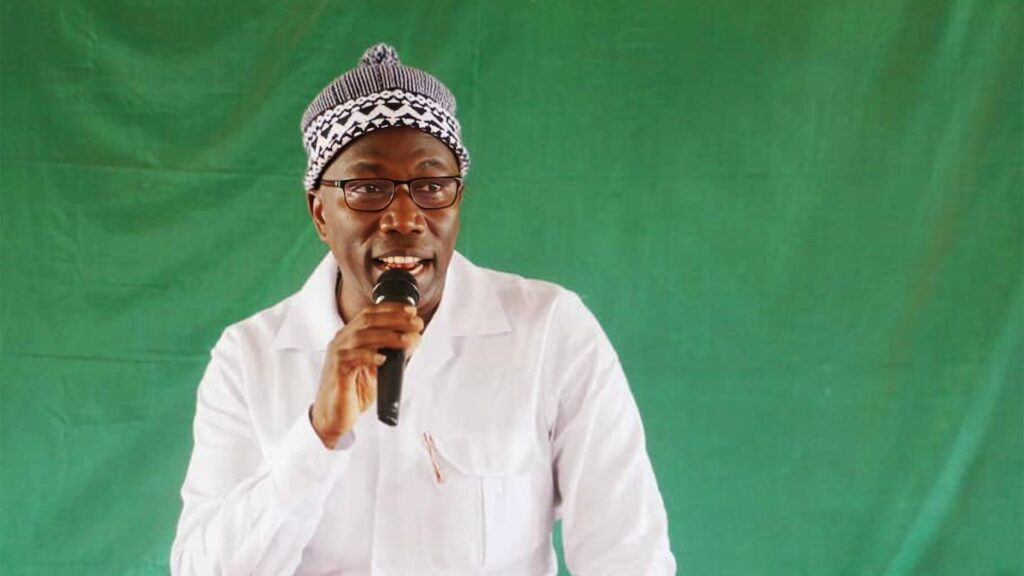
Domingos Simões Pereira of the PAIGC. Photo: Communist Party of Portugal
His concern is that the proposed constitution could fundamentally alter the balance between the presidency, the prime minister and Parliament.
“The military regime is trying to change the constitution so that the person who is elected as the President can make the prime minister powerless, null and void,” Tchiguka said, describing this as one of the key features of the proposed constitutional arrangement.
He argued that the changes could be used to ensure that an administration acceptable to the military establishment retains effective control even if opposition forces perform strongly in the elections.
“So that if they could manipulate the election, they could prevent the opposition party, which is led by Domingos Simões Pereira, from having any power,” he said.
Tchiguka further argued that control over Parliament is particularly important because of Simões Pereira’s position within the legislative system.
“If you know he’s the president of the parliament, he’s the president of the Legislative Assembly, he would be the second most powerful person in the government,” he said.
“What they’re trying to do is to position the person who they can have put in power by a bogus election,” he added, “to make it so that he will be powerless to do anything.”
Tchiguka also challenges the legality and timing of the referendum, arguing that constitutional changes should not be undertaken so close to an election.
“This idea of having a referendum on the constitution is illegal because ECOWAS, Economic Community of West African States, has a law that you cannot change the constitution no earlier than six months prior to the election date,” he said.
He similarly says that Guinea-Bissau’s own legal framework prevents constitutional amendments or a referendum within six months of an election.
“This is the scenario that we’re faced with,” he said, “to try to change the constitution this coming Sunday, August the 30th, and to try to set up another election on December the 6th.”
Opposition calls for restoration of constitutional order
The opposition and allies internationally have called for the restoration of constitutional institutions, the release of political prisoners, the reopening of party headquarters that were shut, and guarantees for political activity.
The International Network in Solidarity with Guinea-Bissau is also calling for soldiers to return to the barracks and for conditions that allow political activists to participate freely in the electoral process.
Tchiguka said opposition forces are urging citizens not to participate in what they regard as an illegitimate electoral process.
“We’re telling the masses of people in Guinea-Bissau, do not go out. Don’t participate in this false election process,” he said.
But he also described a second strategy should the referendum and subsequent elections proceed.
“Even if they manage to get the people to come out and vote, our next plan is to put pressure on the government, that is the illegal government,” he said.
The objective, he explained, would be to ensure that the elected National Assembly retains its constitutional role.
“What we’re saying is that even if they manage to pass this bogus constitution, you still have this legislative assembly that should be in place,” Tchiguka said.
He pointed to the continued occupation of opposition party headquarters and restrictions on the National Assembly as evidence, in his view, that constitutional institutions have yet to be fully restored.
“They presently occupy the headquarters of the PAIGC,” he said, “and they presently have the People’s National Assembly locked out of the assembly building.”
The vote unfolds with unresolved questions over the transitional government’s legitimacy, the uncertified November 2025 results, and the fairness of December’s elections. Tchiguka also adds that Embaló remains politically active and could benefit from a path back to power, part of the opposition’s broader reading of the crisis. He concludes that the situation represents “a real desperate situation for the illegal military regime to try to stay in power.”
From BT News via This RSS Feed.